
Level 2 autism is usually the one people do not talk about enough. It sits right between high-functioning and fully dependent.
Though it is usually visible from childhood, many people get diagnosed in adulthood, and the traits might stay the same, but that does not mean they do not change in adults.
The traits might change and might even be unique to an open person. To understand all this, I looked more closely at my clinical reports over the years and the reports of fellow professionals.
This blog looks into how level 2 autism in adults shows up, how it acts, and how it differs from the other levels.
Disclaimer: This blog is based on clinical experience and general information, and is not a substitute for a professional autism evaluation or diagnosis.
What Does Level Two Autism Mean?
Level two autism is a level mentioned in the DSM-5. There are three levels in it, and the second level is described as Substantial Support
Individuals with this level of autism face noticeable difficulties in daily tasks like talking, connecting, and understanding social cues
Level two autism can affect different areas of life in different ways, so some adults may need more support with communication while others may need more help with routines, work, or daily tasks, traits that can look quite different from milder presentations on the spectrum.
What Does Level 2 Autism Look Like in Adults?
As we discussed earlier, adults with Level 2 autism need substantial support for daily life-related things, but it is still important to know the main areas they need support in.
- Communication: Conversations become hard to start or hold.
- Behavior: Likes and routines stay constant.
- Support: Support is needed across multiple areas, such as communication and understanding many things.
- Independence: Most of the time, these adults manage their daily routines themselves with minimal help.
- Intelligence: IQ is not related to autism; however, it has been noticed that they do overlap at times, and traits can also intersect with ADHD in ways that show up as AuDHD.
Common Traits of Level 2 Autism in Adults
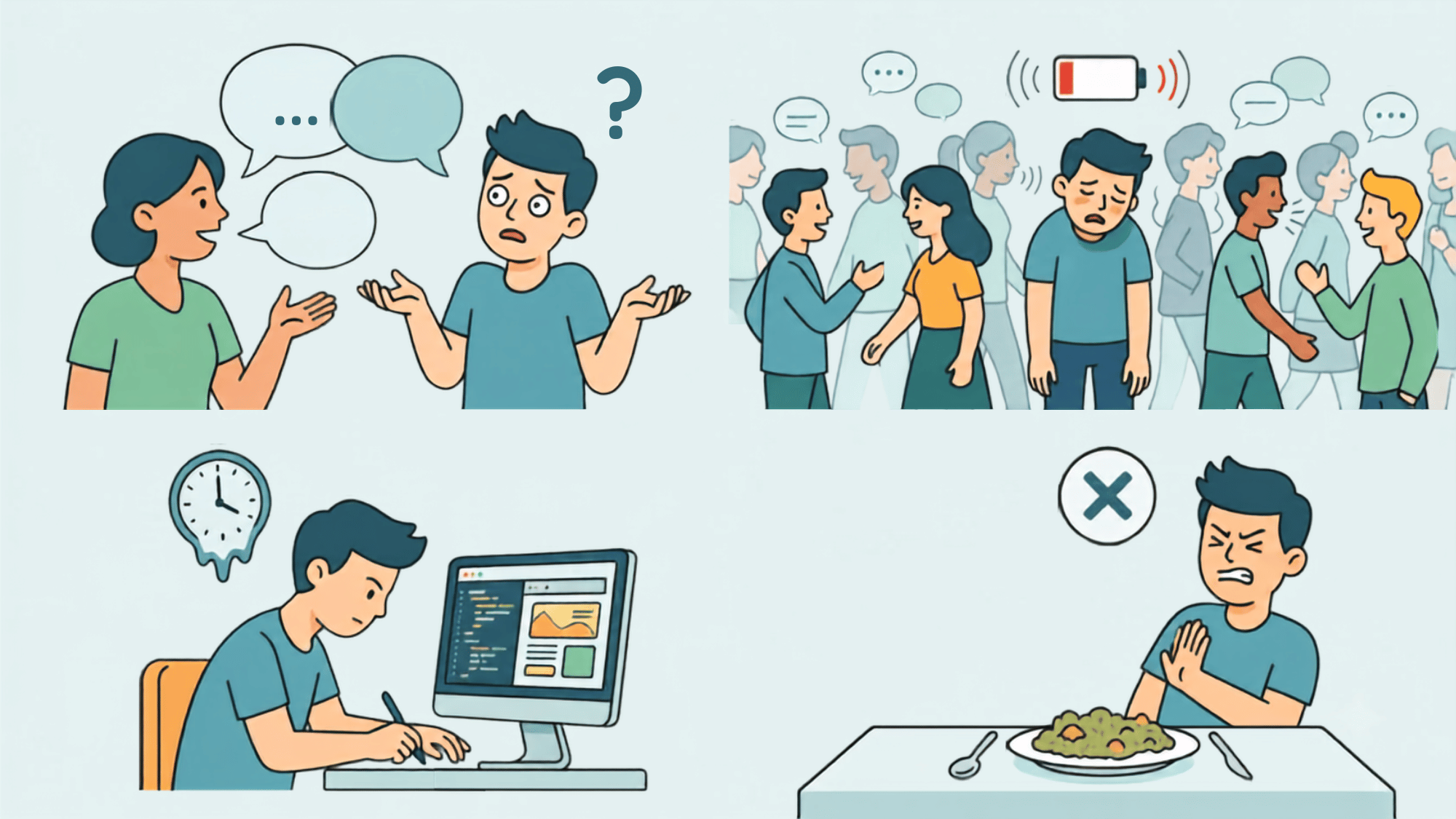
There is no fixed mix of traits seen in adults with level two autism. the diagnosis is rather grouped around two areas: social communication and repetitive behavior.
The patterns mentioned below are what other clinicians and I have noticed, though not always together.
1. Social Communication Differences
Holding a conversation becomes hard with people with level two autism.
Starting a conversation or keeping it going takes effort, as they usually miss facial cues; their rhythm might be off.
They also have a hard time understanding jokes or sarcasm, and they usually reply to a question with an on-point answer instead of adding to it, a pattern that overlaps closely with social communication disorder.
2. Social Interaction Struggles
These people do understand friendship but not in the same way as a person without autism. For them, unspoken social rules are hard to pick up.
These people rarely, or even never, initiate interactions. They may not understand the rules of a friendship, like comforting your friend, if they are not explained properly.
Their social battery also drains out fast, which means they need time to recover after an event or a social gathering.
3. Repetitive Behaviors and Fixed Interests
Repetition is a big thing that brings them comfort. Repeated routines, movements, and phrases give them a predictable timeline of the day and do not overwhelm them.
Their focus also stays on specific interests for a long time, and they usually do not multitask or move between tasks well.
This kind of self-soothing repetition shows up in a related form when people with ADHD stim too, since both conditions rely on the nervous system regulating itself the same way.
4. Sensory Processing Differences
Adults with second-level autism get overwhelmed fast. Loud noises, crowds, and textures can overwhelm them quickly.
They get overstimulated by the clothes they are not used to or maybe by the texture of a certain food they have not tried before or just did not find comfortable.
Some people might even seek pressure or movement to calm down or feel a little less overstimulated, which lines up with what’s typically described as sensory-seeking behavior.
Level 2 Autism Traits That Get Mistaken for Rudeness
Due to the lack of awareness of level 2 autism, a lot of these behaviors get seen as something rude. These people are never really trying to be rude; they just are a little different than you, not broken but just different.
- Eye contact: They avoid eye contact due to sensory discomfort.
- Leaving a room: Their leaving a room does not mean they do not like you; it just means they are mentally tired now.
- Repeating phrases: They are not stalling; they are just processing your thoughts or their own.
- Directness: They answer directly and in simple language because that is how they themselves understand, too.
- Rigid rules: They need rules and boundaries, as spontaneity might feel confusing.
What Happens During Sensory Overload?

Sensory overload, like eating something with an off-texture or being forced to wear something, can push these adults past their limits.
The response usually takes one of two forms. Neither one is a choice. Both signal that the body needs a break.
| Meltdown | Shutdown |
|---|---|
| A visible and outward response | An inward and non-visible response |
| Might include crying, screaming, stimming, pacing | Might include tiredness, less or no response |
| Speaking properly may become difficult | Talking overall becomes hard or even stops |
| Needs a calm environment or place to calm down | Needs to be left alone to recover |
| May happen when emotions or sensory input become too intense | May happen when the brain feels unable to process more information |
Both responses are easier to understand once you look at them through the four functions of behavior, since a meltdown or shutdown is almost always the body trying to escape, avoid, or regulate something rather than a deliberate choice.
What Commonly Overwhelms Someone With Level 2 Autism?
Not every person gets triggered by the same things, but a few of these have been constant in my practice.
- Unplanned change.
- A sudden gathering.
- Certain food textures or strong-smelling foods.
- Not being understood at once or after multiple attempts.
- Their space getting infiltrated.
- Too many tasks at once or being told multiple things at once.
How Level 2 Autism Affects Daily Life
Level 2 autism can touch nearly every routine task, from meals to money. Adult resources through Autism Speaks point to a few areas where support tends to matter most.
They might, and usually, need help with hygiene and remembering their medicines. They might have a hard time cooking and handling sharp objects or fireworks.
At work, they need clear, step-by-step instructions, and the same goes for romantic and non-romantic relationships. They also need someone to budget for them or at atleast help them do so.
These things are often taken for granted by someone who does not have autism, but for someone with autism, these become daily difficult tasks.
Level 2 Autism Vs Other Levels
The DSM-5 splits autism into three support levels. The split is based on daily need, not one single trait. Here’s how Level 2 compares to Level 1 autism and Level 3.
| Area | Level 1 | Level 2 | Level 3 |
|---|---|---|---|
| General need | Requires minimal support | Requires substantial support | Requires very substantial support |
| Social communication | Slightly noticeable difficulty | More marked difficulty | Severe difficulty |
| Routine changes | Can cause discomfort | Causes clear distress | Causes extreme distress |
| Daily support | Usually targeted | Regular and structured | Often extensive |
| Independence | Usually high | Varies with support | Often needs ongoing help |
When to Consider a Professional Evaluation?
If these traits are starting to affect the individual’s life regularly and constantly, it’s important to reach out to a professional.
Lifelong social and communication difficulty that gets in the way of daily life is one sign worth paying attention to, along with sensory overload that frequently disrupts work or home.
Routine changes that trigger severe distress, even shutdowns, are another red flag, as are daily tasks that need more support than expected.
Getting a clearer picture through a professional can also open the door to accommodations that make everyday life easier.
Conclusion
Level 2 autism in adults describes a support need, not a set-in-stone rule about what these adults can do. In my career, I have seen many people build successful careers, relationships, and lives despite the issues they face.
About 2.21% of U.S. adults live with autism spectrum disorder, per CDC data; many never get a name for their traits until later in life.
If any of the things listed above feel familiar to you or someone close to you, book an appointment, keeping in mind that this is not the final word but a starting point.
Frequently Asked Questions
What Medicines are Recommended to Autistic People?
Only two drugs are FDA-approved for anything autism-related: risperidone and aripiprazole. And both target irritability, not core traits. Both should be prescribed only by a professional.
Does Level 2 Autism get Worse with Age?
No, autism does not progress with age but may improve slightly when the support is provided and with proper treatment.
Can You Cure Autism?
Autism is a neurodivergent disorder, not a mental or physical illness, meaning it can not be cured. It is how a brain works.