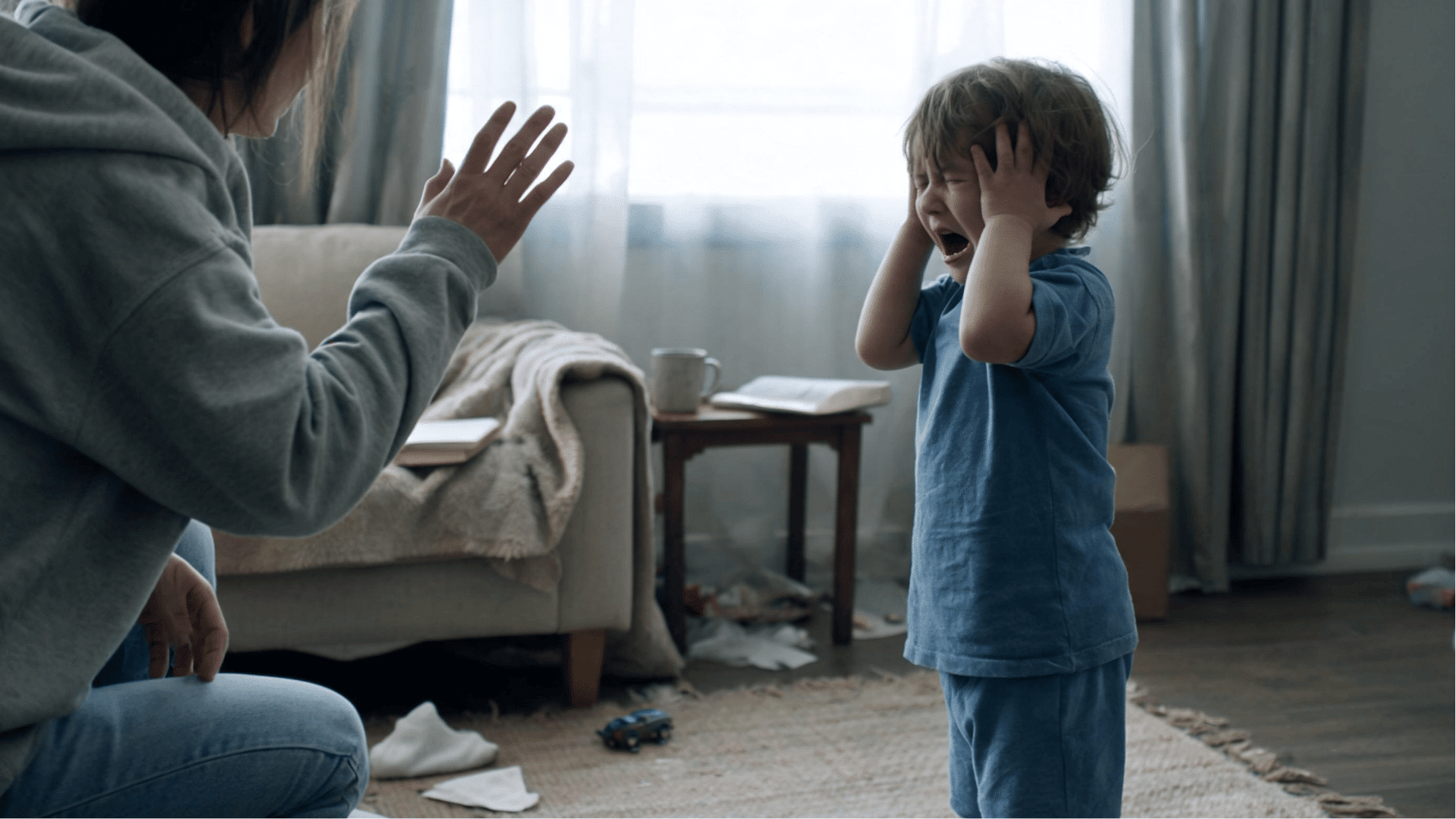
I’ve learned that behavior is never random; it’s communication. Every tantrum or outburst is a child’s way of telling you something.
That’s where the 4 functions of behavior come in, a simple ABA framework that helps explain the “why” behind what you’re seeing.
Once you understand these four functions, responding to your child’s behavior becomes much less confusing and much more effective. Let’s break them down.
What is a “Function” of Behavior?
A function is the purpose a behavior serves for the child, the “why” sitting underneath the action seen on the surface.
Behavior is a form of communication, a way to meet a need when words fall short, so a child who cannot say “this is too hard” may show it through a meltdown instead.
The same action can mean very different things from one child to the next, which is why two children who both yell may need two completely different responses.
Research published through the NIH shows that interventions built on a behavior’s identified function are more effective than those that ignore it.
The 4 Functions of Behavior
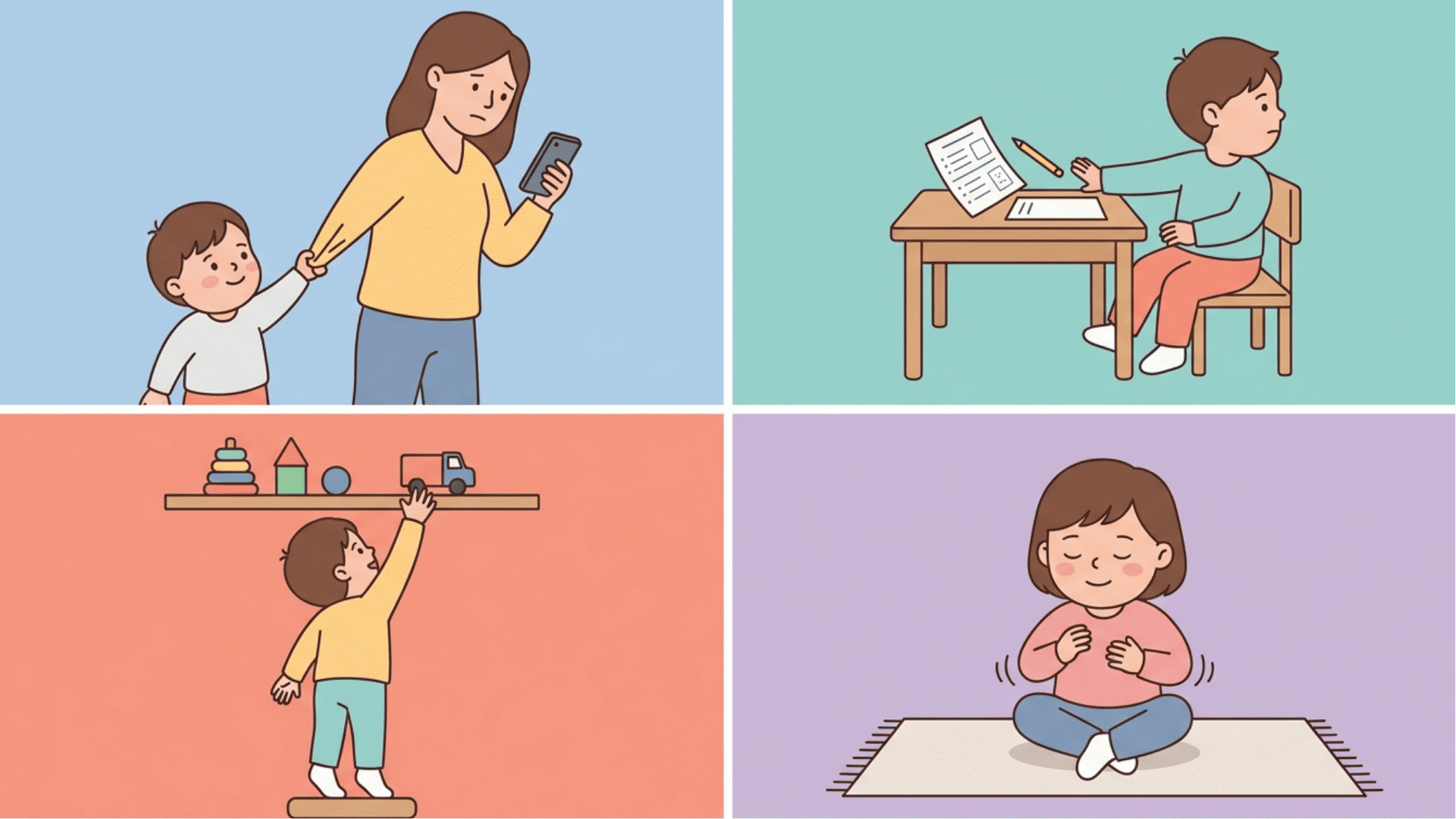
Behavior analysts sort most actions into four reasons, often remembered as “S.E.A.T.” Sensory, Escape, Attention, and Tangible, with each one pointing to a different need.
1. Attention
Some behaviors happen because the child wants a reaction from the people around them, and that reaction can be a smile, a scolding, or even just eye contact.
Attention works as a reward, positive or negative, so a child who is ignored may act out, because being told off still counts as being noticed.
Examples of Attention-Seeking Behavior:
- A child whines or calls out until a parent looks up from their phone
- A student makes silly noises in class to get classmates laughing
- A toddler tugs at a parent’s sleeve during a phone call
2. Escape / Avoidance
Other behaviors are a way for the child to get out of something they find hard or unpleasant, such as homework, a chore, or a noisy, crowded room.
When the behavior makes the demand go away, the child learns it works, so the next time the same task appears, the same behavior is likely to return.
Examples of Escape Behavior:
- A child throws a worksheet to avoid finishing homework
- A student asks to use the bathroom every time a test starts
- A child has a meltdown when asked to clean up their toys
3. Tangible (Access)
Some behaviors are aimed at obtaining a specific item or activity, such as a favorite toy, a snack, a tablet, or extra playtime.
If a tantrum ends with the child holding the wanted item, the lesson sticks, and the behavior becomes the fastest route to the thing they were after.
Examples of Tangible Behavior:
- A child cries at the store until a parent buys the toy
- A toddler grabs a sibling’s snack off the table
- A child screams when a tablet is taken away at bedtime
4. Sensory/Automatic
A few behaviors feel good on their own and need no audience at all, with rocking, humming, and hand-flapping often falling into this group.
These actions are driven by an internal feeling rather than by other people, so, because the reward comes from within, they can occur even when the child is alone.
Examples of Sensory Behavior:
- A child rocks back and forth while sitting quietly
- A child hums or makes repeated sounds with no one nearby
- A child flaps their hands when excited or focused
How Does ABA Explain and Handle Behavior?
Applied Behavior Analysis (ABA) is an evidence-based approach to understanding behavior, built on the idea that behavior is learned and shaped by what happens before and after it.
It moves in two steps, first finding what keeps a behavior going, then using that same information to shape a better response.
Using ABA to Identify What Is Maintaining a Behavior
ABA identifies what maintains a child’s behavior by tracking before-and-after patterns. The consequence is the clue, since it shows what the child gains each time, and the last column names the function keeping the behavior going.
| Antecedent (before) | Behavior | Consequence (After) | Function (Maintained by) |
|---|---|---|---|
| Parent says, “Time for homework” | The child screams and throws the pencil | Homework is delayed for ten minutes | Escape |
| Sibling picks up a shared toy | The child grabs it back and pushes | The child ends up holding the toy | Tangible |
| The teacher’s attention is on another student | The child calls out loudly in class | The teacher turns and responds to the child | Attention |
| The room is quiet with nothing to do | The child rocks and hums to themselves | The rocking continues and feels soothing | Sensory |
| Parent ends screen time at bedtime | The child cries and refuses to hand over the tablet | The parent allows five more minutes | Tangible |
Using ABA to Respond to the Behavior
Once the function is known, the response is to meet that same need more safely and teach the child a skill that replaces the behavior, with a different approach for each function.
| Function | What to Avoid | What to Do Instead |
|---|---|---|
| Attention | Scolding or lecturing, since it still draws attention | Give attention during calm moments and teach a clear way to ask for it |
| Escape | Canceling the task, which lets the behavior get its way | Offer short, planned breaks and teach a “break, please” signal |
| Tangible | Handing over the item to stop the fuss | Teach asking nicely and use a “first this, then that” rule |
| Sensory | Blocking the behavior with nothing to replace it | Offer a safe substitute that gives the same input |
For a quick review, here is a set of printable flashcards (PDF) that pairs each function with instructions for identifying and responding to it.
How to Stop a Challenging Behavior?
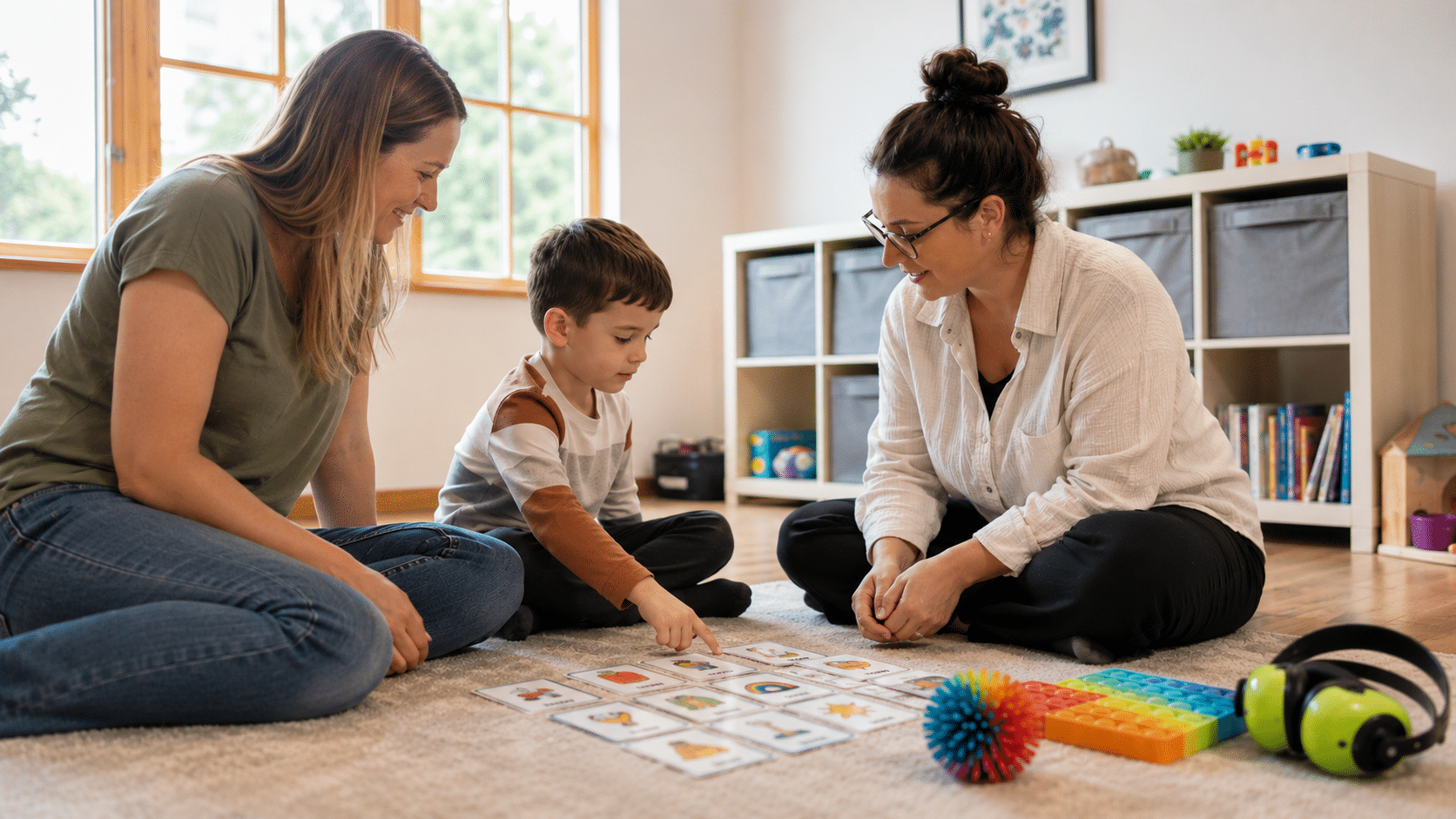
A behavior cannot simply be switched off, but it can be reduced and gradually stopped by changing the conditions around it and teaching a better skill in its place.
A challenging behavior often signals an unmet need, so the goal is to build skills and support rather than to change the child.
- Set up personalized daily activities that keep the child engaged
- Adjust the environment and routine to remove common triggers
- Teach an alternative behavior that meets the same need, such as clearer communication or emotional regulation
- Use calming and redirection strategies at the first signs of distress
- Include the child and their family or carers when planning any support
When to Seek Professional Help?
Many everyday behaviors improve with calm, consistent responses at home, but some need a trained professional.
A pediatrician is worth contacting if the child’s behavior is dangerous, very frequent, or not improving despite steady effort, or if it is getting in the way of learning, sleep, or safety.
An ABA-trained professional can identify what is maintaining achild’ss behavior and develop a plan suited to that child, and early, individualized support tends to yield the strongest results.
The Bottom Line
Behavior is rarely random, and each action points back to one of four underlying needs: attention, escape, a wanted item, or sensory input.
The path forward is steady: watch closely what comes before and after the behavior, name the function driving it, then meet that same need more safely while teaching a new skill to replace it.
Read the pattern, not just the outburst, and behavior stops being a mystery and starts being a message you can answer.