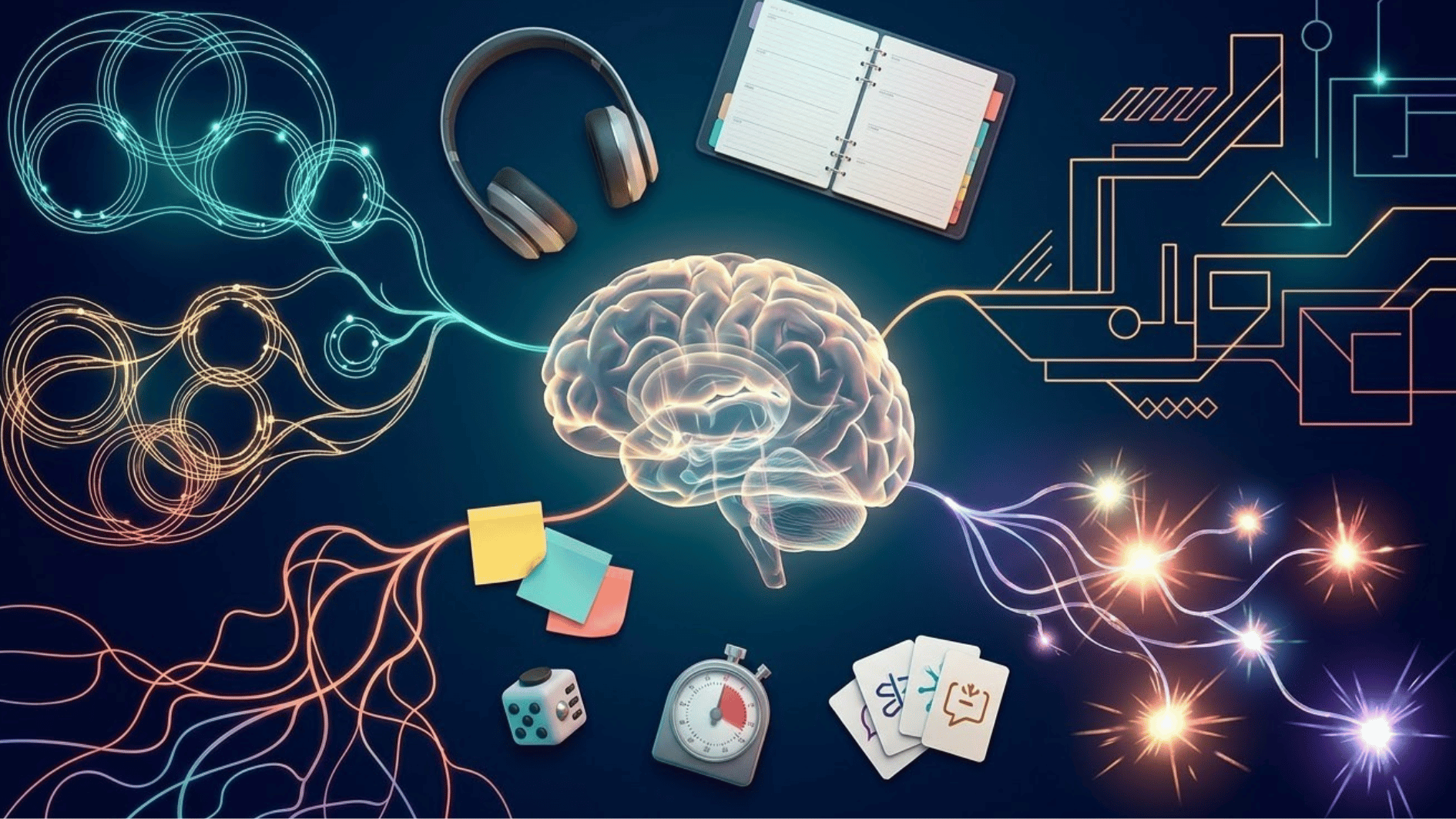

Many people do not realize how differently stimming behaviors can appear from one person to another. They may look like small habits on the outside, but often serve a deeper purpose inside the nervous system.
In my clinical and research experience, I have seen this misunderstanding leave families, adults, and even professionals unsure of what they are actually noticing.
This blog answers a direct question and explains how these patterns can connect with ADHD, anxiety, trauma and ADHD, sensory differences, and everyday self-regulation.
Disclaimer: This blog is for educational purposes only and is not a substitute for professional medical advice, diagnosis, or treatment.
Do People With ADHD Stim?Yes. People with ADHD can stim, and this behavior is more common across neurodivergent populations than in the general public. For someone with ADHD, this might look like tapping, pacing, fidgeting, humming, rocking, skin picking, or repeatedly clicking a pen. These actions are not random. They often connect to the same functions of behavior that shape any repeated action, helping the brain stay alert, release restlessness, manage overwhelm, or create a sense of control in demanding environments. With roughly 11.4% of U.S. children carrying an ADHD diagnosis, ADHD-related stimming is not a fringe experience. It is a common, often misunderstood part of how many people self-regulate, and a pattern that can persist well into untreated ADHD in adults when it goes unrecognized. |
Types of Stimming in ADHD
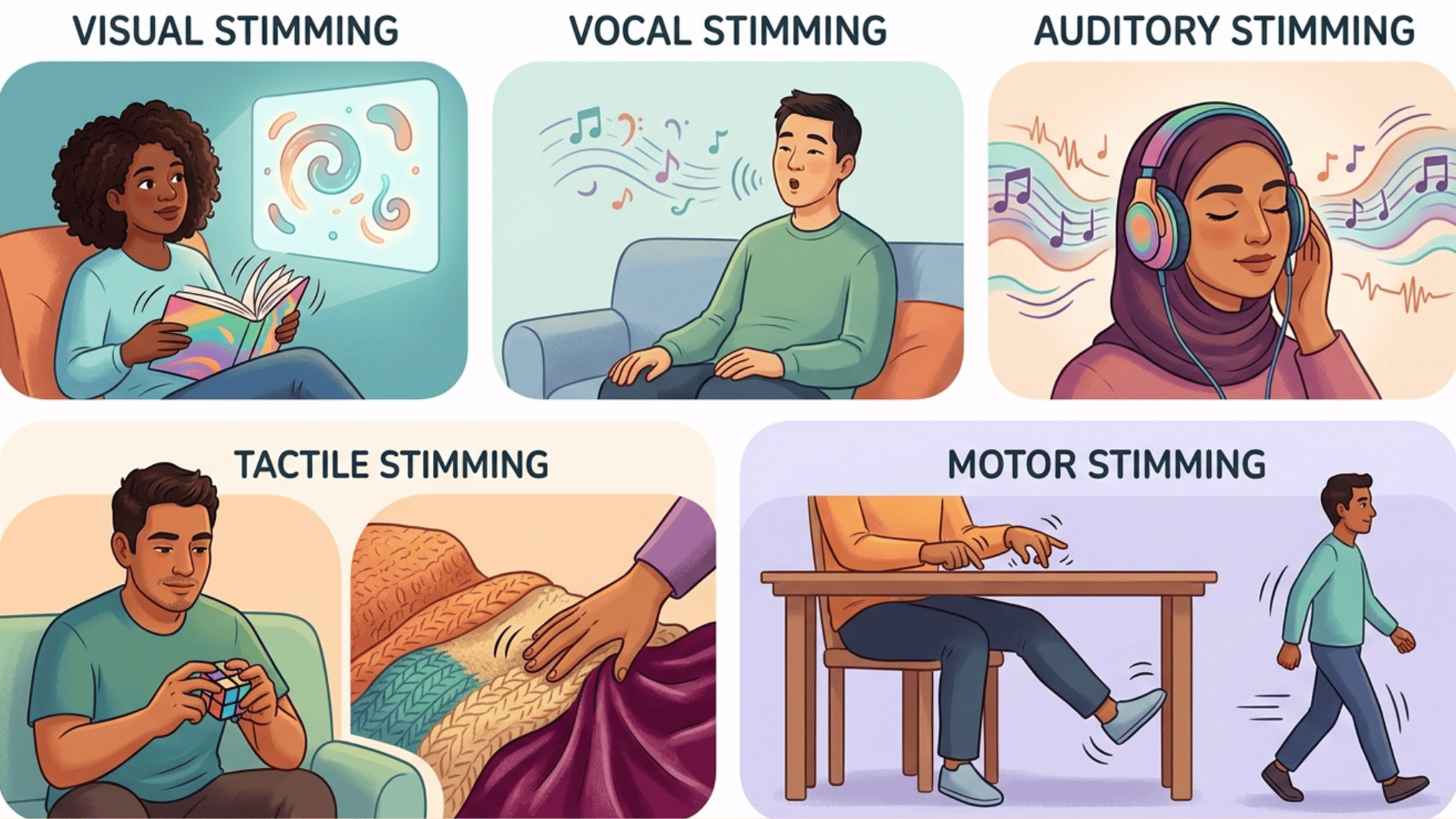
ADHD stimming can involve different senses. Recognizing these forms can make it easier to identify stimming in yourself or a loved one.
1. Visual Stimming
Visual stimming involves repeated actions that give the brain something predictable to focus on.
In ADHD, this may look like flipping pages, watching moving objects, arranging items, or repeatedly blinking. It can happen when someone is bored, distracted, overwhelmed, or trying to stay mentally engaged.
2. Verbal or Vocal Stimming
Verbal or vocal stimming includes repeated sounds, words, or noises that help with focus or emotional release.
Examples include humming, throat-clearing, whistling, repeating phrases, or making small sounds without realizing it. For some people with ADHD, these sounds can make waiting, concentrating, or managing restlessness easier.
3. Auditory Stimming
Auditory stimming involves using sound for comfort, stimulation, or focus. This may include replaying the same song, tapping to a rhythm, mimicking surrounding sounds, or repeatedly seeking certain sounds.
Many people with ADHD use sound to block distractions, create structure, or keep their minds alert.
4. Tactile Stimming
Tactile stimming uses touch, texture, or physical sensation to regulate attention or emotion. Common examples include hair-twirling, nail-biting, finger-rubbing, picking at fabric, or fidgeting with clothing.
These habits may become more noticeable during stress, deep focus, boredom, or anxiety.
5. Motor Stimming
Motor stimming involves repeated body movements that help release physical restlessness. In ADHD, this may look like leg-bouncing, pacing, rocking, finger drumming, chair swaying, or tapping objects.
It is often a way for the body to stay active while the mind tries to focus or calm down.
Stimming ADHD vs Autism: Know the Difference
Because stimming appears in both conditions, the two are easy to conflate. Drawing on a meta-analysis of 63 studies, researchers found that 38.5% of people with autism also meet the criteria for ADHD, a crossover found further in what is AuDHD.
| Feature | ADHD | Autism |
|---|---|---|
| Primary driver | Often linked to seeking stimulation, improving focus, or releasing restlessness | Often linked to regulating sensory overload, distress, or intense internal states |
| Frequency | may change depending on boredom, stress, or focus demands | Often more frequent and may appear across many daily situations |
| Intensity | Usually less elaborate and may look like small fidgets, tapping, or movement | Can be more intense, patterned, or repetitive depending on sensory needs |
| Visibility | Often subtle and easily mistaken for habits, nervousness, or impatience | Often more noticeable, especially when movements or sounds are repeated clearly |
| Diagnostic role | An associated trait that may appear in ADHD but is not required for diagnosis | A core feature commonly considered during autism assessment |
How Common Is ADHD Stimming, Really?

Stimming questions usually surface alongside a broader curiosity about how widespread ADHD is. The numbers anchor the conversation in scale.
According to the CDC, boys (15%) were more likely to be diagnosed with ADHD than girls (8%), and in 2022, an additional 1 million U.S. children aged 3-17 had ever received an ADHD diagnosis compared to 2016.
Underdiagnosis remains significant, particularly among women with high-functioning ADHD and adults.
How to Manage ADHD Stimming?
Not every stim needs to be stopped. Some stims help with focus, calm, or emotional regulation, as stimming is not always a problem.
-
Let Helpful Stims Stay: If a stim supports focus, calm, or comfort without harm, it may not need intervention.
-
Replace Harmful Stims Gently: Try a textured fidget, stress ball, chewable jewelry, or another safe substitute.
-
Plan Movement Breaks: Short walks, stretching, or pacing breaks can meet the brain’s need for stimulation.
-
Get Professional Support: A licensed clinician can help if stimming causes injury, distress, or major disruption.
-
Avoid Shame or Punishment:Suppressing stims harshly can increase stress, especially given how closely shame ties into rejection-sensitive dysphoria for many people with ADHD.
What People are Saying on Reddit
The examples below are drawn from personal stories shared in the r/ADHD community and show how people describe their own stimming and where they see it differing from autism.
|
Comparing Everyday Stims A Reddit user in the r/ADHD community shared that they shake their leg while concentrating, tap their nails, grind their teeth, and move their jaw to a beat, and that they make verbal noises they try to suppress around others. Commenters added toe-wiggling and running sock seams under their fingernails. The poster noted they assumed all of it was normal until their diagnosis. |
|
Recognizing Oral Stims Several users in this r/ADHD thread described biting the insides of their cheeks when something is extremely cute or when frustrated. One person shared that compulsive cheek- and lip-chewing left them with sores; their dentist called it harmless, though they later clarified they could not personally confirm that, a reminder that persistent oral stims sometimes warrant professional input. |
|
Naming Stimming for What It Is A Reddit user argued that what is often labeled “fidgeting” in ADHD is really stimming. They observed that autistic stimming tends toward one consistent action, while ADHD stimming feels more occasional and varied, a lived-experience read that lines up closely with the comparison earlier in this guide. |
The Bottom Line
Stimming is not a flaw to be erased or a behavior that belongs to a single diagnosis. In ADHD, the brain often tries to stay alert, organized, and regulated in real time.
The key is not to shame the stim, but to understand its purpose. If it helps someone focus, calm down, or move through the day without harm, it may simply be part of their self-regulation toolkit.
If it causes injury, distress, or disruption, support should focus on safer alternatives rather than forced suppression.
Frequently Asked Questions
Is ADHD Stimming a Problem?
Not usually. ADHD stimming is not inherently harmful. In many cases, it helps a person soothe themselves, stay focused, or release excess energy.
What are the Triggers that Make ADHD Worse?
Insufficient sleep, high stress, an unhealthy diet (including too much sugar/caffeine), lack of physical activity, overstimulation, unstructured or chaotic routines, and untreated co-occurring conditions like anxiety or depression could be the triggers.
What is the ADHD Walk?
An informal term for a restless, fast-paced, or aimless wandering/pacing pattern, often driven by the need to move, burn excess energy, or think.