

Have you ever felt like your brain is pulling you in two different directions at once? One part of you wants routines, quiet spaces & things to stay the same.
But another part feels restless, full of energy & ready to jump into something new. It’s like two different people live inside your head & they don’t always agree.
If this sounds like you, you might be dealing with something called AuDHD.
In this blog, you’ll learn about AuDHD symptoms, causes, diagnosis & simple ways to manage daily life.
What is AuDHD?AuDHD means someone has both Autism Spectrum Disorder (ASD) and Attention-Deficit/Hyperactivity Disorder (ADHD). AuDHD simply describes someone who meets the criteria for both, and since ADHD itself isn’t one-size-fits-all, it helps to first understand the different types of ADHD that can show up alongside autism. The two conditions can pull in opposite directions. Autism often brings a need for routine. ADHD often brings restlessness and a pull toward new things. The traits can also mask each other, which is why AuDHD is often missed at first. The term itself is fairly new. More adults started using it once they realized one diagnosis didn’t explain everything they felt. |
Some Symptoms of AuDHD You Need to Know
AuDHD symptoms show up as a mix of autism traits and ADHD traits, often working against each other in the same person. Here are the symptoms my patients report most.
- Emotional Intensity: Feelings can hit hard and fast, and calming down after taking longer than usual.
- Social Exhaustion: May want connection but feel drained after socializing, even with people they like.
- Rigid Thinking with Impulsive Action: May need things done a specific way, yet blurt out decisions without planning first.
- Sleep Issues: Racing thoughts or sensory discomfort can make it hard to fall or stay asleep.
- Meltdowns or Shutdowns: Overwhelm can build up and come out as a meltdown or as going quiet and withdrawing.
- Time Blindness: Trouble sensing how much time has passed or how long a task will take.
What’s Behind AuDHD: The Real Causes
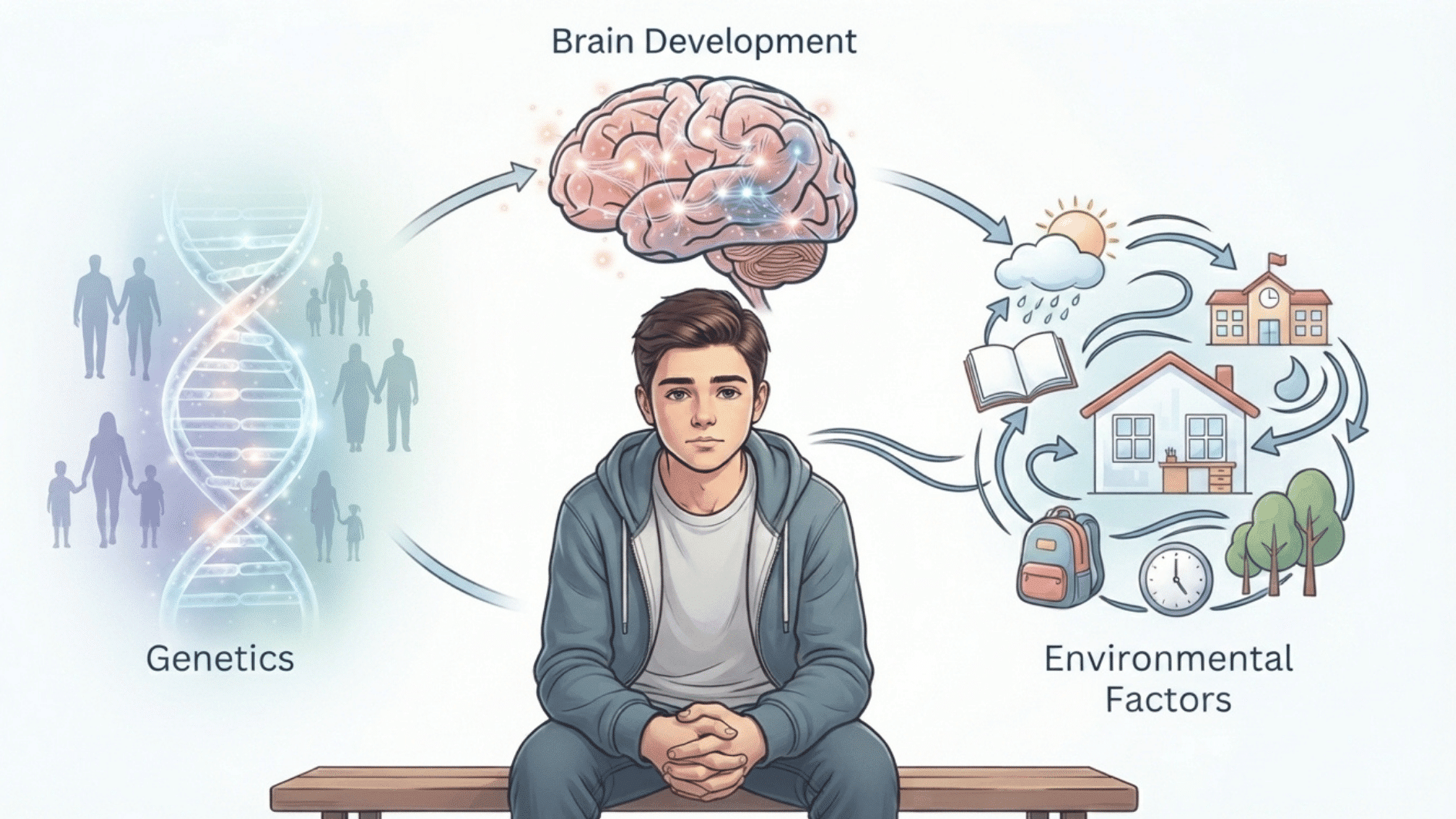
No single cause explains AuDHD. Research points to a mix of genetics, brain wiring, and outside factors that shape how strong the traits become.
1. Genetics Carries the Most Weight
Genes are the strongest known factor behind AuDHD. Autism and ADHD both tend to run in families, and twin studies show high heritability for each condition on its own.
Genome-wide studies have found shared genetic risk variants between autism and ADHD, along with other neurodevelopmental conditions, according to research published on the NIH’s National Library of Medicine
This shared genetic ground is a big reason the two conditions show up together as often as they do.
2. The Brain Develops on a Different Path
AuDHD is a neurodevelopmental condition, meaning the brain forms and wires itself differently starting in early childhood, not something that appears later in life.
This different wiring affects attention span, impulse control, sensory processing, and social communication, the exact areas where autism and ADHD traits overlap.
3. Environment Shapes How Traits Show Up
Genetics sets the baseline, but environment can turn traits up or down.
Prenatal factors, early childhood stress, and major life changes can all make autism or ADHD traits more noticeable.
This doesn’t mean environment causes AuDHD on its own; it means genes load the gun, and environment can pull the trigger on how visible the traits become.
How Is AuDHD Different from ADHD and Autism?
This simple comparison helps you understand the main differences between AuDHD, ADHD, and Autism.
| Feature | AuDHD | ADHD | Autism (ASD) |
|---|---|---|---|
| Attention | May switch between hyperfocus and distractibility | Easily distracted or shifts attention | May focus deeply on specific interests |
| Routines | May want routines but find them difficult to follow | Often struggles to maintain routines | Usually prefers predictable routines |
| Social Communication | Can experience traits from both conditions | May interrupt or miss social cues due to impulsivity | Differences in communication and social interaction |
| Sensory Processing | Sensory experiences may be more complex | Sensory issues can occur, but are less central | Sensory sensitivities are common |
| Diagnosis | Meets criteria for both ASD and ADHD | DSM-5 criteria for ADHD | DSM-5 criteria for ASD |
How Is AuDHD Diagnosed?
AuDHD isn’t diagnosed as a single condition. Instead, clinicians evaluate a person for autism and ADHD separately, using established diagnostic guidelines.
- DSM-5 Evaluation: Clinicians use the DSM-5, a guide for diagnosing mental health conditions. They compare a person’s symptoms with the official criteria for autism and ADHD.
- Detailed Clinical Evaluation: The clinician asks about symptoms, childhood development, daily routines, school & sensory experiences.
- Standardized Assessments: Screening questionnaires, rating scales, and other assessment tools help measure autism and ADHD traits. These tools support the diagnosis but are not used on their own.
- Information From Different Sources: Clinicians may gather information from parents, teachers, caregivers, partners, and medical or school records.
- Ruling Out Other Conditions: The evaluation also checks for conditions such as anxiety, depression, learning disabilities, or sleep disorders. This helps ensure the diagnosis is accurate.
- Final Diagnosis and Next Steps: If a person meets the criteria for both autism and ADHD, the clinician explains the results and recommends the right support.
What Other Conditions Can Occur with AuDHD?
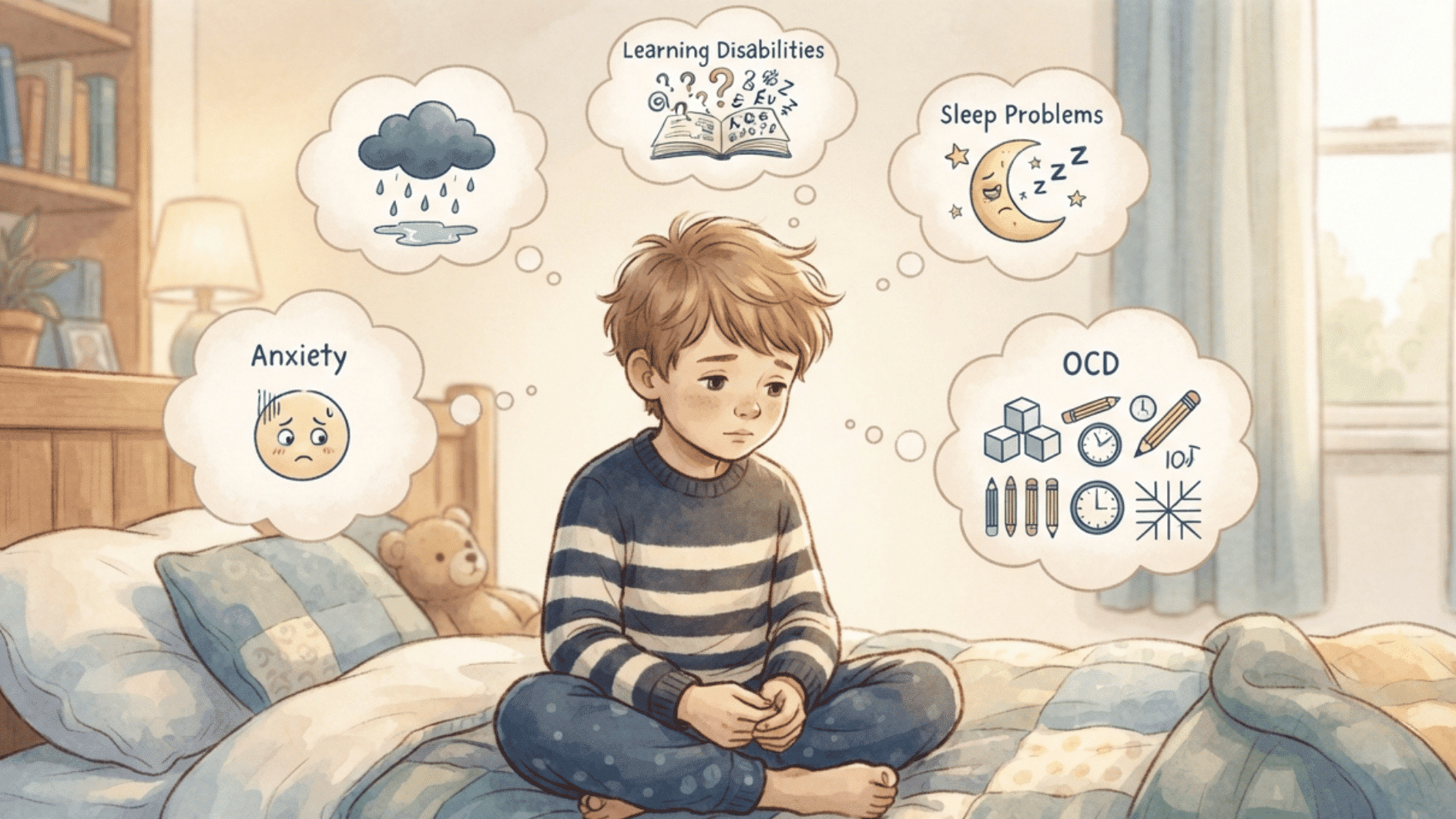
Some people with AuDHD may also have other health or mental health conditions. Having one condition does not mean a person will have another.
These can include anxiety, which causes constant worry or fear, depression, which can lead to sadness and low energy, and learning disabilities such as dyslexia or dyscalculia.
The overlap between mood symptoms and neurodevelopmental conditions is part of a bigger conversation about depression and neurodivergence that researchers are still working through.
Some people also have sleep problems because of racing thoughts or sensory sensitivities.
Others may develop obsessive-compulsive disorder (OCD) or tic disorders, which involve repeated thoughts, behaviors, movements, or sounds.
Identifying these conditions early can help people get the right support and strategies to improve their daily life and overall well-being.
Treatment Options for AuDHD
There is no single treatment for AuDHD. Since it includes both autism and ADHD, treatment focuses on each person’s needs. A care plan may include therapy, medication, and daily support.
- Non-Stimulant Medications: Medications such as atomoxetine or viloxazine may help improve focus and attention. They may also cause fewer side effects for some people.
- Stimulant Medications: Medicines such as Adderall or Ritalin can help manage ADHD symptoms.
- Behavioral Therapy: Cognitive Behavioral Therapy (CBT) can help with emotions, stress, organization, and coping with sensory challenges.
- Occupational Therapy: Occupational therapists teach daily living skills, support sensory needs, & help create routines that work better.
- Education and Accommodations: Learning about AuDHD can help people understand their needs and ask for helpful support at school, work, or home.
Ways to Manage AuDHD in Daily Life
Managing AuDHD means finding a balance between the need for routine and the need for variety. These strategies can help make daily life easier.
1. Create Flexible Routines
A daily routine can help you feel more organized and less overwhelmed. Instead of following a strict schedule, make a routine that allows for small changes.
Staying consistent with routines doesn’t mean being rigid; it just means building habits that can flex when life doesn’t go as planned.
This can reduce stress when plans change unexpectedly while still giving you the structure you need.
2. Use Tools to Stay Organized
AuDHD can make it hard to remember tasks or manage time. Use phone alarms, calendars, visual timers, sticky notes, or a whiteboard to keep track of your day.
These tools can make it easier to stay on schedule and finish important tasks.
3. Build Around Your Interests
Focus is often easier when you enjoy what you are doing. Try to connect school, work, or daily tasks to your hobbies or favorite topics whenever possible.
This can help you stay motivated and complete tasks without feeling as frustrated.
4. Manage Your Sensory Needs
Bright lights, loud noises, and busy places can feel overwhelming.
Tools like noise-canceling headphones, fidget toys, or a quiet space can help you feel calmer.
5. Make Task Changes Easier
Switching between tasks can be hard. A timer, a five-minute warning, or a simple routine can make changes easier.
Mental Health Support and Resources for AuDHD
Managing AuDHD isn’t just about symptoms. The emotional side and finding the right people to lean on matter just as much.
-
Processing the Diagnosis:Feelings of relief, grief, or confusion are common after an AuDHD diagnosis. Give yourself time to adjust rather than expecting instant clarity.
-
Finding a Therapist:A mental health professional experienced with AuDHD can help you work through anxiety, depression, or burnout. Psychology Today’s provider directory can help you find one near you, and knowing what to discuss in therapy beforehand can make the first session easier.
-
Deciding What to Share:Choosing whether to tell school, work, or family about an AuDHD diagnosis is personal. Thinking through what support would actually help can make that decision easier.
-
Connecting with AuDHD Communities:Dueling Minds is a nonprofit dedicated to AuDHD peer support, community building, and resources for thriving in a neurodiverse society.
-
AuDHD-Specific Guidance:AuDHD Connections, created by an AuDHD psychologist and researcher, offers articles, courses, and community discussions focused specifically on the AuDHD experience.
The Bottom Line
Your brain doesn’t have to make sense to everyone else; it just has to work for you.
AuDHD can feel like a tug-of-war between wanting routine and wanting change, but with the right support, that pull can become something you work with rather than against.
If any of this sounds like you, talking to a professional who understands both autism and ADHD is a good next step.
Frequently Asked Questions
Can AuDHD Be Misdiagnosed as Just Autism or Just ADHD?
Yes. Because traits from one condition can mask or overlap with the other, clinicians sometimes diagnose only one condition and miss the second, especially if the evaluation isn’t thorough.
Can Adults Be Diagnosed with AuDHD for The First Time?
Yes. Many adults are diagnosed with one condition, often ADHD, in childhood and only identify the second, often autism, later in life after a fuller evaluation.
Does Stress Make AuDHD Traits Worse?
It can. Stress and major life changes may intensify traits like sensory sensitivity, forgetfulness, or difficulty switching tasks, even though the underlying condition itself hasn’t changed.