
Ever replayed a conversation at 2 a.m., asking yourself if you said the wrong thing? Or held back an idea because you worried how it would land?
Most of us have been there more times than we’d like to admit. But there’s a line between caring and being controlled, and crossing it means other people’s opinions start making your decisions for you.
Learning how to not care what people think starts with catching that moment before it takes over.
In this blog, I’ll cover why this pattern forms, how to loosen its grip, and what’s actually helped people move past it.
Why It’s So Hard to Stop Caring What People Think
Caring what others think isn’t a flaw. It’s biology built for a time when group acceptance meant safety and rejection meant real risk.
Caring means valuing others’ feelings. Approval-seeking means changing yourself to avoid disappointing them: agreeing when you don’t, staying quiet when it matters.
This is often at the root of people-pleasing patterns that quietly take over decisions that should be yours.
I’ve seen people miss this shift until they feel drained or disconnected from their own choices. By then, the pattern is already running the show.
How to Not Care What People Think?
If you want to know how to not care what people think, the answer isn’t to feel nothing. It’s about building a few small habits that change where your focus goes.
1. Check the Evidence First
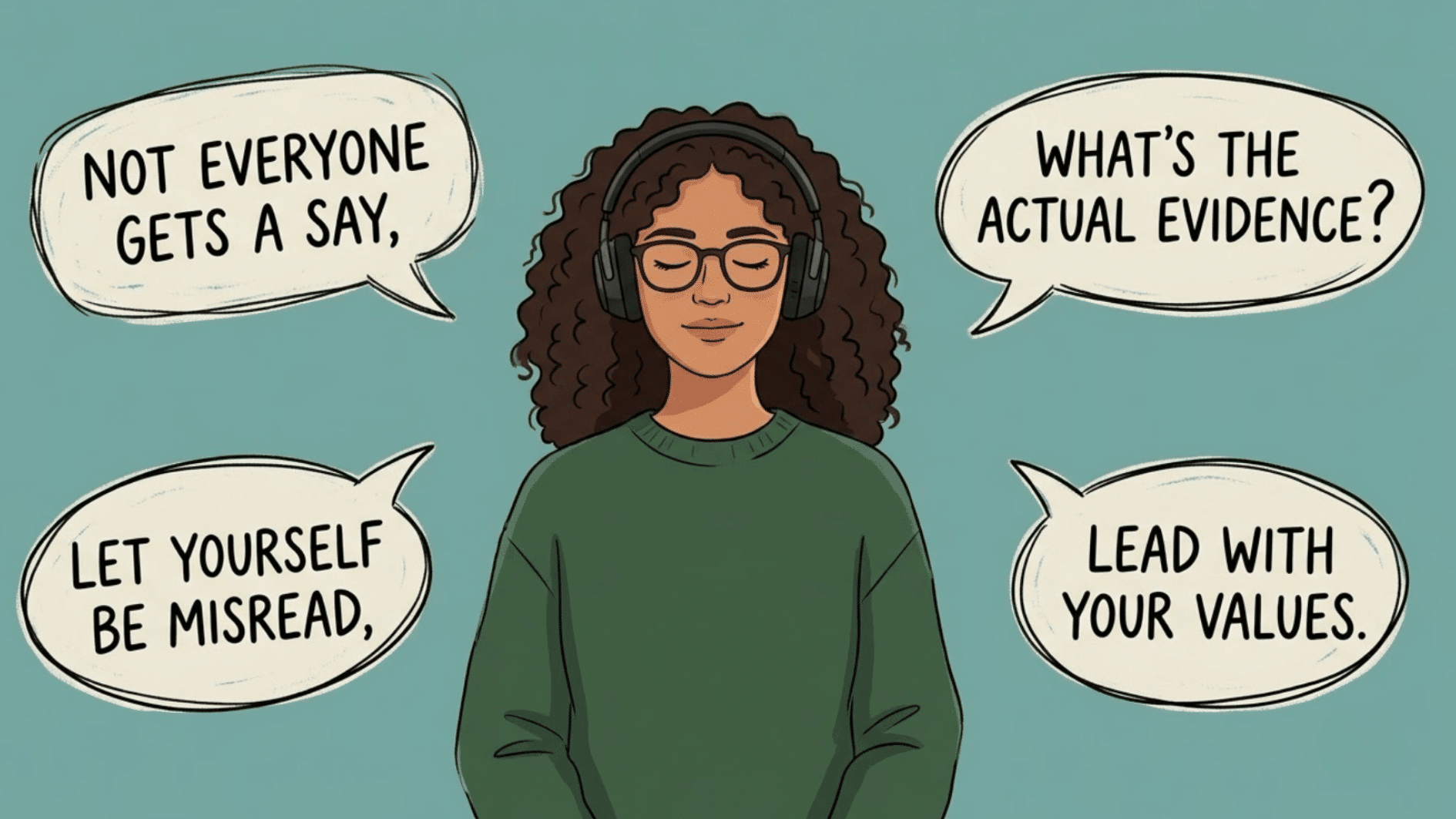
Before you react to judgment you’re imagining, stop and ask: what do I actually know? Most of the time, there’s no real proof. It’s just a story you built in your head from a pause, a look, or a tone you couldn’t quite read.
Spotting this gap between what you assume and what’s true can stop a spiral before it even starts.
2. Not Everyone Gets a Say
Not everyone’s opinion should count the same. Think about the few people who really know you and care about you. Their opinions matter. Everyone else’s? Not so much.
The more people you let into that circle, the more strangers end up having a say in your life, when really, they shouldn’t.
3. Lead With Your Values
Ask “what matters to me” before “what will they think.” Choices based on your own values are easier to stand by later, even if someone disagrees or expected something else from you.
This kind of clarity often comes from finding your purpose, the thing that keeps you steady when opinions pull in different directions.
Your values work like a compass. When you’re not sure what to do, they’re something steadier to check than someone else’s reaction.
4. Being Misread Is Okay
You won’t always come across the way you mean to, and that’s fine. Trying to control how every person sees you is exhausting, and it rarely works anyway.
Letting go of this doesn’t mean you stop caring how you show up. It just means one misunderstanding stops feeling like an emergency. Self-compassion makes that shift easier to hold onto.
5. Compare Less, Notice More
You’re often comparing your behind-the-scenes to someone else’s highlight reel. That’s not a fair comparison. It’s usually not even an accurate one.
Once you notice yourself doing this, the comparison starts to lose its power over you.
6. Build Trust Through Action
Self-trust grows when you follow through on your own choices, not when someone else approves of them. Every time you follow through, you prove to yourself that your judgment can be trusted.
Left unchecked, the opposite pattern can slide into self-sabotaging behavior, where doubt gets in the way of the goals you actually care about.
This is why self-trust builds slowly. It’s not one big moment. It’s many small ones where you backed your own call.
7. Remember They’re Not Watching as Closely as You Think
Most people are too busy thinking about their own lives to study yours the way you imagine.
This isn’t just something people say to make you feel better; it’s a real pattern called the spotlight effect.
It explains why the moment you keep replaying is probably one nobody else even remembers.
Practical Steps to Worry Less and Feel Calmer in The Moment
Knowing the habits above is one thing. Putting them to work in real social situations is what actually brings the worry down.
Spot Your Triggers
Notice which situations spike the worry most: big groups, new people, authority figures, being tired. Naming the pattern makes it easier to prepare for instead of being caught off guard by it.
Start Small
You don’t have to jump into the hardest situation first. A short chat with a cashier or one comment in a meeting builds the same muscle as a bigger interaction, just with less pressure.
Shift Your Focus Outward
Anxiety tends to turn attention inward, onto how you look or sound. Redirecting it toward the other person, what they’re saying, and how they’re reacting gives your mind less room to spiral.
Cut Back What Feeds It
If certain habits, like scrolling social media before an event, tend to leave you more anxious or self-conscious, notice that link and scale it back.
Track How It Actually Goes
After a situation you dreaded, jot down what really happened. Most of the time, it goes better than expected, and seeing that in writing over time makes the next one feel less heavy.
Give It Time
This isn’t a one-time fix. Confidence in social settings builds gradually, through repeated small exposures, not a single breakthrough moment. It’s part of living life fully, one small exposure at a time.
Real Experiences: What Helped People Break the Approval-Seeking Cycle
Across community discussions on platforms like Quora, a few themes come up again and again. These aren’t clinical findings, but they reflect patterns worth paying attention to.
| Most People Are Focused on Themselves A user in a Quora thread asked how to overcome social anxiety on their own after years of feeling stuck in it. One commenter responded that everyone they used to feel intimidated by was actually just as absorbed in worrying about themselves, calling it plain human nature. The people you’re most nervous around are often too caught up in their own version of this same worry to be studying yours. |
| Disappointing Someone Isn’t Failing Them A user in a Quora thread asked how to say no without feeling selfish afterward. One respondent said it’s fine to say no without guilt when you need to, since it doesn’t matter if it displeases someone; being kind to yourself matters too. |
| Confidence Follows the Step, Not the Other Way Around A user in a Quora thread asked what mindset helps someone push through a fear of taking risks. One response suggested the goal isn’t to conquer the fear but to release it, moving forward in small steps instead of waiting to feel ready. |
|
Your Own Judgment Can Be the Validation |
Signs You’re Letting Go of Others’ Opinions
Progress here rarely feels like a breakthrough. It shows up as an absence more than an event, one less thing weighing on you, one fewer second-guess before you speak.
- You Speak Before You Overthink: A comment slips out before you’ve rehearsed it ten times in your head.
- “No” Comes Easier: Less guilt, less over-explaining, less need to soften it with an excuse.
- Judgment Stings Less Long: It still lands, but it passes in minutes instead of running your whole day.
- You Catch Yourself Sooner: Sometimes before it even fully starts.
- You Decide Before Checking: The choice feels settled before you’ve clocked how anyone else will react to it.
- Conversations Stop Replaying: What used to linger for days now fades by the next morning.
The Bottom Line
Caring what others think was never the problem. Letting it control your choices is.
Change here isn’t one switch. It’s small, repeated moments: questioning an assumption, choosing whose voice deserves space in your head, letting values lead instead of fear.
If you’re learning how to stop caring about someone whose opinion still feels hard to shake, that just means the relationship carries more weight, and it deserves patience, not pressure.
If this has been affecting your peace of mind, a therapist can help. There’s no shame in asking for support. Trusting your own judgment is a skill. It grows with practice.
Frequently Asked Questions
Is It Normal to Care What People Think?
Yes. It’s a natural part of being social. It becomes a concern only when it starts controlling your choices.
Why Do I Care so Much About One Person’s Opinion?
Usually because of closeness, history, or the authority that person holds in your life. That doesn’t mean their opinion should decide your worth.
Can Social Anxiety Make Me Care More About What People Think?
Yes. Social anxiety can heighten fear of judgment and make everyday interactions feel riskier than they are. If this feels overwhelming, speaking with a mental health professional can help.