
Wanting to help others is a wonderful quality. Caring, dependability, and kindness are strengths that can build meaningful relationships and create trust.
The problem begins when saying yes to everyone else means saying no to yourself, and learning how to stop being a people pleaser starts with recognizing those patterns and setting healthier boundaries.
In this blog, I’ll explain why people-pleasing develops, how it affects your well-being, and practical steps that can help you care for others without losing yourself in the process.
What is People Pleasing Behavior?
People-pleasing is the habit of putting someone else’s comfort, happiness, or expectations ahead of your own so consistently that your own needs, limits, and feelings begin to disappear.
People-pleasing often looks like kindness from the outside, which is why many people never question it. Friends may describe you as generous, reliable, or easygoing.
Common Signs of People Pleasing:
- Saying yes when you want to say no
- Apologizing even when you’ve done nothing wrong
- Avoiding conflict at almost any cost
- Feeling responsible for other people’s emotions
- Needing approval before feeling confident in your choices
- Feeling resentful after giving more than you wanted
Why People-Pleasing Develops in the First Place?
People-pleasing often begins early, when love or approval felt conditional on being agreeable, helpful, or easy to manage.
A child who learned that calm, compliant behavior kept the peace at home may carry that same survival strategy into adulthood, long after the original threat is gone.
Attachment patterns, inconsistent caregiving, or growing up around conflict can all reinforce the belief that your worth depends on keeping others satisfied.
Over time, this becomes automatic rather than a conscious choice.
How to Stop Being a People Pleaser?
Breaking long-standing habits rarely happens overnight. It usually begins with small moments where you choose honesty over automatic agreement.
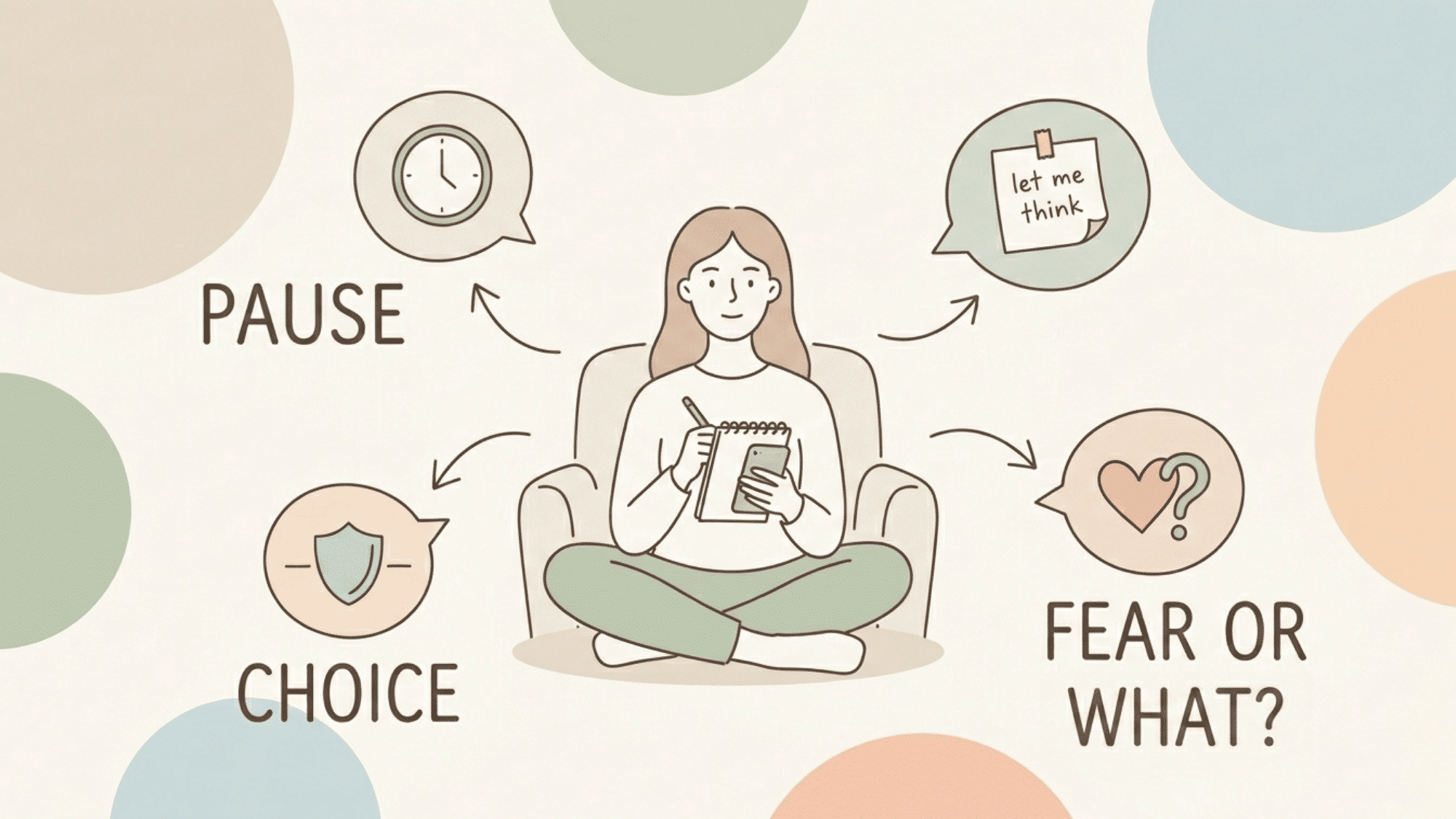
1. Pause Before Saying Yes
Many people answer quickly because silence feels uncomfortable, especially when they are used to keeping others happy.
Give yourself a little time before agreeing, so your response comes from choice rather than pressure. You can say, “Let me check and get back to you,” or “I need some time to think about that.”
What this Looks Like: A coworker asks you to cover their shift, and instead of agreeing on the spot, you say, “Let me check my schedule and text you tonight”
2. Notice the Fear Behind the Yes
Before agreeing, ask yourself whether you truly want to say yes or whether you are trying to avoid guilt, conflict, or disappointment.
This question can help you separate real generosity from fear-based agreement.
You might also ask, “Will I resent this later?” or “Am I afraid they will be upset?” Many people realize they are not choosing freely; they are trying to feel safe.
That need for constant reassurance often shows up in relationships built on anxious attachment.
What this Looks Like: A friend invites you to a weekend trip, and before replying, you catch yourself thinking, “Am I actually excited, or just afraid she’ll be hurt if I say no?”
3. Start With Low-Stakes No
You do not have to start with the hardest boundary in your life. Practice with small moments, such as declining a minor favor, choosing the restaurant, or saying no to a non-urgent request.
These smaller choices help your brain learn that saying no does not automatically harm a relationship. Over time, each honest no can make bigger boundaries feel less frightening.
What this Looks Like: A neighbor asks you to watch their dog for the third weekend in a row, and this time you say, “I can’t this weekend,” instead of automatically agreeing.
4. Accept That Some People May Be Disappointed
One hard part of changing is accepting that your boundaries may disappoint someone. Disappointment is not the same as rejection, and healthy relationships can usually tolerate a “no.”
Trying to prevent everyone else’s discomfort often creates ongoing stress for you. It also feeds the habit of judging yourself far more harshly than you would ever judge a friend.
Learning to sit with a little discomfort can become an important step toward healthier, more honest relationships.
What this Looks Like: You skip your cousin’s last-minute birthday dinner because you’re exhausted, and even though she seems a little annoyed, the friendship is fine a week later.
Trust Me, Adopt these Daily Habits to Break the Pattern
Once you understand your patterns, these strategies are less about a single perfect boundary and more about building a steadier relationship with yourself.
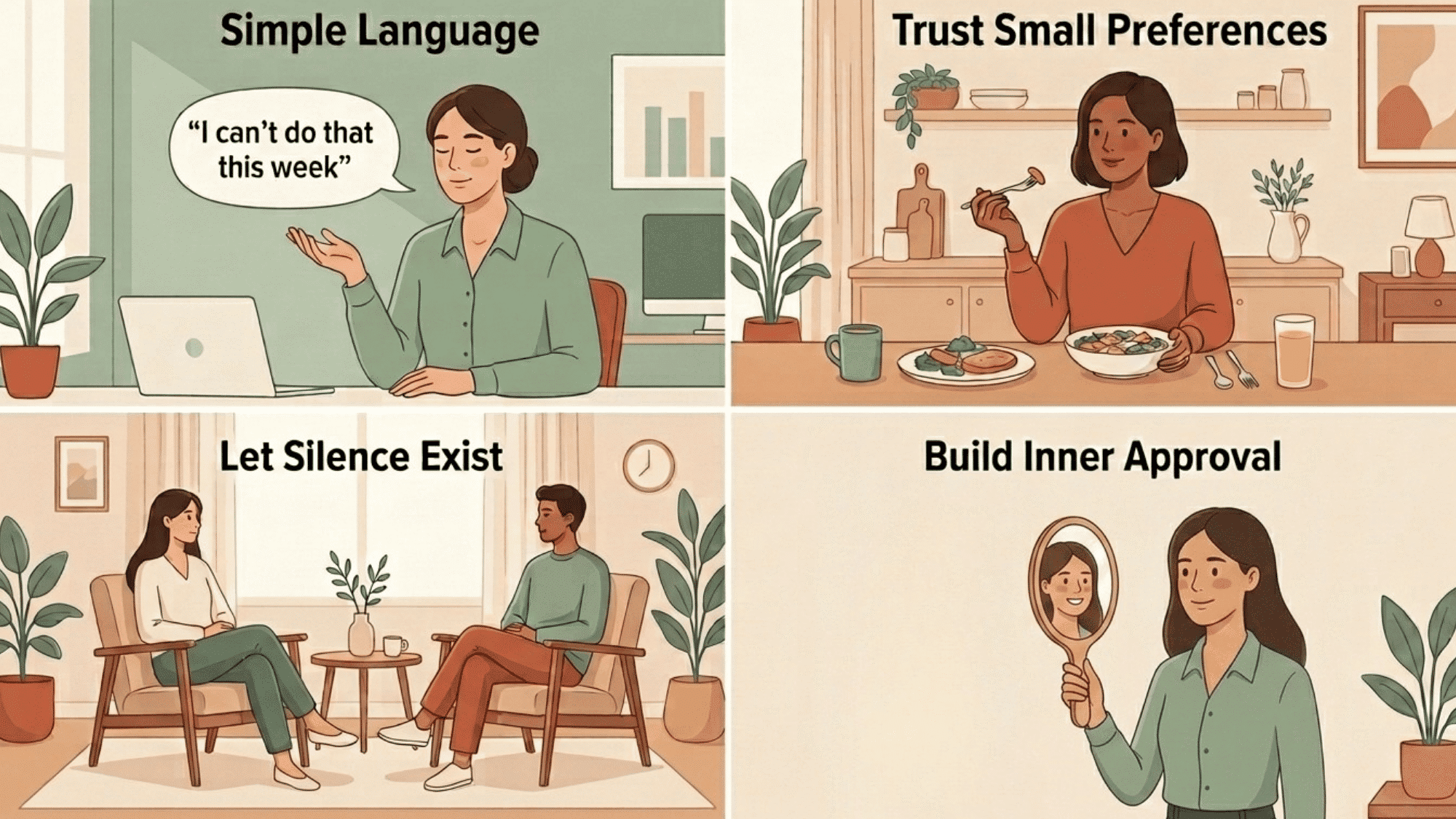
- Use Simple Language: Say, “I can’t do that this week,” instead of giving a long explanation.
- Trust Small Preferences: Choose what you want to eat, watch, wear, or do without asking for approval first.
- Delay Reassurance-Seeking: Before asking, “Are you mad at me?” pause and ask what evidence you actually have.
- Let Silence Exist: You do not have to fill every pause, fix every mood, or smooth over every awkward moment.
- Avoid Backtracking Too Fast: Give yourself time before undoing a boundary just to feel better.
- Build Inner Approval: After a hard but honest choice, remind yourself that self-respect matters more than keeping everyone comfortable, and offer yourself the same kindness you hand out so freely to others.
What to Do When You Slip Back Into Old Patterns?
Backsliding does not mean the work stopped mattering.
A default “yes” or an unnecessary apology can still slip out, especially under stress or with people you have pleased for years.
Instead of treating it as failure, notice what triggered it and return to the boundary the next time it comes up.
Progress in breaking this pattern is rarely a straight line; it usually looks like more good days than bad ones, not the total absence of old habits.
Experiences of People on Unlearning People-Pleasing
Many people openly discuss their struggles with others in online communities. These experiences offer practical perspectives on what has helped others begin to set boundaries and become more confident.
| The Reddit r/IWantToLearn community includes discussions from people trying to understand why they always prioritize others over themselves. Members share practical advice on recognizing guilt-driven decisions, becoming comfortable with disappointing people, and practicing small boundaries before tackling bigger situations. |
| In Reddit’s r/socialskills community, people describe how approval-seeking affected their friendships, work, and confidence. Many comments encourage learning to say no without overexplaining, accepting that not everyone has to like you, and building self-worth independently of others’ opinions. |
| The r/DecidingToBeBetter discussion focuses on personal growth rather than perfection. Community members explain how journaling, therapy, and taking small emotional risks helped them stop making every decision based on other people’s reactions. |
| Tiny Buddha features first-person stories from readers who describe moving away from chronic people-pleasing by accepting discomfort, speaking honestly, and realizing that healthy relationships do not require constant self-sacrifice. |
The Bottom Line
Lasting change rarely happens through one big decision. It grows from small, repeated moments of honesty, whether that’s pausing before saying yes, setting a boundary, or trusting your own judgment.
It’s about making room for your own needs while continuing to care about the people around you. the goal isn’t perfection.
It’s building a life where kindness includes yourself as well as everyone else.
Over time, people-pleasing behavior can change as your brain learns that relationships don’t have to depend on constant approval. Healthy connections make space for understanding and mutual respect.
Frequently Asked Questions
Is People-Pleasing a Trauma Response?
It can be. For some people, staying agreeable becomes a way to avoid criticism, conflict, or emotional unpredictability, especially after stressful past experiences. These habits often trace back to early experiences that still shape adult behavior.
Can People-Pleasing Affect Physical Health?
Yes. Constant stress from overcommitting can contribute to poor sleep, fatigue, muscle tension, headaches, and emotional exhaustion.
Why Do I Feel Guilty After Setting a Boundary?
Guilt often appears when your brain is used to equating approval with safety. It does not always mean your boundary was wrong.
Can You Be Kind without Being a People-Pleaser?
Yes. Kindness comes from choice, while people-pleasing often comes from fear. Healthy kindness includes respect for your limits too.
How Long Does It Take to Stop People-Pleasing?
There is no fixed timeline. Most people improve through repeated small choices, honest communication, and support when the pattern feels hard to change.