
Many people feel frustrated when they repeatedly stand in the way of goals they genuinely care about. It can feel confusing to want something deeply yet struggle to take the steps to make it happen.
These patterns rarely come from laziness, weakness, or a lack of motivation.
More often, they develop over time through learned beliefs, emotional experiences, and coping habits that once felt protective.
In this blog, I will explain what self-sabotage is, why these patterns develop, common signs to recognize, and practical, research-supported strategies that can help you begin changing them with greater awareness and self-compassion.
Disclaimer: This blog is for educational purposes only and is not a substitute for professional mental health care, diagnosis, or individualized treatment.
What is Self-Sabotaging Behavior?Many people assume self-sabotage means intentionally making life harder, but that is rarely how these patterns work. Most happen automatically, without conscious awareness, until their effects become difficult to ignore. As someone who regularly reviews behavioral science literature, I’ve noticed that these behaviors often reflect old coping strategies rather than deliberate choices. What once helped a person feel emotionally safe may later interfere with their goals. Self-sabotaging behavior refers to thoughts, emotions, or actions that repeatedly interfere with personal goals, relationships, health, or long-term well-being despite a genuine desire to succeed. |
The Psychological Meaning Behind Self-Sabotage
Psychologically, self-sabotage means a person may act against their own goals because an old emotional pattern feels safer than a new outcome.
It is not always a conscious choice. The brain may repeat avoidance, overthinking, perfectionism, or withdrawal because those responses once helped reduce fear, shame, or uncertainty.
The American Psychological Association explains that people often respond to stress through automatic thoughts and emotional processes, many of which happen outside awareness.
Why Does Self-Sabotaging Behavior Develop?
Self-sabotage rarely appears overnight. No single experience explains why someone develops these behaviors. Several personal, emotional, and environmental factors often interact over time.
| Factor | How it Can Contribute |
|---|---|
| Childhood experiences | Shapes beliefs about safety, trust, and self-worth |
| Fear of failure | Avoids situations where mistakes feel threatening |
| Fear of success | Worries about greater expectations or responsibility |
| Perfectionism | Delays action until everything feels perfect |
| Low self-esteem | Creates ongoing self-doubt despite evidence of ability |
| Chronic stress | Reduces emotional flexibility and thoughtful decision-making |
Common Signs of Self-Sabotaging Behavior
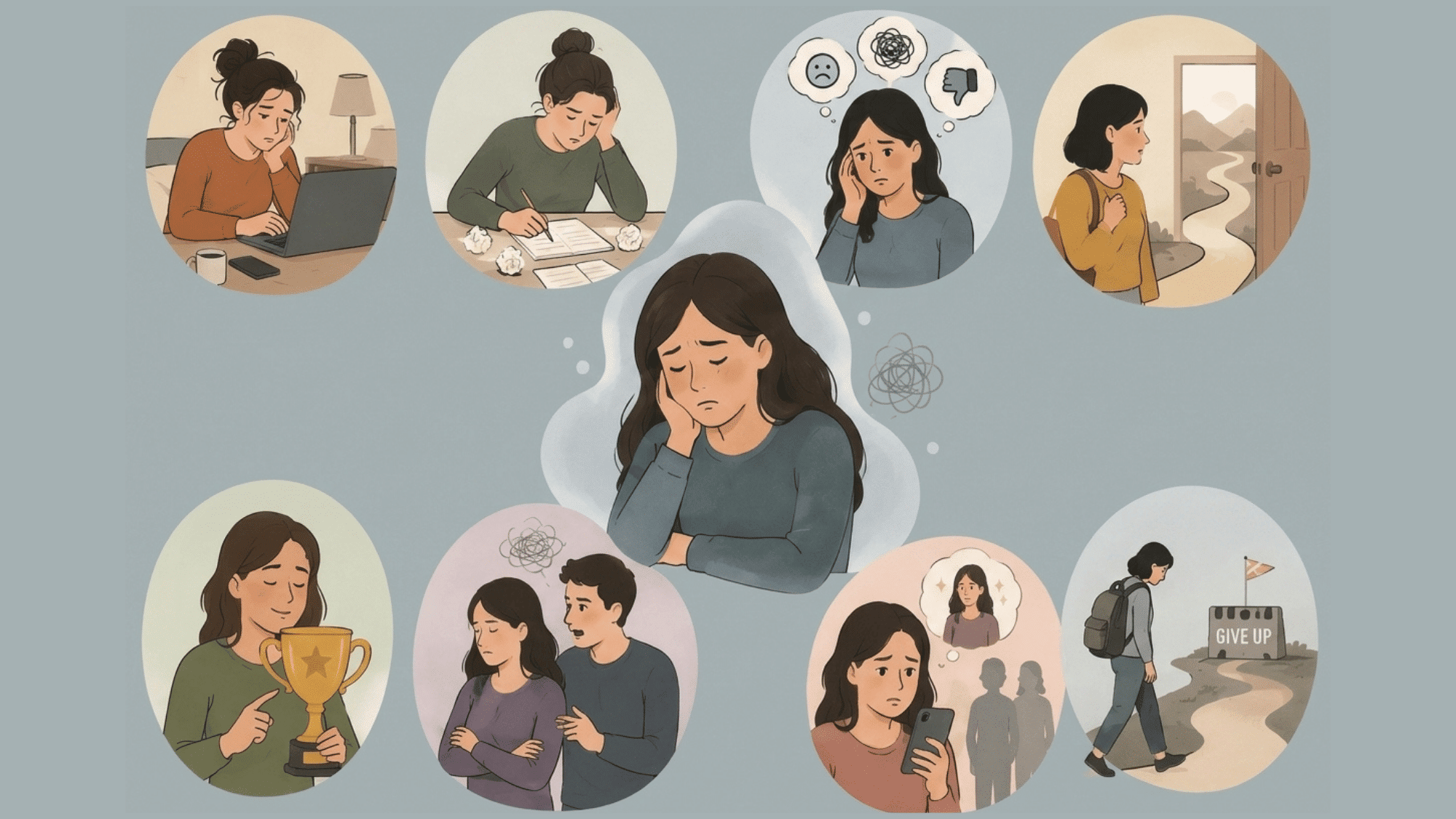
These habits often seem small when viewed individually. Over time, however, they can repeat across work, relationships, health, and personal goals, making progress feel harder than it needs to be.
1. Procrastinating Important Tasks
Putting off meaningful work often provides temporary relief from anxiety, but the stress usually returns stronger as deadlines approach.
2. Perfectionism that Prevents Action
Wanting to do something well is healthy. Waiting until everything feels flawless can prevent progress altogether.
Maladaptive perfectionism is always linked with procrastination, anxiety, and emotional distress.
3. Negative Self-Talk
Negative self-talk turns mistakes into personal judgments. Instead of thinking, “That did not go well,” the mind says, “I always mess things up.”
When repeated often, these thoughts can feel like facts. This can lower motivation before a person even has a fair chance to try.
4. Avoiding New Opportunities
New opportunities can feel exciting, but they can also bring fear of failure, judgment, or change.
A person may say they are “not ready” when fear is really leading the decision.
Avoidance reduces discomfort in the short term, but it can also limit growth. Over time, it may lead to regret or a sense of being stuck.
5. Difficulty Accepting Success
Some people struggle to accept success because it does not match how they see themselves. They may call achievements luck or quickly focus on what could have been better.
This makes it hard to feel proud or confident. Success becomes another source of pressure instead of something they can build on.
6. Staying in Unhealthy Relationships
Unhealthy relationships can feel familiar, even when they are painful. Fear of loneliness, rejection, conflict, or starting over may keep someone stuck.
This becomes self-sabotaging when the relationship repeatedly harms emotional well-being. The person may choose familiarity over peace, safety, or healthier connection.
7. Constantly Comparing Yourself to Others
Comparison often leads people to judge their real lives against someone else’s visible highlights. This can create the feeling that everyone else is ahead or doing better.
The problem is that comparison leaves out context. It ignores personal effort, timing, struggles, and progress that may not be obvious.
8. Giving up Too Quickly
Giving up quickly often happens when early setbacks feel like proof that success is impossible. One mistake or rejection can feel bigger than it really is.
Most meaningful progress includes discomfort, feedback, and adjustment. Quitting too soon can prevent confidence from forming through practice.
Ways to Stop Self-Sabotaging Behavior
Changing long-standing habits rarely happens overnight. Progress usually comes from practicing small skills consistently rather than waiting for motivation to appear.
- Increase Self-Awareness: Notice when you avoid tasks, give up quickly, or criticize yourself. Journaling can help you spot patterns.
- Identify Emotional Triggers: Pay attention to stress, criticism, conflict, rejection, or uncertainty. These feelings often start the cycle.
- Challenge Unhelpful Thoughts: Question thoughts like “I’ll fail anyway.” Replace them with more realistic and balanced thinking.
- Set Smaller Goals: Break big tasks into small steps. One completed step can build momentum and reduce overwhelm.
- Practice Self-Compassion: Treat mistakes as learning moments. Research from Kristin Neff links self-compassion with resilience and emotional well-being.
- Build Healthier Daily Habits: Support your mind with sleep, journaling, movement, meals, and routine. Small habits make change easier to maintain.
- Ask for Support When Needed: Talk to trusted people or a professional. Support can offer perspective, accountability, and encouragement.
How Self-Sabotage Can Affect Everyday Life?

These patterns rarely stay limited to one part of life. Small decisions made repeatedly can gradually influence confidence, relationships, physical health, and emotional well-being.
| Area | Common Pattern | Possible Impact |
|---|---|---|
| Career | Procrastination and fear of mistakes | Missed opportunities, low confidence, and burnout |
| Relationships | Avoiding vulnerability or hard conversations | Weaker trust and less healthy connection |
| Mental well-being | Ongoing self-criticism | Anxiety, shame, frustration, and exhaustion |
| Physical health | Stress and unhealthy routines | Poor sleep, less movement, and weaker overall well-being |
| Personal growth | Avoiding challenges | Limited learning, confidence, and long-term progress |
When Should You Seek Professional Support?
Self-help strategies can be very effective for many people, but there are times when additional support may be the healthiest next step. Professional support may be especially helpful if these patterns continue.
- Anxiety or Depression Is Affecting Daily Life: Emotional distress makes work, school, or relationships increasingly difficult.
- Relationships Keep Following the Same Painful Cycle: Trust, communication, or conflict repeatedly create similar problems.
- Fear Prevents Important Decisions: Avoidance is limiting career, education, finances, or personal growth.
- Past Trauma Feels Unresolved: Earlier experiences continue influencing your emotions or relationships.
- Substance Use Has Become a Coping Strategy: Alcohol, drugs, or other behaviors are being used to avoid emotional pain.
- Thoughts of Self-Harm or Suicide Require Immediate Support: Contact emergency services or reach out for crisis assistance immediately.
Note: You can find local mental health services through SAMHSA’s Treatment Locator or learn more through the National Institute of Mental Health helplines.
Wrapping it Up
Knowing what self-sabotaging is can make repeated setbacks feel less like personal failures and more like learned patterns that can be changed with time and practice.
Self-awareness, healthier coping strategies, and supportive relationships can gradually replace habits that once felt automatic. Progress may not always be quick, but it is often built through repeated consistency.
Although self-sabotaging behavior can feel deeply ingrained, it does not have to define your future. Every small step toward understanding your patterns creates greater confidence, flexibility, and self-compassion.
Frequently Asked Questions
Can Self-Sabotage Happen without Realizing It?
Yes. Many habits operate automatically because they developed over time as coping strategies rather than conscious choices.
Is Self-Sabotage Connected to Anxiety?
It can be. Anxiety may increase avoidance, perfectionism, fear of failure, and overthinking, all of which can reinforce self-sabotaging patterns.
Can Childhood Experiences Contribute to Self-Sabotaging Behavior?
Yes. Early experiences can influence beliefs about safety, trust, and self-worth. However, these experiences do not determine your future, and healthier patterns can be learned over time.
How Long Does It Take to Stop Self-Sabotaging Behaviors?
There is no fixed timeline. Consistent self-awareness, realistic goals, supportive relationships, and professional help when needed can all contribute to lasting change.