

Sometimes, you ask your partner to do something.
Maybe fold the laundry or wash the dishes, and by the end of it, you are the one doing so because they are either confused or say, “I am just not that good at it”
This line or situation is usually one of the first clues of weaponized incompetence. A lot of people have someone in their lives who does this, but people usually ignore it for the time being.
The signs are not even hard to notice if you know where to look. This blog breaks down what weaponized incompetence is, why it keeps happening, and what to do about it.
What is Weaponized Incompetence?Weaponized incompetence is a pattern of ignoring responsibility or acting fragile by performing a task poorly, claiming they can not do it, and refusing or avoiding even learning it. It is usually a repeated habit instead of an isolated incident, and in my clinical experience, it usually starts small before it settles into a routine of only one partner doing most of the work around the house. The tasks left behind are rarely random; they tend to be the ones the other partner already dislikes or has said they can’t handle. Over time, this shifts the mental load onto one person, even when both partners believe the division of labor is fair. |
How Does Weaponized Incompetence Work?

As we discussed earlier, it is not an isolated incident. It is a loop of a task being ignored and then being handled by the other person out of frustration or need, leaving the one responsible without the need to be competent.
These patterns are the ones most commonly seen:
A Task is Avoided or Done Poorly
The person given the task delays it until someone else steps in or does it wrong on purpose. For example, the dishes get washed, but they end up with greasy spots or even broken.
It is done in hopes that the task will be permanently taken off their hands.
Someone Else Steps In
These people usually wait until someone else steps in due to time constraints or frustration. Either way, the task ends up being off their plate and on someone else’s.
This is often the same instinct behind chronic people-pleasing, stepping in so often that it becomes expected of you.
The Pattern Gets Reinforced
Taking over teaches the other person that poor effort works.
The behavior isn’t always doing a task wrong once; it’s the repeated shift of responsibility onto someone else.
Each handoff makes the next one easier to justify.
Common Signs of Weaponized Incompetence
If you want to make sure that someone is practicing weaponized incompetence, look for these signs as they might give you a clue.
- They say“You’re better at this”when the other person ends up doing their task.
- They ask for step-by-step instructions for basic things or things they were taught before.
- They repeat mistakes even after the process or the work has been continuously explained.
- They act confused towards a task done in daily life.
- They either do not pick up the task or, if they do, they put in partial effort.
These small, repeated behaviors are worth watching alongside other warning signs in a relationship, patterns rarely show up in isolation.
Daily Life Examples of Weaponized Incompetence in Relationships

This pattern starts bleeding into the relationships of that person too. Parenting, friendship, jobs, or romantic relationships nothing stays safe from this.
These signs can be seen in a relationship or household.
1. Household Chores
Laundry left in the laundry basket or on the bed, dishes left in the sink or left in the dishwasher without a rinse, or even the bed left messy after waking up.
Ignoring a task or doing it barely right is what we would summarize this part as.
2. Planning and Emotional Labor
These people end up using the classic “you know you are better at this”, when it comes to planning a birthday or sending the invites.
3. Parenting Responsibilities
Kids’ uniforms left messy, lunches unpacked or even forgotten, getting late at the pick-ups, or ignoring the forms given by the school.
This makes the single parent the one in charge of double-checking everything, making their hands fuller than they already were.
4. Money and Household Administration
Bills ignored even after multiple reminders, subscriptions left unchecked, or the budget of the house being ignored in favor of personal enjoyment.
Genuine Inexperience Vs Weaponized Incompetence
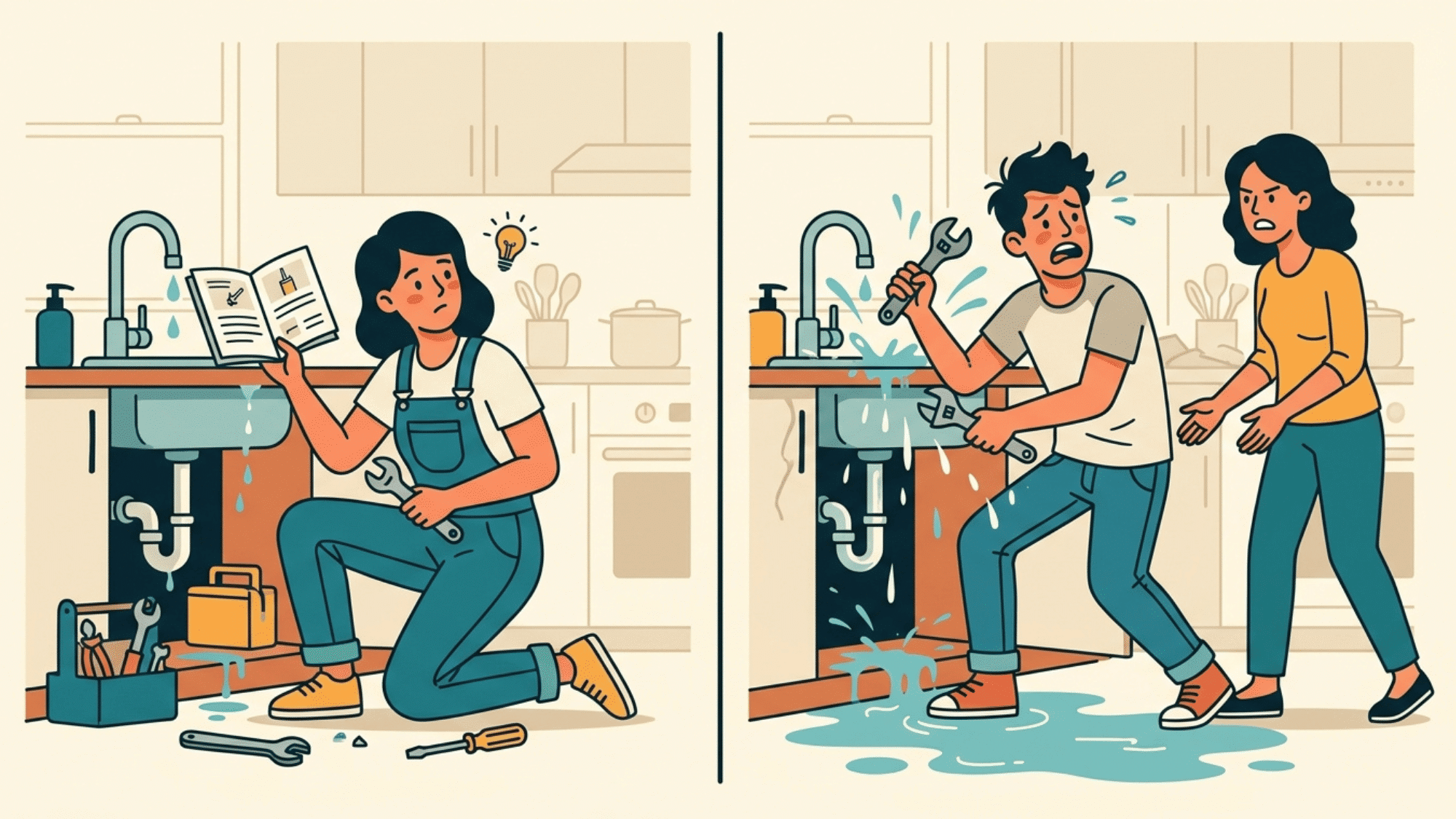
Not all the mistakes made by a person are intentional. Some people genuinely face issues with some tasks, be it physical or mental.
| Genuine Inexperience | Weaponized Incompetence |
|---|---|
| Tries to learn | Avoids learning |
| Improves with practice | Repeats the same mistakes |
| Accepts feedback | Becomes defensive |
| Takes responsibility | Expects someone else to step in |
| Asks useful questions | Uses questions to offload the task |
Ways Weaponized Incompetence Affects Relationships
Left unaddressed, this pattern tends to erode the relationship well beyond the original task. The strain shows up in a few consistent ways:
- Unequal Labor: one partner carries most of the household’s workload.
- Rising Mental Load: the responsible partner is left tracking everything, not just doing it.
- Resentment: frustration builds quietly over time.
- Eroded Trust: the pattern signals unreliability in small, repeated ways.
- A Parent-Child Dynamic: one partner starts managing the other rather than partnering with them.
How to Deal With Weaponized Incompetence
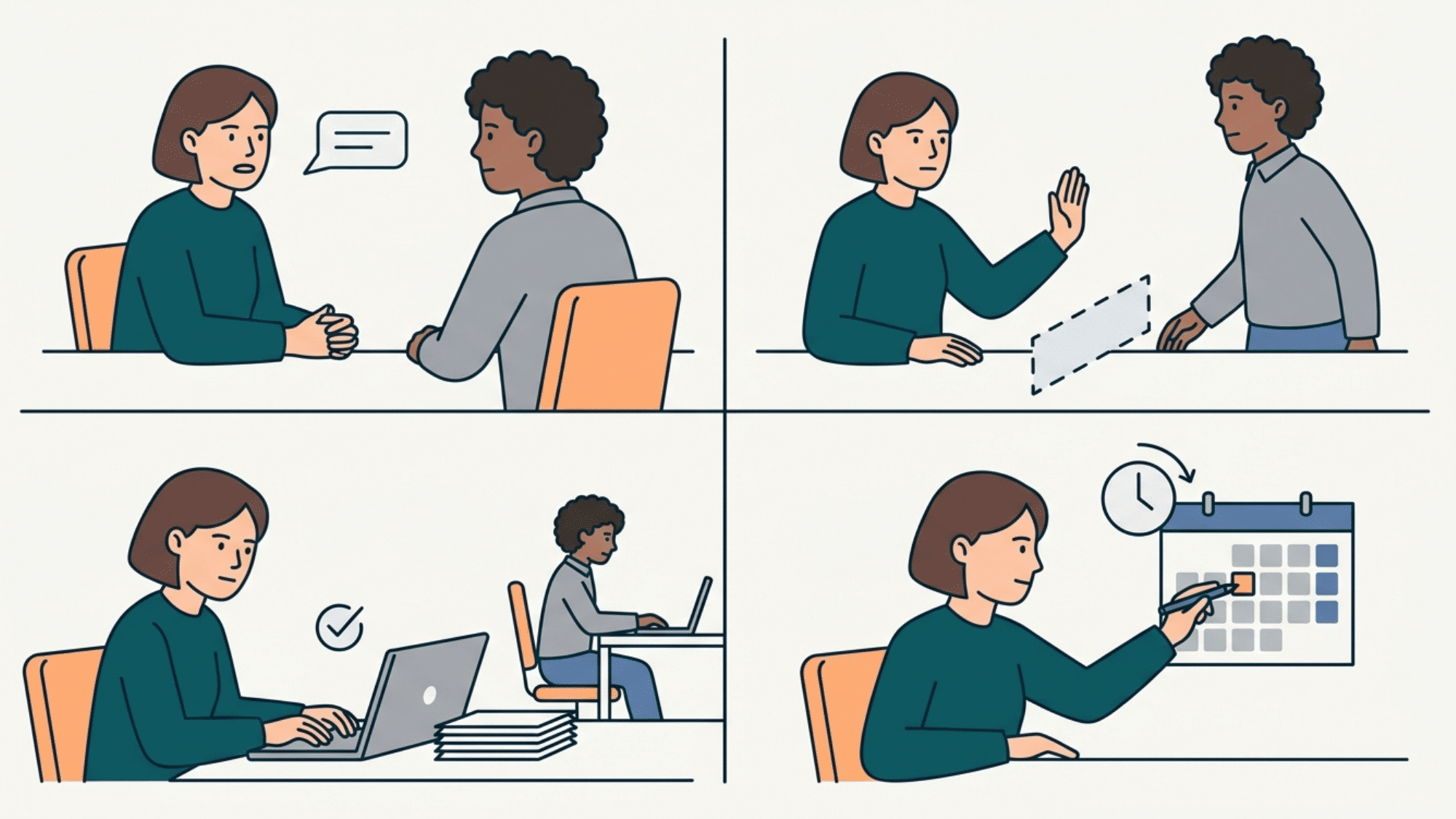
If you want to continue the relationship, it is important to speak up and hold your ground because, if you don’t, it will leave you drained and you will start loathing the other person.
1. Have a Clear Conversation
It is always better to be clear and open about what you have noticed. Mention the pattern, gently but clearly, instead of hopping around the topic.
If the other person shows willingness to talk, it usually means they are willing to even work on it or atleast least try to.
2. Explain How It Affects You
Explain the stress, emotional weight, physical weight, and the frustration it causes you to have, and how it also makes you pull away from the relationship altogether.
3. Assign Them Particular Tasks Firmly
Assign them tasks that only they will do, and if they aren’t done properly, they will deal with the consequences too.
It gives them a fixed set of tasks and helps both people stay calm and in control.
4. Stop Automatically Taking Over
If they mess it up, let them fix it themselves instead of running over to rescue them. Let them come to you even when they genuinely want to learn.
Let them be an adult.
5. Set Clear Standards and Deadlines
Do not give them vague instructions. Be clear on what it means for a task to be done for you. Vague expectations give them a chance to not do the work properly.
The key is to use gentle and easy language like “The clothes should be properly folded, flat and shouldn’t be left on the bed.
Put them in the closet once you are done folding them.”
6. Review the Division of Labor
Look at planning and remembering, not just visible chores. Invisible tasks carry real weight and deserve to be split just as deliberately.
7. Follow Through With Boundaries
Be firm with following your boundaries. Letting go once means setting an expectation of being let go always. Follow through with the consequences if the pattern doesn’t change or repeat after a while.
It usually means the pattern wouldn’t really change. Left unaddressed, this dynamic can start to resemble other patterns that erode trust.
What If You are the One Doing It?
Sometimes, one ends up doing it without consciously realizing it. And recognizing it takes courage and honesty. These few things can help you look into it.
- Be aware of the tasks you usually ignore and how many you ignore.
- Notice if someone else ends up fixing your mistakes.
- Ask yourself if you actually try to learn a task or lean on something or someone else to teach you.
- Take responsibility and be willing to face the consequences of your actions, even if it feels scary.
Some of this avoidance overlaps with self-sabotaging behavior more broadly, where avoiding responsibility becomes a way of avoiding discomfort.
The Bottom Line
Weaponized incompetence is something that not only makes life hard for the person practicing it but also for the people around them.
It can make people unable to live a normal life on their own because they become so dependent on others to do everything for them or fix their mistakes.
Making firm boundaries and respecting your own time and efforts is one way to fight this issue, and it becomes important to fight it after the constant hurt and pain because you and your efforts matter.
Frequently Asked Questions
Is It ADHD or Weaponized Incompetence?
ADHD makes a person genuinely forgetful, meaning it is not intentional and is just how their mind works. Weaponized incompetence is usually self-serving and a way to garner sympathy or avoid responsibilities.
Is Weaponized Incompetence Abuse?
it is not clinically considered abuse, but it can turn into so if used to control the other person, isolate them, mentally bully them, or punish them.
Can Weaponized Incompetence Be Unintentional?
Yes, it can start as a learned habit rather than a conscious strategy, though Cleveland Clinic notes the deciding factor is whether the pattern improves once it’s pointed out.