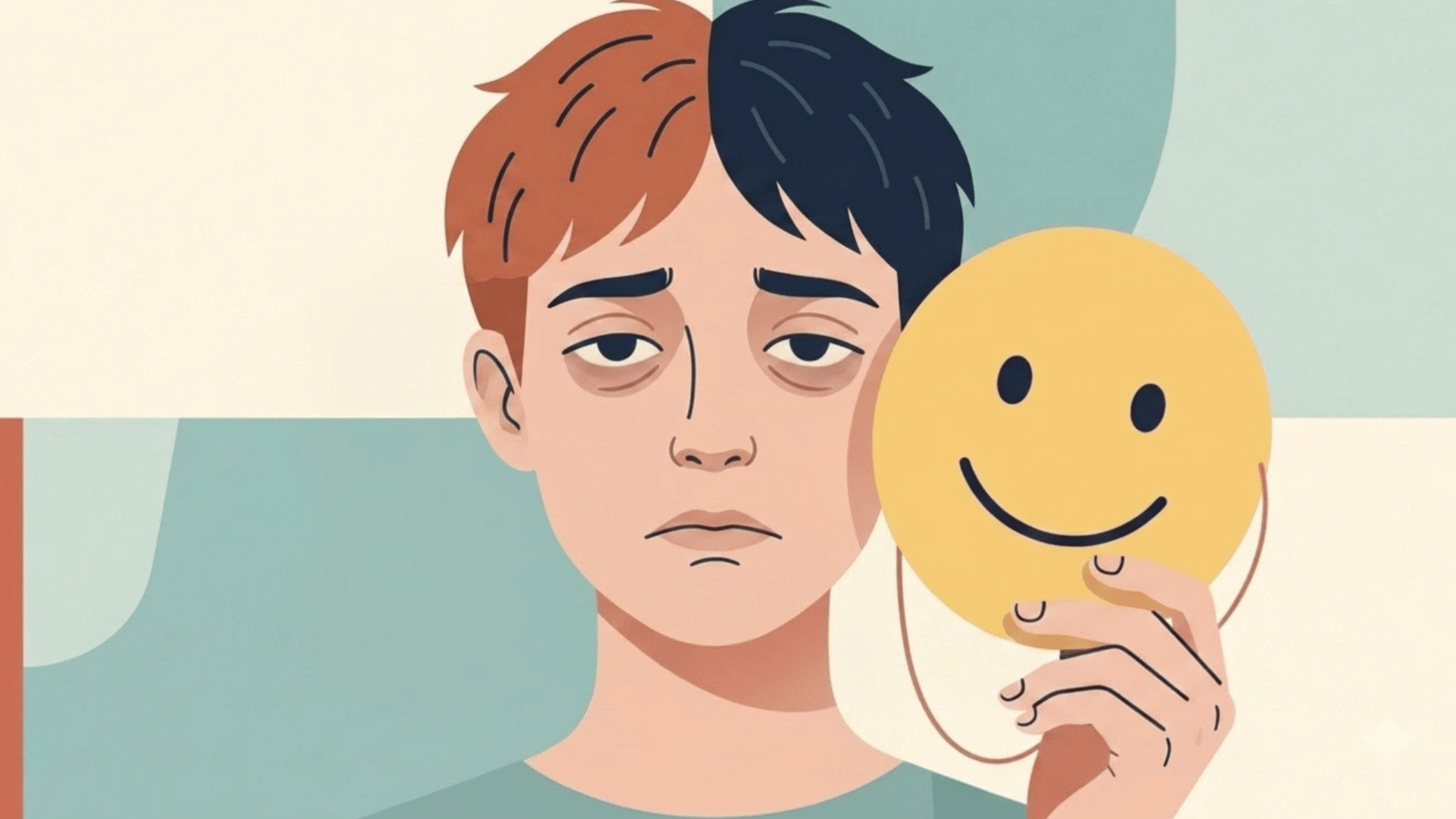

Most of us know, somewhere deep down, that certain things are simply non-negotiables in a relationship.
As someone who studies how we connect and cope, I’ve seen how forgiveness can quietly reshape a person’s well-being, especially when remorse is unclear.
As a psychologist whose doctoral research in behavioral science examined cognition, emotion regulation, and human decision-making, I have seen how rarely people pause to clearly name those standards.
And when they go unnamed, they often stay in relationships that quietly erode their wellbeing, simply because they never decided what they could not accept.
What are Non-Negotiables in a Relationship?Non-negotiables are the standards you are not willing to give up, no matter how strong your feelings are for someone. They differ from preferences, which are simply things you would like. A preference might be a shared love of travel. Non-negotiables could include honesty, mutual respect, or safety. Knowing yours matters because it protects your wellbeing and helps you build relationships rooted in mutual care rather than quiet self-sacrifice. |
Non-Negotiables Vs Deal-Breakers: Key Differences
Knowing the difference between non-negotiables and deal-breakers helps you build healthier relationships by setting clear expectations, protecting your values, and recognizing when it’s time to leave.
| Aspect | Non-Negotiables | Deal-Breakers |
|---|---|---|
| What it is | A standard you set for yourself | A behavior that ends the relationship |
| Direction | Anticipatory: what you need to feel secure | Reactive: what you refuse to tolerate |
| Nature | A value, like honesty or respect | An action, like lying or cheating |
| Timing | Defined before or early in dating | Triggered when the line is crossed |
| Role | The guides you choose | Signals when to walk away |
| Example | Open, honest communication | Repeated dishonesty |
Top 20 Relationship Deal Breakers
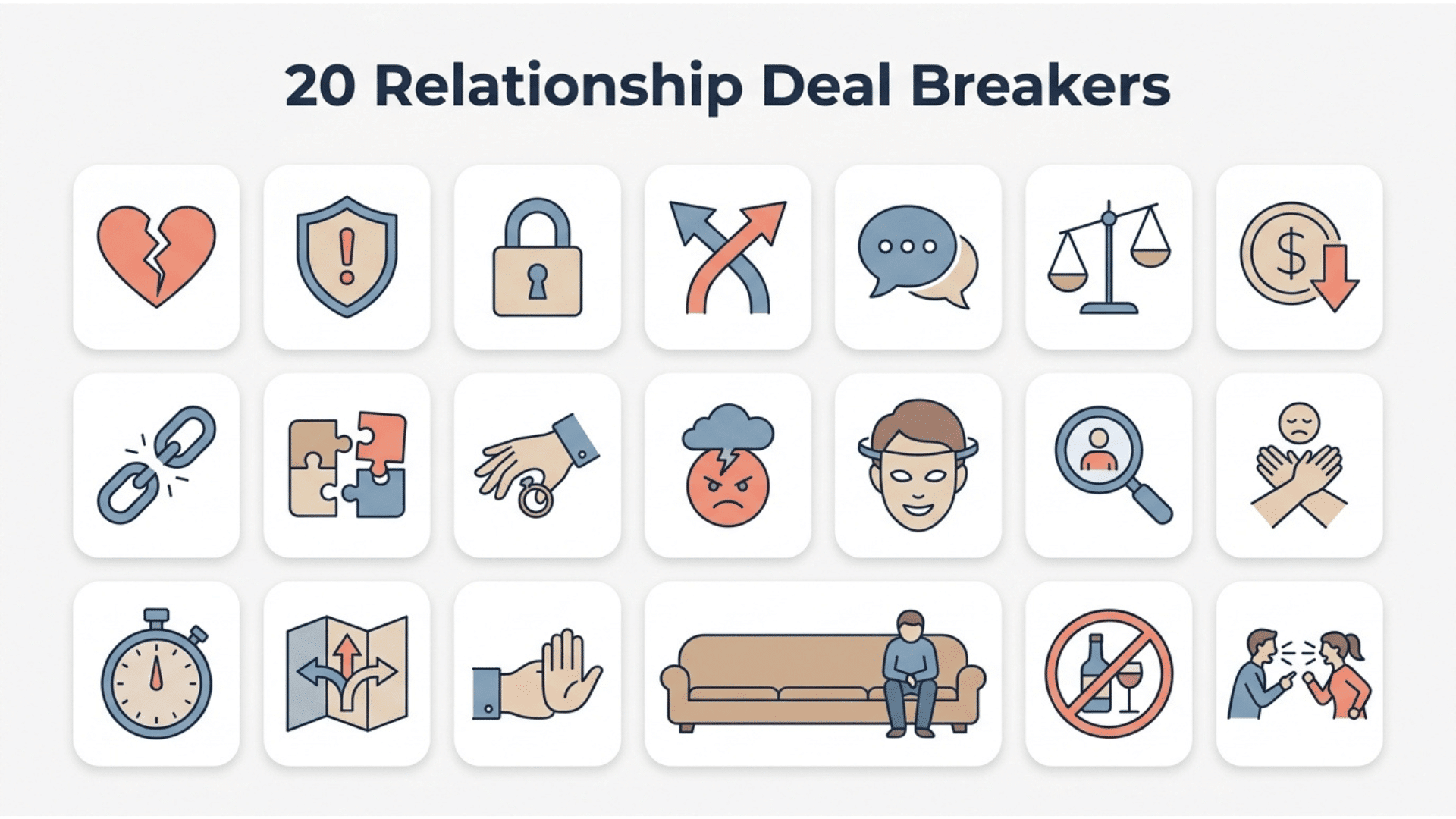
Here are the most common deal breakers people identify, along with how to spot each one, weigh it honestly, and act on it in your own relationship.
1. Dishonesty
Look for repeated lies, half-truths, or a partner who hides information that affects both of you. Small untruths that keep recurring often point to a deeper problem with trust.
Evaluate: Ask if the dishonesty is a one-time lapse or a steady habit you keep excusing.
Apply: Name the Behavior directly, watch if honesty improves over time, and treat ongoing deception as a sign to step back.
2. Infidelity
Notice if faithfulness, in whatever form you both agreed to, is respected. Betrayal of that agreement can deeply affect your emotional health.
Evaluate: Consider whether trust can realistically be rebuilt and whether your partner takes genuine Accountability.
Apply: Decide your own limit on second chances before you are tested, so the choice reflects your values rather than the heat of the moment.
3. Any Form of Abuse
Watch for physical, emotional, verbal, or financial harm, including threats, intimidation, or control disguised as concern.
Abuse is never a misunderstanding, and it’s worth knowing the warning signs of abuse that The Hotline outlines.
Evaluate: Understand that abuse tends to escalate, not resolve, and that you are not responsible for causing it.
Apply: Prioritize your safety, reach out to a trusted person or a professional helpline, and know that leaving a toxic relationship is a valid and often necessary choice.
4. Controlling Behavior
Pay attention to a partner who monitors your movements, isolates you from loved ones, or dictates your choices.
Control often grows slowly until it feels normal; this is the same slow shift that, more broadly, defines a toxic relationship.
Evaluate: Ask if you feel freer or smaller the longer you are together.
Apply: Set a clear boundary, observe the response, and treat resistance to your independence as a serious warning.
5. Disrespect
Look for contempt, mockery, or a pattern of dismissing your feelings and opinions. Respect is the foundation on which healthy love is built.
Evaluate: Notice if disrespect appears in private, in public, or both, and how your partner reacts when you raise it.
Apply: State what respectful treatment looks like to you, then measure their willingness to consistently meet it.
6. Poor Communication
Notice if your partner shuts down, avoids hard conversations, or refuses to listen. Silence and stonewalling can be as damaging as conflict.
Evaluate: Ask if disagreements move toward resolution or repeat.
Apply: Suggest healthier ways to talk things through, and gauge if your partner is willing to grow with you.
7. Mismatched Life Goals
Watch for differences on major questions such as marriage, children, location, or career direction. These shape the whole arc of a shared life, much like your own personal goals shape your individual ones.
Evaluate: Separate goals you can flex on from those you truly cannot.
Apply: Have the honest conversation early, and avoid assuming someone will change their mind to match yours.
8. Financial Irresponsibility
Look for secrecy about money, reckless spending, or unwillingness to share basic financial planning.
Money habits affect long-term stability and trust and can sometimes signal a more transactional relationship than either partner realizes.
Evaluate: Consider if the issue is a skill that can be learned or a fundamental value you clash over.
Apply: Talk openly about expectations around money, and watch for honesty and effort rather than perfection.
9. Substance Misuse
Notice if drinking or drug use harms your partner, your safety, or the relationship itself. Concern here is about wellbeing, not judgment.
Evaluate: Ask if your partner acknowledges the problem and seeks support, or denies it entirely.
Apply: Encourage professional help, protect your own limits, and recognize when the situation is beyond what you can fix.
10. Lack of Emotional Availability
Look for a relationship where one person carries the planning, care, and emotional labor. Balance can shift at times, but it should not be permanent; carrying that weight long-term can quietly slide into codependent patterns.
Evaluate: Ask if the distance is temporary stress or a steady way of relating.
Apply: Express what closeness you need, then notice if they move toward you or pull further away.
11. Unequal Effort
Look for a relationship where one person carries the planning, care, and emotional labor. Balance can shift at times, but it should not be permanent.
Evaluate: Ask if you feel like a partner or a caretaker.
Apply: Name the imbalance plainly, and watch if effort becomes more shared over time.
12. Disrespect Toward Boundaries
Notice if your partner ignores your stated limits or pressures you to override them. Boundaries are not requests to be negotiated away.
Evaluate: Consider how often you have to repeat the same boundary.
Apply: Restate it once with clarity, then let their response guide your decision.
13. Dishonoring Your Values
Watch for ongoing clashes over beliefs, ethics, or priorities that matter deeply to you. Shared values create a sense of being on the same team.
Evaluate: Separate surface differences from clashes that touch your core identity.
Apply: Discuss where each of you stands, and accept that some value gaps are too wide to bridge comfortably.
14. Jealousy and Possessiveness
Look for suspicion, accusations, or attempts to limit your friendships and freedom. Healthy love does not rely on fear or surveillance.
Evaluate: Ask if reassurance ever feels like enough, or if the jealousy keeps growing.
Apply: Set expectations around trust, and treat persistent possessiveness as a warning rather than a sign of affection.
15. Chronic Dishonoring of Commitments
Notice a pattern of broken promises, canceled plans, or words that rarely match actions. Reliability is part of feeling safe with someone.
Evaluate: Ask if you can depend on your partner when it truly counts.
Apply: Pay attention to consistency over time, and trust Behavior more than apologies.
16. Refusal to Take Accountability
Watch for blame-shifting, defensiveness, or an inability to admit fault, as growth is impossible without ownership.
Evaluate: Consider if conflicts ever end in genuine repair.
Apply: Look for sincere acknowledgment, not just apologies, and weigh if real change follows.
17. Incompatible Intimacy Needs
Pay attention to lasting mismatches in physical or emotional closeness that leave one person unfulfilled. These needs deserve honest discussion.
Evaluate: Ask if the gap can be met halfway or persists.
Apply: Talk about it openly and respectfully, and notice if both of you are willing to meet in the middle.
18. Disregard for Your Wellbeing
Look for indifference to your health, stress, or happiness. A caring partner notices when you are struggling.
Evaluate: Ask if your hard days are met with support or dismissal.
Apply: Communicate what care looks like to you, and observe if your partner makes the effort.
19. Constant Criticism
Notice a steady stream of put-downs that chip away at your confidence. Feedback can be loving, but contempt wears you down.
Evaluate: Ask if you feel more secure or more anxious over time.
Apply: Name the impact of the criticism, and treat an unwillingness to soften it as a meaningful red flag.
20. Lack of Mutual Respect for Growth
Watch for a partner who resents your goals or holds you back rather than cheering you on. Love should expand your life, not shrink it.
Evaluate: Ask if your ambitions are welcomed or quietly discouraged.
Apply: Share what support means to you, and weigh whether your partner truly wants you to flourish.
How to Communicate Regarding Non-Negotiables?

Sharing your non-negotiables is not about issuing demands; it is about helping your partner understand what you need to feel safe and respected.
- Pick the Right Moment: Choose a private, relaxed time rather than the heat of an argument, so the conversation stays open instead of defensive.
- Speak from Your Own Experience: Use clear statements like “I need honesty to feel secure,” which express self-respect rather than blame.
- Be Specific: Name what the non-negotiable looks like in practice, so there is no room for confusion later.
- Listen as Well as Share: Communication works both ways, so invite your partner to voice their needs too.
- Watch how They Respond: Their willingness to understand and adjust often tells you far more than their words
Practical Advices on Non-Negotiables
These everyday scenarios show how non-negotiables and deal breakers appear in real relationships, making it easier to recognize them in your own.
| Across Reddit threads, people share a wide range of views, some swearing certain behaviors are absolute deal breakers while others see room for compromise, which is a helpful reminder that your non-negotiables are personal to you.- askreddit |
| Has to like spending time together and physical affection (Quality Time and Physical Affection are my top two love languages, and after a relationship with someone that didn’t like those things, I don’t want to do that again). Woodsfinder |
| We don’t badmouth each other or let others badmouth us to anyone. If there is a serious problem, we can talk and work towards a solution, even if that means things like therapy or counseling.- kai_theone |
| Men can be really dense sometimes. You need to tell them that their actions or inactions are bothering you; otherwise, it’s like talking to the wall.- Katie |
The Bottom Line
Defining your non-negotiables in a relationship is an act of self-respect, not selfishness.
When you know your standards and recognize the top 20 relationship deal breakers, you can choose partnerships rooted in honesty, safety, and mutual care.
Take time to reflect, communicate openly, and trust what you observe over time.
And if any situation involves abuse or threatens your wellbeing, please reach out to a qualified professional or a trusted support line.