

Relationships are not only built through words.
For many people, feeling cared for comes from the small things someone does to make everyday life a little easier or less stressful.
Among the five love languages, acts of service focuses on expressing affection through thoughtful actions rather than compliments, gifts, or physical affection alone.
In this blog, I will explain what the acts of service love language is, its importance, and share practical examples of acts of service that many people find meaningful.
What is the Acts of Service Love Language?Acts of service are intentional acts that help, support, or ease another person’s burden as an expression of love or care. The action itself may be simple, but its emotional meaning often comes from the message it conveys: I noticed what you needed and wanted to help. This is why making breakfast during a stressful week or taking over errands when a partner feels overwhelmed may feel far more meaningful than an expensive gift. The intention behind the gesture also matters. An action done with kindness and willingness is more likely to strengthen a connection than one performed with resentment or expectation. |
What are the Five Love Languages?
The five love languages describe different ways people may prefer to express and receive care in relationships.
| Love Language | What it Means | Common Examples |
|---|---|---|
| Words of affirmation | Feeling loved through kind, supportive, and encouraging words | Compliments, thank-you messages, praise, and verbal reassurance |
| Acts of service | Feeling cared for when someone helps with practical tasks | Cooking a meal, doing chores, running errands, or offering support |
| Receiving gifts | Feeling valued through thoughtful gifts that show care and attention | Flowers, favorite snacks, small surprises, or meaningful keepsakes |
| Quality time | Feeling connected through focused attention and shared moments | Talking without distractions, going for a walk, or planning time together |
| Physical touch | Feeling loved through safe and caring physical affection | Hugs, holding hands, cuddling, or a comforting touch |
Signs that Acts of Service Might Be Your Love Language
Acts of service can feel especially meaningful when thoughtful actions make you feel cared for, supported, and valued more than words alone.
- You Notice Helpful Actions: Practical support often means more to you than compliments.
- Shared Responsibilities Feel Loving: Help with everyday tasks makes you feel supported and valued.
- Reliability Matters Most: Consistent effort may mean more than romantic words or grand gestures.
- You Show Love by Helping: You naturally care for others by solving problems or making life easier.
- Broken Promises Affect You Deeply: A lack of follow-through may feel more hurtful than a missed gift, and it can quietly plant doubts about the relationship if the pattern repeats.
How to Show Love Through Acts of Service?
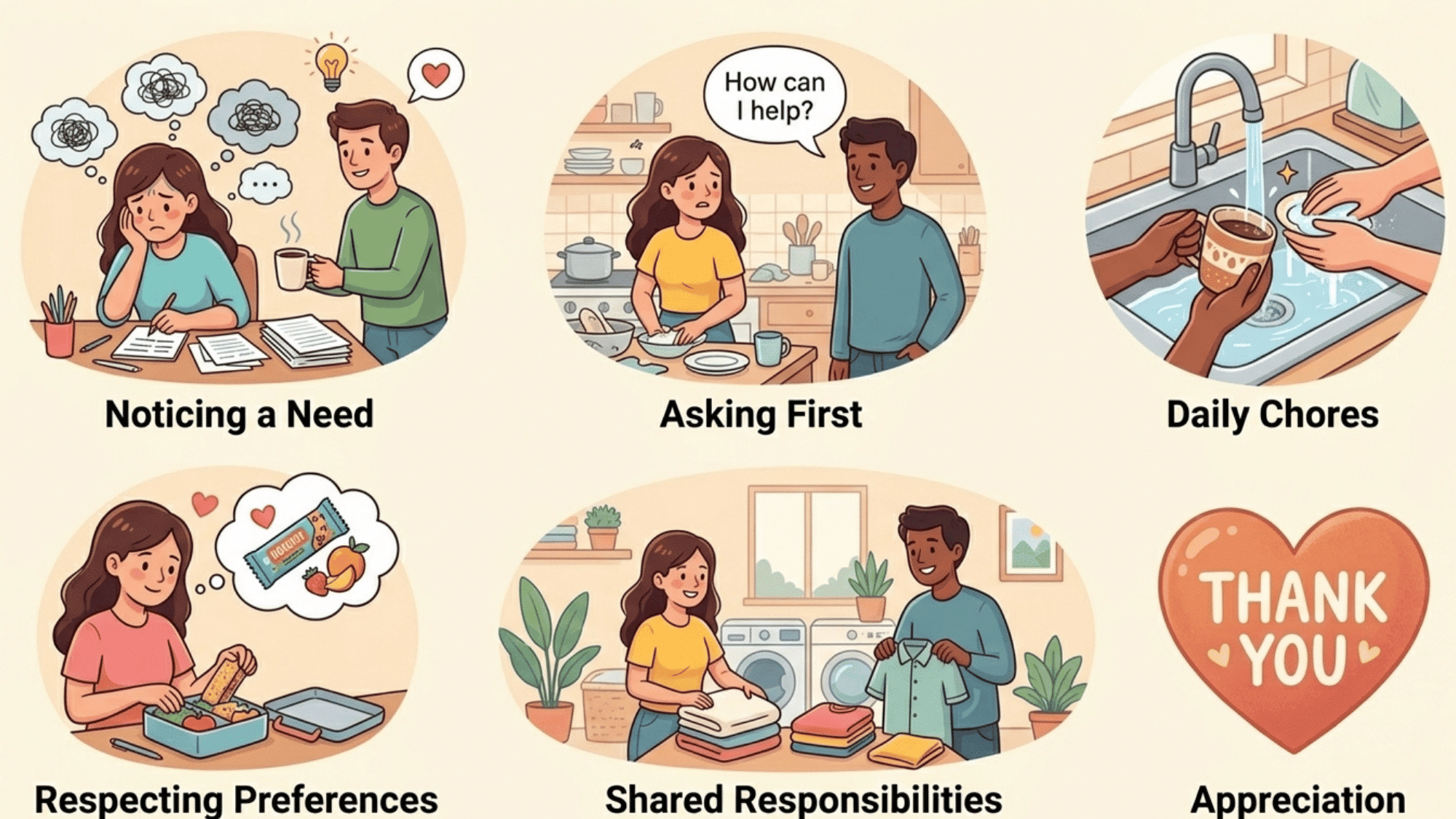
The most meaningful gestures often solve small everyday problems before they become overwhelming. They do not need to be expensive, dramatic, or perfectly planned.
1. Notice Daily Stressors
Start by observing the tasks, moments, or responsibilities that repeatedly drain your partner’s energy.
Support feels more meaningful when it responds to something real, not something assumed.
For example, if your partner always feels rushed in the morning, preparing coffee, packing lunch, or handling one small task can feel deeply thoughtful.
2. Ask Before Assuming
Helpful actions are more effective when they match what the other person actually needs. Asking first prevents support from becoming intrusive or misplaced.
This matters even more when supporting a partner living with ADHD, since the kind of help that feels supportive can look different from what works in other relationships.
Instead of guessing what would help, simply ask. Questions like “Would it help if I handled dinner tonight?” show consideration while respecting personal preferences.
3. Be Consistent Rather than Grand
One big gesture may feel special, but steady support often builds more trust over time. Reliability shows that care is part of the relationship, not just a response to crisis.
This might mean taking over a recurring task, following through on promises, or noticing when your partner’s workload has increased.
4. Respect Personal Preferences
Not everyone defines help the same way. One person may appreciate practical chores, while another may value planning, errands, reminders, or emotional presence paired with action.
That is why it helps to learn what support feels like to your partner, instead of assuming your version of helpfulness is automatically theirs.
5. Share Responsibilities Fairly
Acts of service should not turn into one person carrying most of the work. When one partner consistently avoids tasks through a weaponized incompetence pattern, the other ends up doing the work anyway, and support becomes expected but not returned.
Fairness does not always mean splitting every task exactly in half. It means both people feel seen and respected, and are willing to contribute in ways that fit their capacity.
Getting clear on non-negotiables in a relationship can help both partners identify where imbalance is quietly building before it becomes a bigger source of tension.
6. Express Appreciation Both Ways
Appreciation helps thoughtful actions feel noticed rather than taken for granted. A simple “thank you” can reinforce warmth and mutual respect.
The Research on gratitude has linked appreciation in relationships with stronger connection and greater relationship satisfaction.
When both partners notice each other’s efforts, care feels more balanced.
Acts of Service Examples in Everyday Relationships
Acts of service can look different depending on the relationship, but the main idea is practical support that responds to a real need.
- Busy Workday: Bring them coffee, prepare lunch, or run a small errand so they can focus on work with less stress.
- Household Chores: Fold the laundry, wash the dishes, or tidy up a shared space without waiting to be asked.
- Partner Feeling Sick: Prepare a simple meal, pick up medicine, or check in regularly to make sure they have everything they need.
- Parenting Duties: Take over bedtime, school pickup, or playtime so your partner can rest or catch up on other responsibilities.
- Stressful Week: Pick up groceries, refill household essentials, or handle routine tasks that help lighten their mental load.
- Long Commute: Fill the gas tank, pack their lunch, or get things ready for the next morning to make the day a little easier.
- Exam Period: Set up a quiet study space, limit distractions, or help with daily tasks so they can focus on studying.
- Emotionally Difficult Day: Handle routine chores, prepare a comforting meal, or give them space to rest without worrying about everyday responsibilities.
Wrapping it Up
Knowing what the acts of service love language is is less about memorizing relationship advice and more about noticing how care is communicated through everyday actions.
The same attentiveness carries over into other parts of life too, including healthier family relationships outside the romantic partnership.
I see acts of service as most helpful when they encourage attention, fairness, and honest communication rather than pressure to perform perfectly.
Small, thoughtful gestures often become meaningful because they show attention, reliability, and a willingness to make another person’s day a little easier.
Frequently Asked Questions
Is Acts of Service the Same as Doing Household Chores?
Not always. Chores count when they are done thoughtfully to support someone, not just as routine tasks.
Can Someone Have More than One Love Language?
Yes. Many people connect with two or more love languages depending on the relationship and life stage.
What are Simple Acts of Service Examples for Long-Distance Relationships?
It may include sending meals, arranging grocery delivery, helping with travel plans, or handling online tasks.
Can Your Preferred Love Language Change Over Time?
Yes. Stress, parenting, illness, or major life changes can shift how someone prefers to give and receive love.