
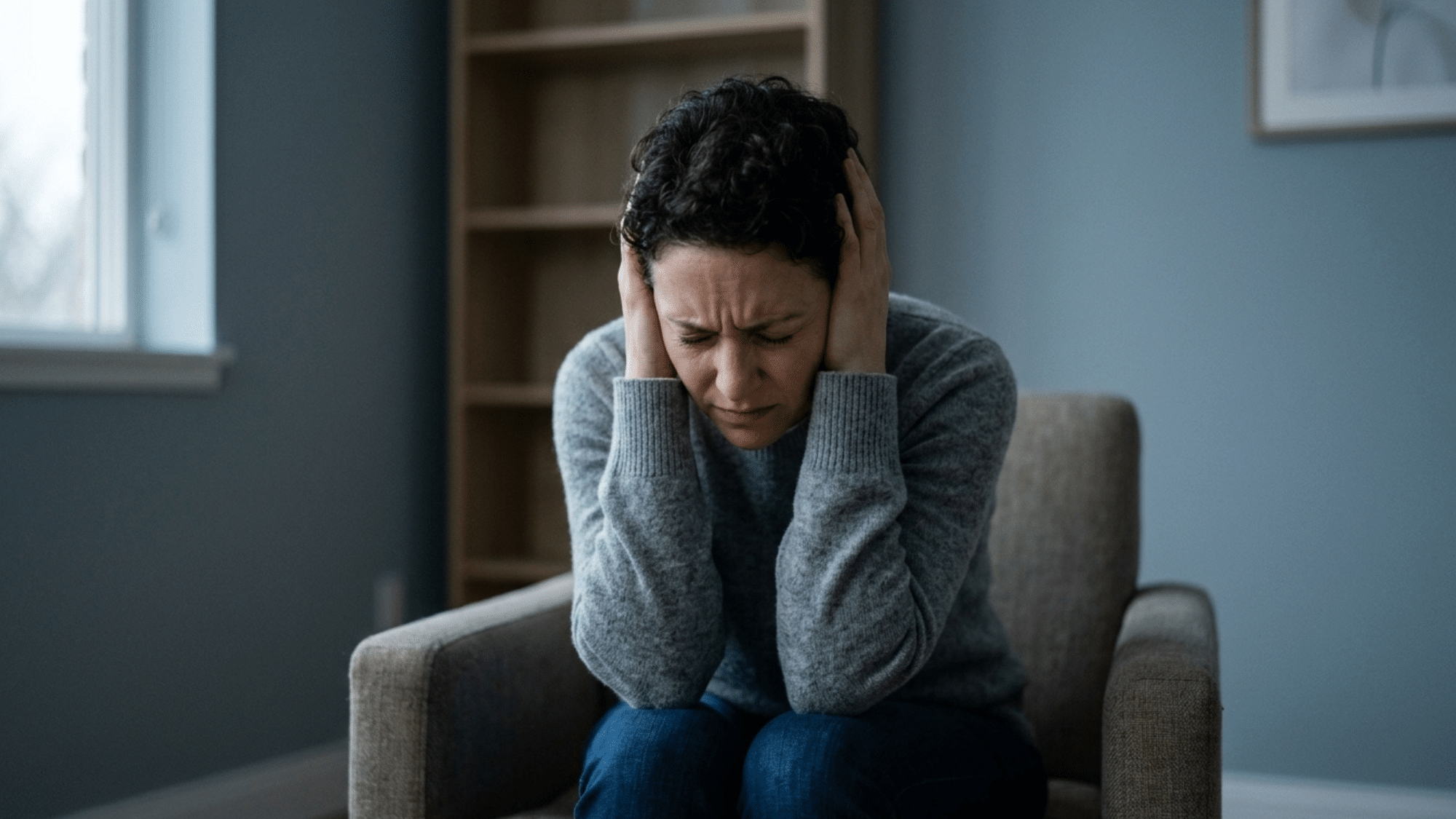
A mental health diagnosis can bring up a lot of questions, especially when two conditions appear to share many of the same symptoms.
When comparing schizoaffective disorder vs schizophrenia, it is important to know that both conditions can involve psychosis, but they are not the same diagnosis and do not follow the exact same clinical pattern.
My goal here is to explain these conditions in a clear, research-informed way that supports understanding rather than fear.
Disclaimer: This blog is for informational purposes only and should not replace professional medical advice, diagnosis, or treatment.
|
The Main Difference: Schizophrenia centers primarily on psychosis, while Schizoaffective disorder combines psychotic symptoms with significant, sustained mood episodes (depression or mania) as a core part of the diagnosis. |
What is Schizophrenia?
Schizophrenia is a chronic psychiatric disorder that affects how a person thinks, perceives reality, processes information, and interacts with others.
According to the National Institute of Mental Health (NIMH), schizophrenia affects less than 1% of the U.S. population and typically emerges in late adolescence or early adulthood.
The condition is often associated with psychosis, but it can also affect emotions, motivation, memory, and everyday functioning, and does not look the same for everyone.
What is Schizoaffective Disorder?
Schizoaffective disorder is a mental health condition that includes both psychotic symptoms and significant mood symptoms.
A person may have periods where psychotic symptoms are present even when mood symptoms are not the main issue. Mental health professionals generally classify schizoaffective disorder into two types:
- Bipolar Type: This form includes episodes of mania and may also include depressive episodes, which is one reason a diagnosis can require careful evaluation.
- Depressive Type: Depressive symptoms may include low mood, loss of interest, fatigue, changes in sleep or appetite, difficulty concentrating, or feelings of hopelessness.
Is Schizoaffective Disorder the Same as Schizophrenia?
No, schizoaffective disorder is not the same as schizophrenia. Schizoaffective disorder is less common than schizophrenia, but it can present unique challenges.
The confusion usually comes from the fact that both conditions can involve hallucinations, delusions, and disorganized thinking.
The key difference is that schizoaffective disorder includes significant mood episodes as part of the diagnosis.
In schizophrenia, mood symptoms may occur occasionally, but they are not the defining feature of the disorder.
Where the Two Conditions Overlap?
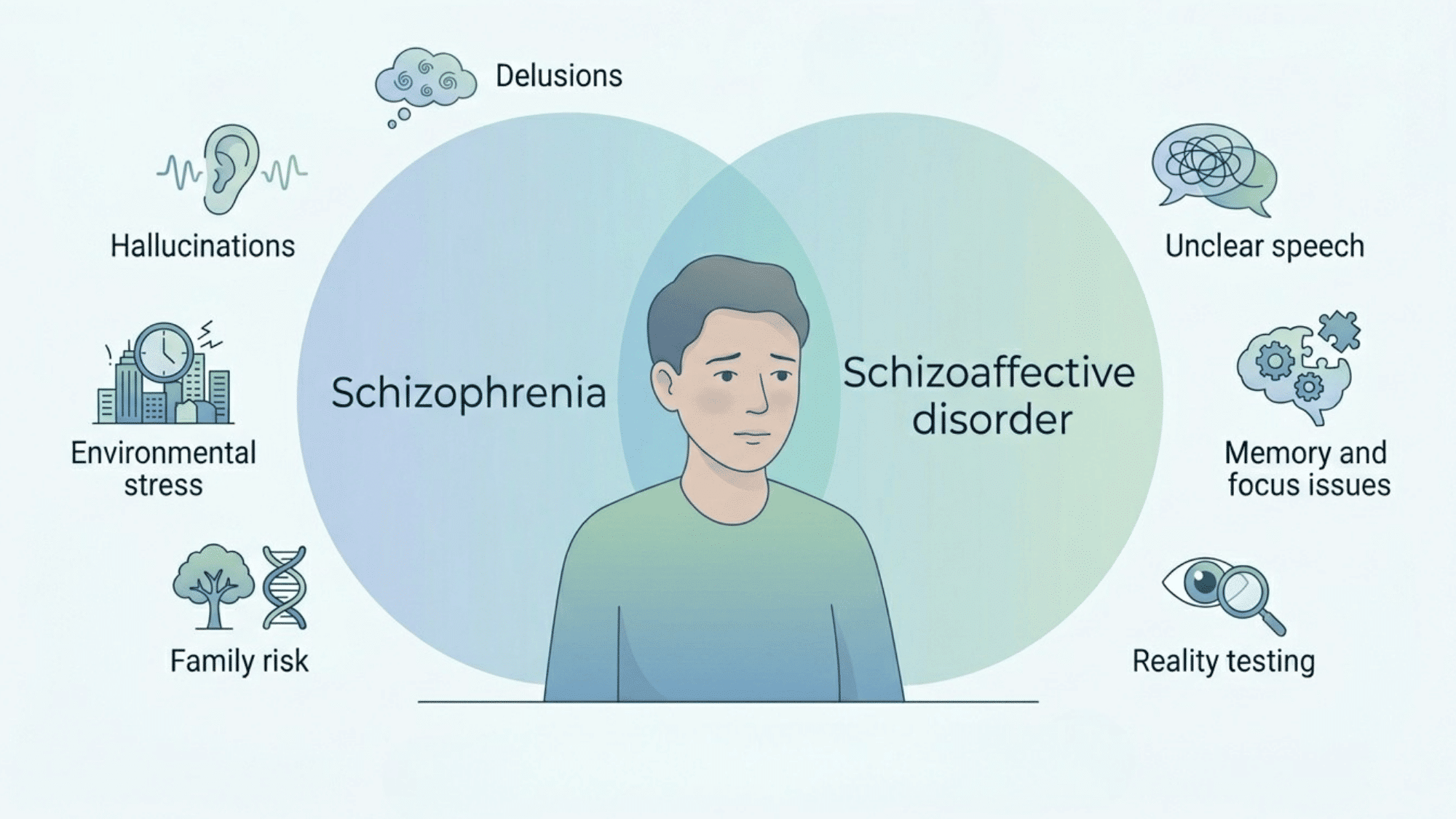
Although schizophrenia and schizoaffective disorder are separate diagnoses, they share several symptoms and risk factors. This overlap is one reason clinicians look at the full pattern of symptoms over time.
| Area of Overlap | How it May Show Up |
|---|---|
| Hallucinations | Hearing, seeing, or sensing things others do not. |
| Delusions | Strong beliefs that stay fixed despite conflicting evidence. |
| Disorganized speech or behavior | Speech or actions may seem unclear, unusual, or hard to follow. |
| Cognitive difficulties | Trouble with focus, memory, conversations, or daily tasks. |
| Reality testing problems | Difficulty separating internal experiences from external events. |
| Family or genetic risk | A family history of psychotic disorders may increase risk. |
| Environmental stressors | Trauma, major stress, or substance use may worsen symptoms. |
Can Someone Have Both Schizophrenia and Schizoaffective Disorder?
A person is usually not diagnosed with both conditions at the same time, but the diagnosis may change as symptoms become clearer.
- Separate Diagnoses: Schizophrenia and schizoaffective disorder are considered different conditions.
- Diagnosis Can Change: A clinician may revise the diagnosis if new symptom patterns appear over time.
- Psychosis May Appear First: Someone may initially be diagnosed with schizophrenia if hallucinations or delusions are the main concern.
- Mood Episodes May Become Clearer Later: If major depression or mania becomes a consistent part of the illness, schizoaffective disorder may be reconsidered.
- This Does Not Mean the First Diagnosis Was Careless: It often means the full pattern needed more time to understand.
Reasons Getting the Right Diagnosis Can Take Time
Mental health diagnoses rarely happen overnight. Symptoms often evolve, overlap, or change in ways that require ongoing assessment.
For conditions involving psychosis, time can be an important part of the diagnostic process. Healthcare providers may assess the symptom history and timing of psychotic symptoms
The Diagnostic and Statistical Manual of Mental Disorders (DSM-5-TR) provides criteria that help clinicians distinguish between these conditions.
One important consideration is whether psychotic symptoms occur independently of mood episodes. This distinction often helps guide diagnosis.
The Bottom Line
While schizophrenia centers primarily on psychosis, schizoaffective disorder combines psychotic symptoms with significant mood disturbances.
In my review, one lesson appears repeatedly: diagnoses are tools for understanding patterns, not predictions about a person’s future.
Learning the distinctions between these conditions can support informed conversations, compassionate care, and a clearer path toward appropriate treatment and support.
Frequently Asked Questions
Is Schizoaffective Disorder Worse Than Schizophrenia?
Not necessarily. It depends on symptom severity, treatment response, support systems, and individual circumstances rather than diagnosis alone.
Which Condition is More Common?
Schizophrenia is more common than schizoaffective disorder; both conditions are considered relatively uncommon in the general population.
Why Can Schizophrenia and Schizoaffective Disorder Be Misdiagnosed?
Misdiagnosis can happen because the symptoms often overlap, especially when hallucinations, delusions, or disorganized thinking are present.
Can Someone Be Diagnosed With One Condition and Later Receive Another Diagnosis?
Yes. Diagnostic impressions sometimes change as clinicians gather more information and observe symptom patterns over time.
Can People With Either Condition Live Independent Lives?
Many individuals can, particularly when symptoms are recognized early and appropriate treatment and support remain in place.