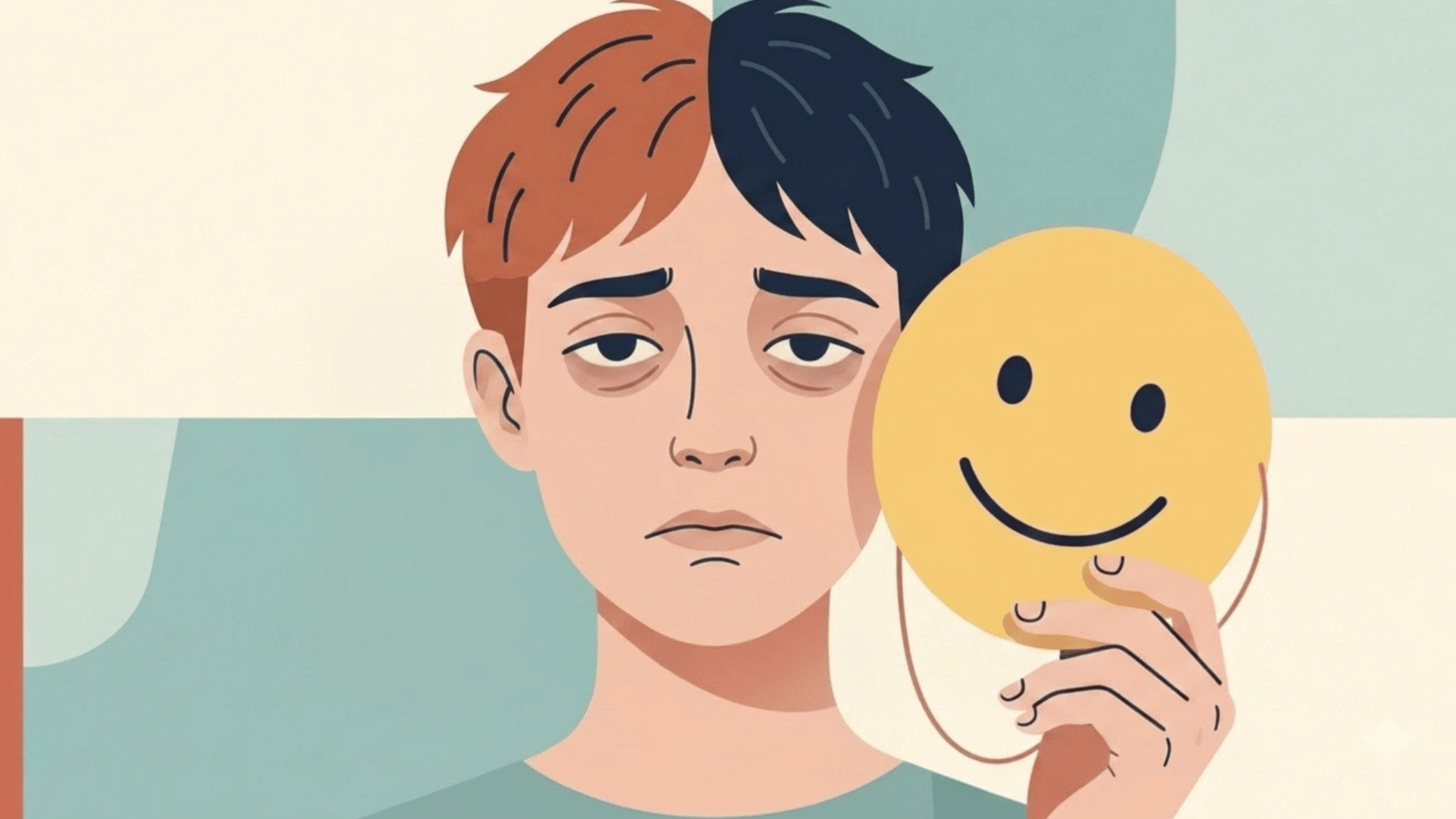
Starting a new relationship can sometimes bring unexpected worry. A small pause in a conversation or an unanswered message may suddenly seem much bigger than it really is.
A simple explanation is that the human mind does not enjoy uncertainty.
When emotions are involved, and the future feels unclear, it naturally starts searching for answers, even with little available information.
In this blog, I will explain what new relationship anxiety is, why it happens, the signs and situations that commonly trigger it, and ways to respond without letting fear take control.
What is New Relationship Anxiety?
New relationship anxiety refers to the fear, uncertainty, or emotional tension that may arise in the early stages of dating or a developing relationship.
The NIMH. gov describes affiliation and attachment as processes involved in forming and maintaining social bonds.
These connections influence how people respond to closeness and social experiences.
If left unchecked, they sometimes tip into full relationship doubts.
Some people worry about saying the wrong thing; others become concerned that a partner is losing interest after a delayed reply or a canceled plan.
The situations may differ, but the uncertainty behind them is often similar. It is also not a medical diagnosis, but rather an experience many people recognize.
Is Anxiety Normal at the Start of a Relationship?
Yes, a new relationship often brings both interest and uncertainty.
It is common to feel nervous when feelings are growing, you’re trying to make a good impression, and trust is still new.
For some people, opening up can also feel uncomfortable before emotional safety develops. They think carefully about dates, messages, and whether the other person feels the same.
These reactions usually settle as both people spend more time together and communication becomes clearer.
Temporary worry alone does not mean the relationship is unhealthy.
Anxiety may need more attention when it affects sleep, work, daily routines, or the ability to enjoy the relationship. Constant overthinking or avoiding closeness can also be signs to look for.
Why Does Anxiety Happen in a New Relationship?
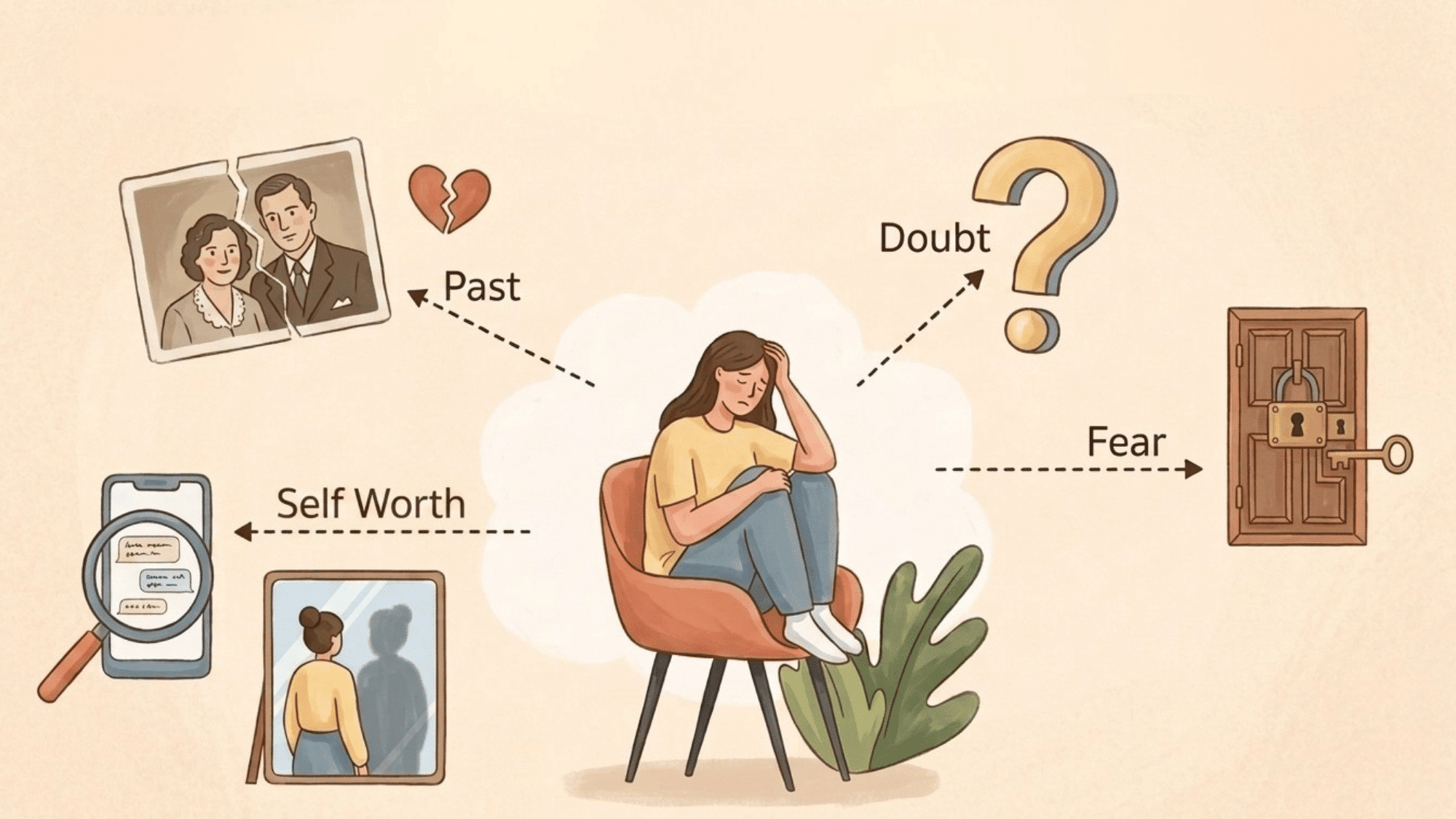
Anxiety rarely comes from a single reason. It usually grows from a mix of past experiences, personal beliefs, and the uncertainty that naturally comes with getting close to someone new.
Uncertainty About the Relationship
The early stages of dating often come with unanswered questions. Two people are still learning about each other’s feelings, expectations, and communication styles.
When things feel unclear, the mind may start creating possible explanations. Sometimes, normal uncertainty can begin to feel like a sign that something is wrong.
Fear of Rejection
Developing feelings for someone can make rejection feel more painful. A delayed reply or a change in communication may feel more serious when someone is already worried about losing the connection.
Past Relationship Experiences
Previous relationships can influence how someone reacts to a new connection. Experiences like betrayal, sudden endings, or inconsistent communication may make certain situations feel familiar.
Attachment Patterns
People develop different ways of responding to closeness and emotional connection.
Some feel comfortable with intimacy, while others become more alert when they sense distance or changes in attention.
Research on adult attachment has examined how these patterns relate to trust, emotions, and responses within romantic relationships.
Low Self-Worth
When someone often doubts their own value, they may find it difficult to accept affection or believe that another person genuinely cares about them.
Fear of Being Vulnerable
Opening up means allowing another person to see personal feelings, needs, and fears. For some people, that level of honesty can feel uncomfortable when trust is still developing.
This overlaps with what shows up when someone is emotionally unavailable, holding back not from lack of interest but from discomfort with exposure.
Holding back emotionally may feel like protection, but it can also make it harder to build a deeper connection.
Overthinking Everyday Situations
Uncertainty can make ordinary moments feel more important than they are. A short message, a change in plans, or a quiet conversation may lead to repeated questions.
Checking messages, replaying conversations, or searching for hidden meanings may bring brief comfort, but it often keeps the worry active.
Common Relationship Anxiety Symptoms
People experience anxiety in different ways. For some, it stays in their thoughts, and for others, it shows up through emotions, habits, or even physical tension.
| Area | Common Signs | Everyday Example |
|---|---|---|
| Thoughts | Replaying conversations, expecting rejection, assuming the worst | Reading the same text message several times |
| Emotions | Insecurity, jealousy, restlessness, worry | Feeling uneasy when a date is rescheduled |
| Behaviors | Seeking reassurance, checking social media, asking repeated questions | Looking for clues that interest has changed |
| Physical responses | Trouble sleeping, muscle tension, upset stomach, racing heart | Feeling anxious before opening a new message |
Common Triggers During the Early Stages of Dating
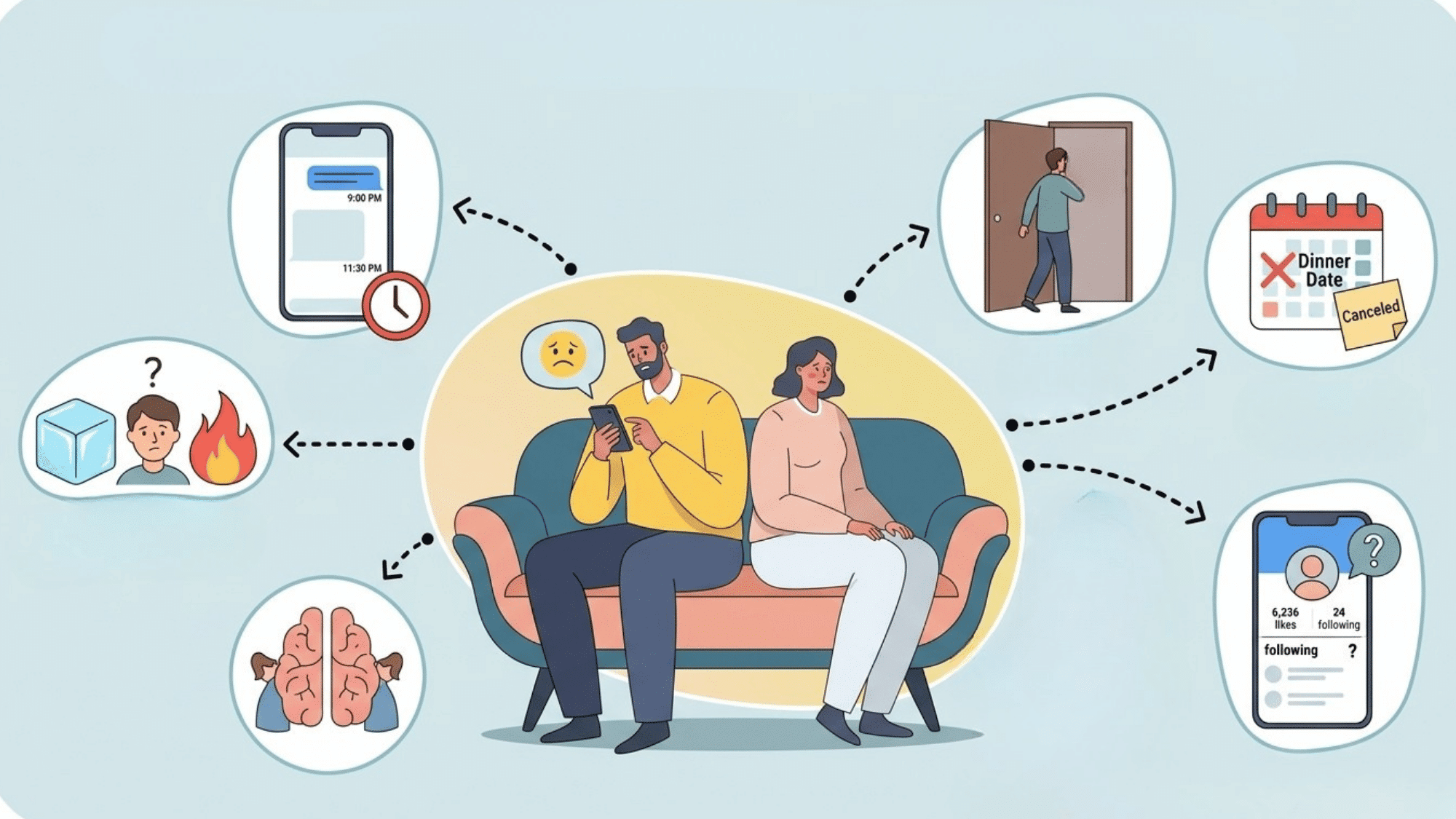
Certain situations tend to bring anxious thoughts to the surface. The trigger itself is not always the problem. It is often the meaning the mind gives to that situation.
Delayed Replies
A late response can raise concerns about interest, commitment, or whether something has changed.
Mixed Signals
Inconsistent communication, changing plans, or shifts in attention can create confusion about where the relationship stands.
A Partner Needing Space
Time spent on work, hobbies, family, or personal interests is normal, but it may feel unsettling for someone who fears distance.
Growing Emotional Investment
As feelings intensify, the fear of losing the connection may become more noticeable.
Social Media Activity
Online actions, such as a missed reply or a new follower, can sometimes create unnecessary doubts.
Conflict or Changed Plans
A disagreement or canceled plan does not always signal a problem, but it may feel bigger when trust is still developing.
Practical Ways to Manage New Relationship Anxiety
Managing anxious thoughts starts with slowing down before reacting. A few small habits can make uncertainty feel less consuming.
- Pause Before Responding: Before sending another message or assuming something is wrong, wait.
- Check the Facts: Ask what you know, what you are guessing, and whether another explanation fits.
- Step Away for a While: Take a walk, breathe slowly, or put your phone aside until the emotion settles.
- Keep Your Routine: Stay connected with friends, hobbies, work, and personal goals.
- Limit Repeated Checking: Constantly reviewing texts or social media often brings only brief relief.
- Speak Clearly: Instead of expecting the other person to read your mind, share your concerns calmly.
- Let Trust Build Slowly: Pay attention to consistent behavior over time rather than instant certainty.
How to Talk to a New Partner About Anxiety Comfortably?

The American Psychological Association (APA) highlights that healthy relationships are linked with communication, emotional support, and the ability to manage challenges together.
Choose a calm moment when neither person is upset or distracted. Conversations about anxiety are usually easier when there is enough time to listen without rushing.
Speak from your own experience and describe what you notice in yourself. Phrases such as “I feel anxious when communication changes suddenly” sound less blaming and keep the discussion open.
Pay attention to how your partner responds. A respectful response includes listening, asking questions, and discussing expectations and concerns seriously, even when they do not fully understand them at first.
Wrapping it Up
Feeling secure in a relationship usually develops little by little. It grows through everyday moments rather than one conversation or one grand gesture.
Understanding new relationship anxiety makes it easier to recognize those feelings without assuming the worst.
Paying attention to patterns and communicating openly can help the relationship feel more secure.
Relationships grow best when both people feel safe enough to be their true selves.
If the worry begins affecting everyday life or keeps returning despite your best efforts, seeking extra support is a healthy step.
Frequently Asked Questions
Can You Have Anxiety in a Healthy Relationship?
Yes. Even a caring and respectful relationship does not automatically prevent anxiety. Uncertainty, past experiences, or fear of vulnerability can still lead to anxious thoughts.
Can New Relationship Anxiety Go Away?
For many people, it becomes less noticeable as trust, communication, and familiarity grow. If it continues to interfere with daily life, it may be helpful to seek additional support.
Why Do I Feel More Anxious When I Really Like Someone?
The more emotionally invested someone becomes, the more they may fear losing that connection. That can make uncertainty feel much more intense during the early stages of dating.