You’ve probably set the same goal more than once and watched it fade after a few weeks.
That happens to most people, and it usually has nothing to do with willpower.
A vision board gives your goal a place where you’ll actually see it every day, instead of hiding in a notebook you forget to open.
Once a goal sits in front of you every day, it starts to shape small choices without you even trying.
This guide walks you through how that works, how to make a vision board step by step, and the mistakes that quietly get in the way.
What Is a Vision Board?A vision board is a collage of images, words, and goals placed somewhere you see often, like a wall, a poster board, or a phone lock screen. I think of it as a visual cue, not a craft project. The idea comes from a real concept in psychology called goal priming. Seeing a goal repeatedly keeps it active in your mind, and each glance works as a small mental nudge toward what you’re pursuing. A vision board isn’t a substitute for planning. I see it as a companion to your goals, not the steps that get you there. |
Why Create a Vision Board?
A vision board does three things well. It sharpens what you actually want, keeps your attention on it, and slowly turns that attention into habits.
- To turn a vague idea into something specific, picking images forces you to choose, like a plate of home-cooked meals over a generic “get healthier.”
- To stay focused, a vision board pulls your attention back to what matters, a few seconds at a time, instead of letting a busy mind drift toward whatever feels urgent.
- To build habits that stick, a vision board works through repetition. A daily glance can nudge small choices, like opening a workout app instead of a game app.
How to Make a Vision Board Step by Step
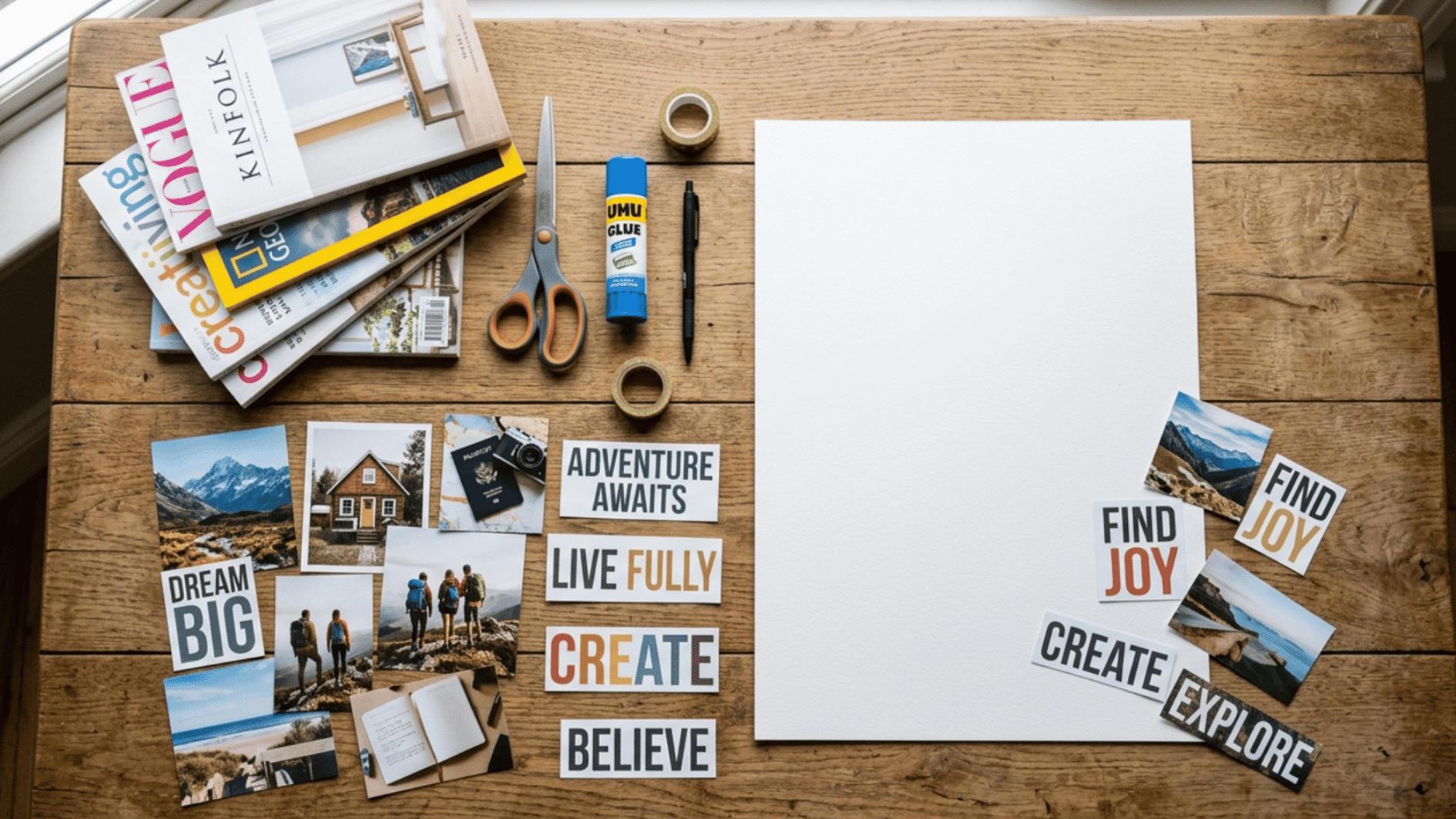
Building a vision board takes less than an hour once you know the steps in order. I’ve laid out five steps below, and it helps to follow them in sequence instead of jumping straight to pictures.
Step 1: Define Your Goals
Pick two to four life areas that matter most right now, like career, health, or relationships.
Within each area, write down three to five goals you actually want. Make each one clear enough to picture, like “run a 5K by October” instead of just “get fit.”
Step 2: Gather Your Supplies
For a Paper Board, Grab a Poster Board or Corkboard, Scissors, Glue or Pins, and A Few Old Magazines.
For A Digital Board, Open a Free App Like Canva or Pinterest and Skip the Scissors.
Step 3: Find Images, Quotes, and Words
Search for Pictures that Match Your Exact Goals, Not Ones that Just Look Pretty.
A Photo of The Actual City You Want to Visit Works Better than A Random Beach Photo. Add a Short Word or Phrase Near Each Image so You Remember What It Means Later.
Step 4: Arrange Your Vision Board
Group pictures by goal instead of placing them randomly, so your eyes can take in one area of your life at a time instead of jumping around.
Put the goal that matters most to you near the center, since that’s usually where your eyes go first. Leave a little space between groups too. A board that’s too full starts to blur together, and nothing stands out.
Step 5: Display It Where You’ll See It Often
Put the board somewhere you already look every day, like near your mirror or your phone’s lock screen. You’re more likely to notice it there than somewhere you have to go looking for it.
The spot matters more than how it looks. A board kept in a drawer only helps on the days you remember to open it, and most days, you won’t.
Things to Put on Vision Board
Once You’ve Picked Your Life Areas, These Examples Can Help You Turn Them Into Specific Images and Words Instead of Staying Stuck on Vague Ideas.
- Career and Education Goals: A job title, workplace, or certificate you’re working toward, with a target date if you have one.
- Health and Wellness Aspirations: A running trail, a yoga pose, or a meal you want to cook more, not a generic fitness photo.
- Financial Goals: A real number, like a savings target or a debt-free date, works better than a vague wish.
- Relationships and Family: A photo from a memory you want more of, like a wedding, a family trip, or time with friends.
- Travel and Lifestyle Dreams: A photo of the actual place you want to visit, not a random travel shot.
- Personal Growth and Hobbies: An image tied to a skill or hobby, like a guitar, a paintbrush, or a book cover.
- Inspirational Quotes and Affirmations: One or two phrases that mean something to you personally, not generic quotes you’ve seen before.
- Photos, Symbols, and Meaningful Reminders: A personal photo or object that reminds you why the goal matters, like your kids or a place that motivates you.
Physical vs. Digital Vision Boards
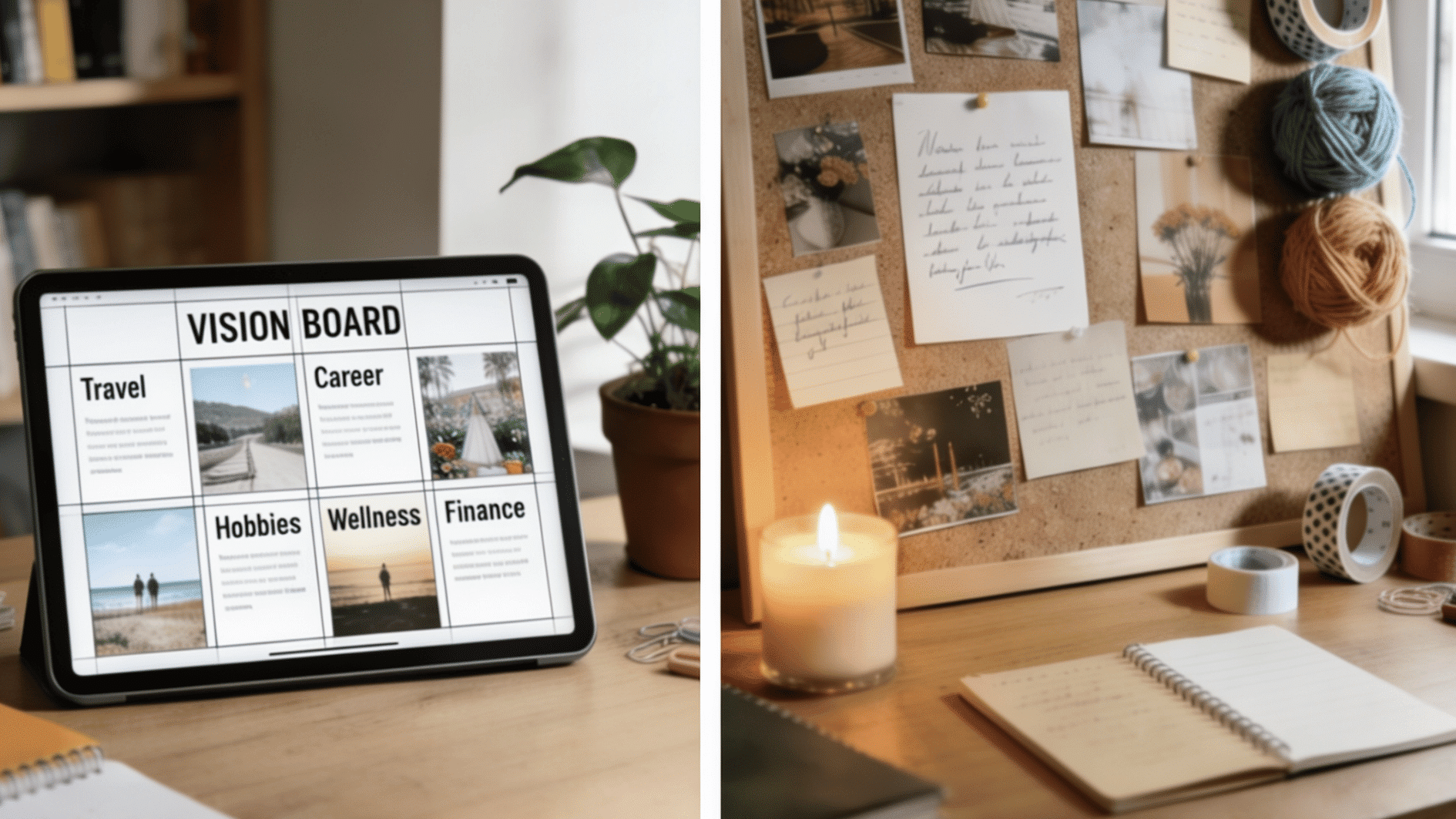
Once you’ve picked your images and words, the next decision is the format they live in.
| Particulars | Physical Board | Digital Board |
|---|---|---|
| Cost | Poster board, magazines, glue | Free, using apps like Canva or Pinterest |
| Setup time | 30-60 minutes of cutting and arranging | A few minutes, drag and drop |
| Visibility | Only where you place it | Can live on your phone, laptop, and lock screen at once |
| Editing | Requires redoing sections by hand | Easy to swap or update anytime |
| Feel | Tactile, hands-on process | Quick, but less physical involvement |
Common Vision Board Mistakes to Avoid
A few common mistakes can quietly stop your vision board from working. Here are the ones you’re most likely to run into.
- Setting too many goals at once. A board with fifteen goals spreads your attention thin instead of sharpening it. A handful you can actually hold in mind works better.
- Using images without personal meaning. A picture that just looks nice, without tying to a goal you actually want, fades into the background within a week.
- Focusing only on results instead of actions. A picture of the outcome, like a paid-off loan, means little without a nod to the daily action behind it, like a savings app icon.
- Treating the board as a one-time project. Once it’s built and forgotten on a wall, it stops doing any work at all.
How to Use Your Vision Board Effectively
Building the board is only half of it. Using it well is what actually moves a goal forward.
- Review It Regularly: Check it at a moment tied to a routine you already have, like your morning coffee, even if it’s only a few seconds.
- Turn Your Goals Into Action Steps: Pick one small, specific task for each image you can do this week, not just a hope for later.
- Keep the Board Steady Over Time: A vision board works best when the goals on it stay the same for a while. Save changes for a real reason, like a new year or a goal you’ve actually finished, instead of updating it every few weeks.
Conclusion
A vision board has one job: keep a goal in sight long enough for you to act on it.
The board itself matters less than being honest about what you put on it, choosing images that reflect what you actually want, not what looks good to others.
If you’re starting today, don’t aim for a perfect board. Pick two or three goals, find one image for each, and put it somewhere you’ll see tomorrow morning. That’s a better start than a polished board built for someday.
Frequently Asked Questions
How Many Pictures Should a Vision Board Have?
There’s no fixed number. Ten to twenty images usually work well, enough to cover your chosen goals without crowding the board or losing focus.
What Size Should a Vision Board Be?
Any size works, from a small corkboard to a full poster. Pick a size that fits where you plan to display it daily.
Do vision boards actually work for everyone?
Not always the same way. They tend to help people who pair them with real action steps, and matter less for people who only look without doing anything toward the goal.