

I’ve met many people who feel sick to their stomach right before something stressful, a big meeting, a hard talk, or a long, worried night.
They’re often surprised when I tell them the mind and the gut are closely linked. Anxiety and nausea show up together more than most people realize, yet few understand why.
It’s one of the most common things I hear in my work, and also one of the most confusing for those going through it. In this blog, I will explain the link between anxiety and nausea, why it happens, and what you can do about it.
Can Anxiety Cause Nausea?Yes, anxiety can cause nausea, as when you feel anxious, your body activates its fight-or-flight response, releasing stress hormones like cortisol and adrenaline. This diverts blood flow from digestion, slowing it and leaving you queasy, unsettled, or genuinely sick to your stomach. The reason lies in the gut-brain axis, the two-way communication between brain and gut. Harvard Health Publishing explains the two are deeply connected, and the ADAA notes the gut’s nerve network is highly sensitive to emotions. So that pre-presentation nausea isn’t your imagination, but your body responding to your mind. |
The Link Between Anxiety and Your Digestive System

Your brain and gut are in constant conversation, which is why emotional stress so often shows up as very real, physical discomfort in your stomach.
- The brain and gut are closely linked through the gut-brain axis, allowing constant two-way communication.
- When you experience anxiety, the body activates the fight-or-flight response, releasing stress hormones
- This reduces blood flow to the digestive system and slows normal digestion, which can lead to nausea or stomach discomfort.
- Harvard Health Publishing explains that the brain and gastrointestinal system are deeply connected, meaning stress in one can affect the other.
- The Anxiety and Depression Association of America (ADAA) also notes that the gut has a vast nerve network closely connected to the brain, making it highly sensitive to emotions.
Can Stress Cause Nausea?
Yes, stress can cause nausea even without an anxiety disorder, as everyday moments like interviews, tough conversations, or stressful events trigger it too.
Your nervous system signals the gut to slow digestion, shift motility, and disrupt its microbiome, leaving you queasy or unsettled, and it’s your body’s natural, very human response.
The vagus nerve, which runs from the brain to the gut, plays a key role in transmitting these stress signals to the digestive system.
The Role of Stress Hormones
When you feel anxious, your body releases cortisol and adrenaline; these hormones are helpful in short bursts but disruptive when elevated for extended periods. In the digestive system, they can:
- Slow gastric emptying causes food to move more slowly through the stomach.
- Increase stomach acid production, which may contribute to discomfort or heartburn.
- Trigger muscle contractions and cramping in the intestines.
- Heighten the gut’s sensitivity, making normal digestive sensations feel more intense.
- Alter bowel movements, leading to diarrhea, constipation, or changes in routine.
- Reduce blood flow to the digestive tract, affecting normal digestive processes.
- Contribute to nausea or an upset stomach, especially during periods of acute stress.
- Disrupt the balance of gut bacteria, potentially affecting digestion and overall gut health.
- Increase feelings of bloating or fullness, even after small meals.
What Does Anxiety-Related Nausea Feel Like?
Anxiety-related nausea can feel different from nausea caused by illness or food; some common characteristics include:
| Feature | Anxiety-Related Nausea | Illness-Related Nausea |
|---|---|---|
| Timing | Before or during a stressful event | Anytime, often sudden onset |
| Pattern | Tied to emotional or stressful situations | Not necessarily linked to emotions |
| Other symptoms | Racing heart, sweating, nervousness | Fever, vomiting, body aches |
| Relief | Often improves when stress reduces | Requires medical treatment |
| Duration | Usually short-term or situational | Can persist without treatment |
If you are a woman feeling nauseous and tired in situations of ongoing stress, it is worth considering if anxiety may be a contributing factor.
How Common is Anxiety and Anxiety-Related Nausea?
Anxiety is common, with the National Institute of Mental Health (NIMH) reporting that about 19.1% of U.S. adults experience an anxiety disorder each year, and 31.1% at some point in life.
Women are more affected than men, as the percentage states (23.4% vs 14.3%).
Anxiety can also influence digestion, as the American Journal of Managed Care (AJMC) notes that up to 40% of people report anxiety-related stomach issues.
Those most affected include individuals with anxiety disorders (GAD, panic, social anxiety), IBS, or anticipatory anxiety, where worry about future events triggers physical symptoms like nausea and fatigue.
How to Manage Anxiety-Related Nausea?
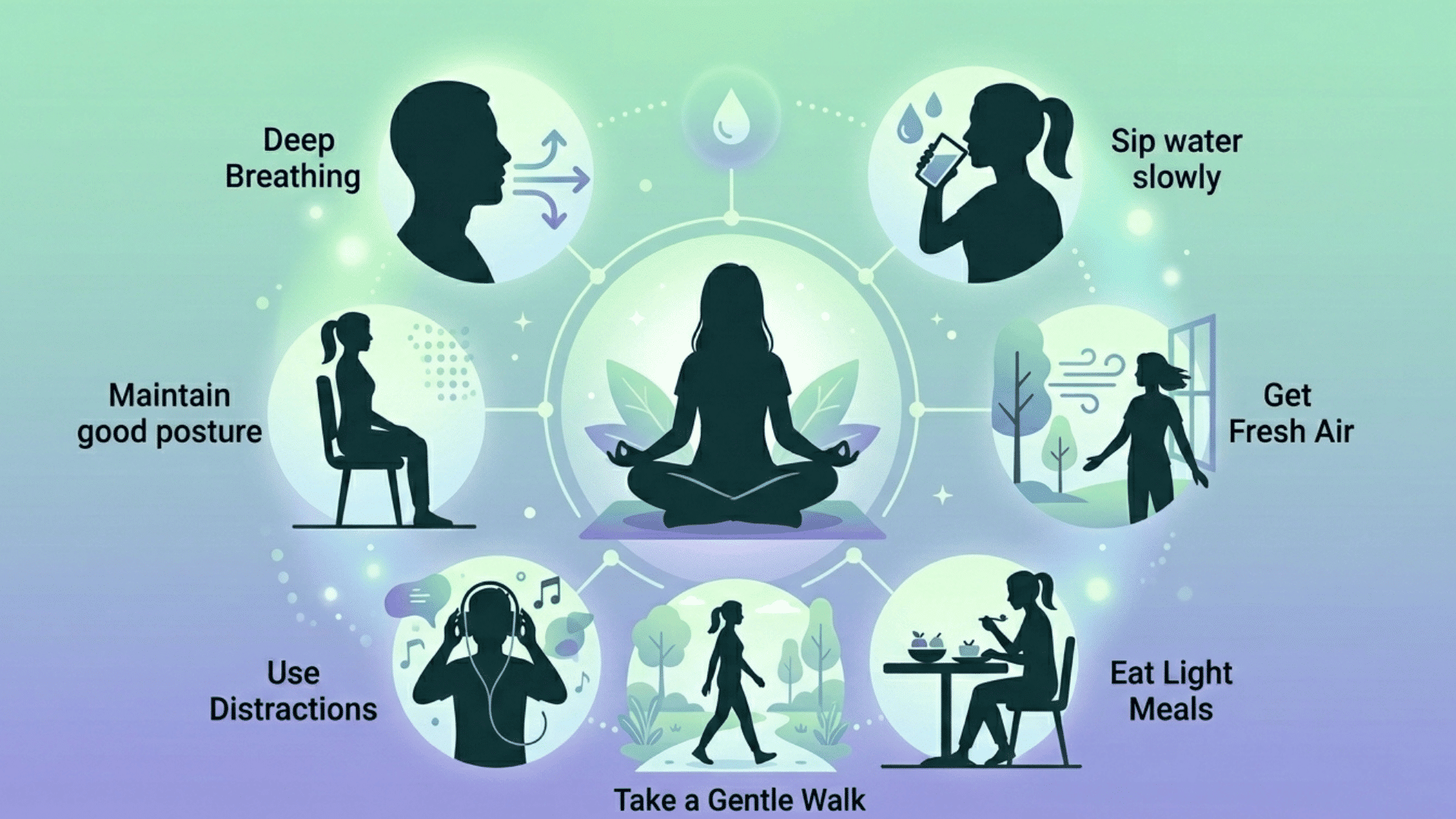
Anxiety-related nausea can be managed through simple grounding techniques, lifestyle adjustments, and stress control strategies that help calm the mind and support digestion.
- Deep Breathing: Calms the body’s stress response.
- Sip water slowly: It helps ease nausea.
- Get Fresh Air: Reduces dizziness and mental tension.
- Eat Light Meals: Keep the stomach balanced and comfortable.
- Take a Gentle Walk: Supports digestion and shifts focus.
- Use Distractions: Music or reading can redirect anxious thoughts.
- Maintain good posture: It relieves stomach tightness and discomfort.
Evidence-Based Approaches
Here are Evidence-based approaches for managing anxiety-related nausea that focus on clinically supported therapies and interventions that help regulate stress responses and improve overall digestive and emotional balance.
1. Cognitive Behavioral Therapy (CBT)
CBT helps rewire anxious thought patterns that trigger nausea, as it’s one of the most researched treatments for anxiety disorders.
Source:American Psychological Association – CBT
2. Diaphragmatic Breathing
Slow, deep belly breathing activates your parasympathetic nervous system – essentially hitting the “calm down” switch; even one minute of quiet breathing can ease both anxiety and nausea noticeably.
Source: Cleveland Clinic – Deep Breathing Exercises
3. Regular Physical Activity
Exercise naturally lowers cortisol and releases endorphins, both of which reduce anxiety, and even a 20-minute walk helps. It’s one of the simplest, most accessible tools you have.
Source:ADAA – Exercise for Stress and Anxiety
4. Mindfulness-Based Stress Reduction (MBSR)
MBSR teaches you to observe anxious thoughts without reacting to them. Over time, this breaks the stress-gut cycle that causes nausea. Research consistently backs its effectiveness for anxiety.
Source:NIH – Mindfulness-Based Interventions
5. Dietary Adjustments
What you eat during high-stress periods matters. Small, frequent meals, cutting caffeine, and staying hydrated can meaningfully reduce gut irritation. Your digestive system is far more stress-sensitive than most people realize.
Source:Harvard Health – Diet and Mental Health
When to Speak with a Healthcare Professional?
While anxiety-induced nausea is common, it is important to rule out other causes, and you should speak with a doctor or mental health professional if:
- Nausea is persistent, severe, or worsening
- You are losing weight unintentionally
- You are experiencing vomiting that affects your daily life
- Nausea is accompanied by chest pain or difficulty breathing
- Symptoms do not improve when stress is reduced
A healthcare provider can help distinguish anxiety-related symptoms from other gastrointestinal conditions and provide appropriate support.
Community Opinions on Anxiety and Nausea
There’s real comfort in knowing you’re not alone, and here’s what others living with anxiety-related nausea have shared about their experiences in online support communities.
|
Mornings are the Worst On the Anxiety Support forum, one member described waking up gagging daily, and others quickly related- “I gag every morning as soon as I wake.”- HealthUnlocked |
|
Overthinking Makes it Worse A long-time sufferer of health-anxiety nausea reflected that fixating on it only intensified it: “What you give power to has power over you.”- HealthUnlocked |
|
It Often Starts with Stress or Trauma One member traced their nausea and “butterflies” directly to anxiety, noting they didn’t have them before a traumatic event occurred.- HealthUnlocked |
|
Small Remedies Bring Comfort Across forums, members recommend gentle fixes like ginger tea, sugary fruit juice, and breathing exercises- with one calling ginger the best for nausea.- HealthUnlocked |
The Bottom Line
Anxiety is more than a mental experience; it is a full-body response, and yes, anxiety can cause nausea is a question with a clear, science-backed answer.
Your gut and brain are deeply connected, and when anxiety rises, your digestive system responds.
Can stress cause nausea without a formal diagnosis? Yes. Everyday stress carries the same physical weight, and its effects on digestion are very real.
For women feeling nauseous and tired alongside persistent anxiety, professional support is always worth seeking.
Managing anxiety through therapy, lifestyle changes, or medical guidance can meaningfully reduce physical symptoms too.
Frequently Asked Questions
How Long Does Anxiety-Related Nausea Usually Last?
It often eases as stress passes, but ongoing worry can make it linger for weeks; consult a healthcare provider.
Can Anxiety Nausea Happen at Night or Wake Me from Sleep?
Yes, racing bedtime thoughts keep your nervous system alert, which can unsettle your stomach as you fall asleep or even wake you up.
Will Treating My Anxiety Actually Stop the Nausea?
Often, yes; since nausea stems from the gut-brain link, calming anxiety through therapy, movement, or mindfulness usually relieves the physical symptoms too.