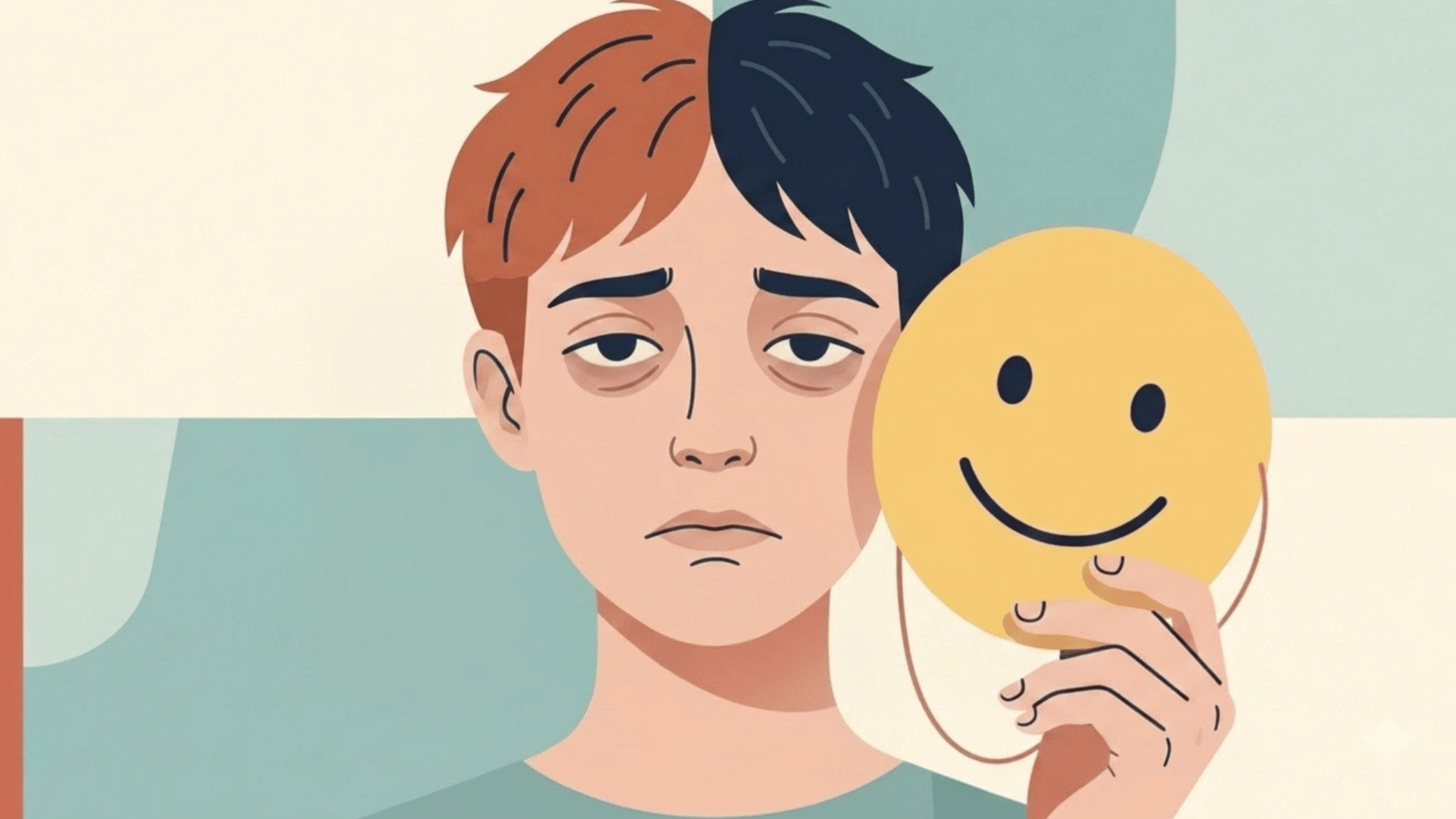

If you’re healing from narcissistic abuse, you know the confusion does not always end when the relationship does. You may replay conversations, question your memory, or still feel connected to someone who hurt you.
These feelings can be a response to prolonged manipulation, not a sign that something is wrong with you. Healing means rebuilding trust in your own thoughts, feelings, and judgment.
In this blog, I’ll walk you through practical self-care tips and advice to help you heal after narcissistic abuse at your own pace.
What is Narcissistic Abuse?
Narcissistic abuse is a repeated pattern of behaviors used to gain power, control, or emotional influence over another person in a toxic relationship.
It often develops slowly rather than appearing all at once.
It involves manipulation tactics that make the other person question their feelings, memories, or decisions.
It may involve gaslighting, blame-shifting, emotional withdrawal, criticism, intimidation, or attempts to isolate you from others.
These behaviors may be mixed with affection, apologies, or promises of change, making the pattern difficult to recognize.
Suggested: If you're still piecing together whether what you experienced fits this pattern, it can help to first read our guide on narcissistic behaviors in a relationship before working through recovery.
Why Does Healing from Narcissistic Abuse Feel a Bit Different?
Narcissistic abuse doesn’t just end a relationship. It reshapes how you see yourself. The mind holds onto these patterns long after the relationship is over.
- Lack of Trust in Your Instincts: Feeling unsure about your judgment around new people or situations.
- Anxiety in New Situations: Experiencing worry or fear when starting relationships or entering unfamiliar environments.
- Constant Alertness: Feeling like your nervous system is always on guard, even when you are safe.
- Difficulty Making Decisions: Struggling with choices that once felt simple or automatic.
- Unexplained Guilt: Feeling responsible or guilty without a clear reason.
How to Heal After Narcissistic Abuse?
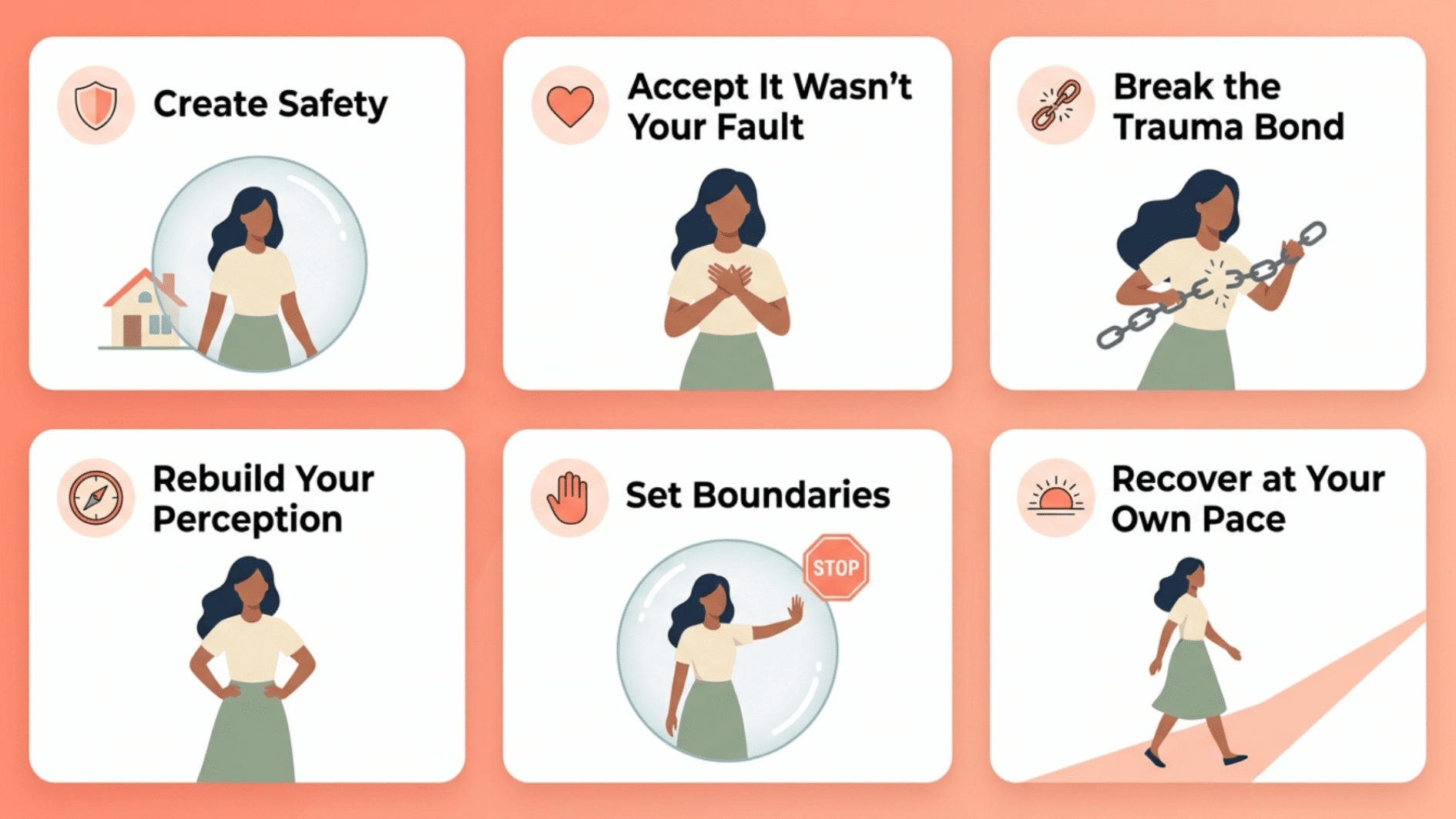
Healing after narcissistic abuse happens in stages, not overnight. Each step below builds on the last, and none of them requires rushing.
Step 1: Create Safety and Limit Contact Where Possible
Safety comes first. If you can go no contact, do it. If you share children, finances, or a workplace, limit contact to what’s necessary and keep it brief, factual, and in writing when possible.
Even partial distance gives your mind room to stop operating in survival mode.
Example: Switch custody logistics from calls to email, so there’s no tone, timing, or pressure in the exchange.
Step 2: Accept that The Abuse Was Not Your Fault
Manipulation works by making you question your own judgment, so blame often lands on the wrong person: you. It wasn’t your fault. This step isn’t about repeating that phrase until it sticks.
It’s about noticing the specific moments you still blame yourself for and challenging them one at a time.
Example: When the thought “I should’ve left sooner” comes up, ask what you actually knew back then, not what’s obvious now.
Step 3: Break the Trauma Bond with Patience
Missing someone who hurt you doesn’t mean you want them back. It means the relationship trained your brain to associate them with relief from anxiety they caused in the first place.
If the pull still feels confusing, it helps to understand about trauma bond and why it forms.
Breaking that link takes repetition, not willpower. Every time you resist reaching out, the bond loosens a little more.
Example: If the urge to text them hits at 11pm, wait 20 minutes before deciding. The urge usually passes once the spike settles.
Step 4: Rebuild Confidence in Your Own Perception
Manipulation often leaves you doubting things you used to know for certain, from your memory of events to your read on other people.
Rebuilding this looks like small experiments: trusting a gut reaction, then checking if it held up. I’ve found this works better than trying to “think positive” because it gives you actual evidence rather than an affirmation.
Example: If something feels off about a new coworker, note it privately, then check weeks later whether your instinct matched what happened.
Step 5: Set Healthy Boundaries without Guilt
Setting boundaries feels unfamiliar after a relationship where saying no had consequences. Start small, say no to something low-stakes and notice that nothing bad happens.
Guilt may still show up, but guilt isn’t a signal that you did something wrong. It’s often just an old alarm going off out of habit.
Example: Decline a last-minute favor for a friend, and notice the friendship survives and the guilt fades faster than expected.
Step 6: Give Yourself Room to Recover on Your Own Timeline
Recovery doesn’t run on anyone else’s clock. Compare yourself only to where you were before, not to how far along you think you’re supposed to be by now.
What matters is that you keep showing up for the process, even imperfectly.
Example: If a hard week follows three good ones, that’s not a reset. Compare this week to how you would’ve handled it a year ago, not to last week’s easier stretch.
Daily Habits that Support Healing From Narcissistic Abuse
Recovery isn’t only about the big steps. It’s also shaped by what you do daily, in small, consistent ways. A few habits make a real difference:
- Calm Your Nervous System: Slow breathing, a short walk, or a few minutes of stillness can help calm a stress response that remains elevated after prolonged emotional strain.
- Journal without Judgment: Writing down what you feel, without trying to fix or organize it, gives your mind a way to process emotion instead of carrying it silently.
- Reconnect with People Who Feel Safe: Rebuilding a few steady, trustworthy connections helps counter the isolation narcissistic abuse often creates.
- Protect Your Sleep, Food, and Movement: Poor sleep and skipped meals make triggers harder to manage, while consistent basics make regulation easier.
- Name What You’re Feeling Before Reacting to It: Pausing to label an emotion, even silently, gives you a beat between the trigger and your response.
- Notice Harsh Self-Talk: When a critical inner voice shows up, pause and ask whose voice it really sounds like; this is where practicing self-compassion makes the biggest difference.
- Set One Small Goal Each Day: Even something minor, like replying to an email you’ve been avoiding, builds a sense of momentum that abuse often erodes.
How Long Does it Take to Heal From Narcissistic Abuse?
There’s no fixed timeline. Healing depends on how long the relationship lasted, how deep the impact was, and the support you have around you.
Some people notice a shift in a few months. For others, it takes years to fully rebuild trust in themselves. Progress isn’t a straight line either.
You may feel steady for weeks, then get pulled back by a memory or trigger, and that doesn’t mean you’ve failed. It means healing is still working through you.
What matters more than speed is consistency. Small daily habits, patience with yourself, and support when you need it will get you there faster than trying to rush the process.
Signs You are Healing from Narcissistic Abuse

Progress after narcissistic abuse tends to show up in small shifts you notice only when you compare where you are now to a few months back.
Your Judgment Feels Reliable Again
You stop second-guessing every decision. A choice that once triggered hours of doubt now takes minutes. This shift usually happens gradually, not all at once, so it’s easy to miss as it happens.
Triggers Lose Their Grip
A reminder of the relationship still surfaces, but it passes faster and disrupts your day less.
What I’ve noticed is that people often measure this wrong. They wait for triggers to disappear completely instead of noticing that the intensity and duration have already dropped.
You no longer feel worthless the way the relationship sometimes trained you to.
You’re Building a Life That’s Actually Yours
Interests, routines, and relationships start forming around what you want, not around managing someone else’s moods.
This is one of the clearer markers of progress, because it reflects energy that used to go toward survival now going toward your own life instead.
How to Handle Triggers and Setbacks While Healing?
A trigger doesn’t mean you’re back at square one. It means something- a smell, a song, a message- reminded your body of the relationship before your mind caught up.
Name it silently as it happens: “this is a trigger, not an emergency.” That distinction separates what your body is reacting to from what’s actually happening right now.
Ground yourself by noticing a few things around you, or pressing your feet into the floor. This pulls your nervous system out of the memory and back into the present room.
Setbacks tend to arrive in clusters, not alone. A rough stretch after weeks of steadiness usually means something stirred the pattern temporarily, not that it’s back for good.
When Should You Consider Professional Support?
Self-help strategies can make a real difference, but some patterns respond better with professional support. Consider reaching out if you:
- Have intrusive memories that aren’t easing over time
- Notice how your trust or self-worth affects daily life
- Feel severe anxiety or panic attacks
- Notice symptoms of depression alongside these patterns
- Keep repeating painful relationship patterns despite your efforts
- Have thoughts of self-harm or hopelessness
Note: If you’re in crisis or need immediate support, find your local crisis service through Find A Helpline, or call the National Domestic Violence Hotline if safety is a concern.
Conclusion
Healing from narcissistic abuse builds through small choices, not one turning point. Every time you trust yourself, hold a boundary, or get through a hard day without reaching back out, that adds up.
Some steps will feel easy. Others will take real effort. Both are normal parts of the process. What matters most is that you keep choosing yourself, one small decision at a time.
And if the weight of it feels like more than you can carry alone, reaching out for professional support is a reasonable next step, not a setback.
Frequently Asked Questions
Can You Fully Recover After Narcissistic Abuse?
Yes. Most people regain their confidence, trust, and sense of self, though the memory of it may not fully disappear.
Can Narcissistic Abuse Affect how I Parent or Show up For My Kids?
Yes. Self-doubt and hypervigilance can carry into parenting, often as over-apologizing or second-guessing decisions. This usually eases as your confidence rebuilds.
How Do I Heal if I Still Have to Stay in Contact with Them?
Keep interactions brief, factual, and limited to necessary topics. Emotional distance is possible even when physical contact isn’t.