

In my clinical work, few questions come up more often than this one: “I don’t feel sad exactly, I just feel nothing. Is something wrong with me?”
If you’ve been asking yourself why do I feel empty inside, I want you to know two things: that feeling is clinically real, and no, nothing is wrong with you for having it.
When emptiness lingers, I’ve seen it shift into something sharper.
This blog covers what causes emotional emptiness and what actually helps.
Disclaimer: The content reflects the author’s clinical knowledge and research background but is not a substitute for a personalized evaluation by a licensed mental health professional
What Does Feeling Empty Inside Actually Mean?
When patients describe emotional emptiness, they are rarely talking about sadness.
They describe an absence, numbness, where motivation and meaning used to be. They can go through entire days, have conversations, finish work, and register nothing internally.
It can look fine from the outside. It doesn’t feel like anything from the inside.
Sometimes chronic emotional emptiness is linked to conditions like depression and borderline personality disorder.
If the feeling has lasted more than two weeks and is interfering with daily life, talking to a licensed therapist is a reasonable next step.
If there is no obvious reason, that is still valid. Emotional emptiness does not always have a clear trigger.
Why Do I Feel Empty: Common Reasons Behind the Hollow Feeling
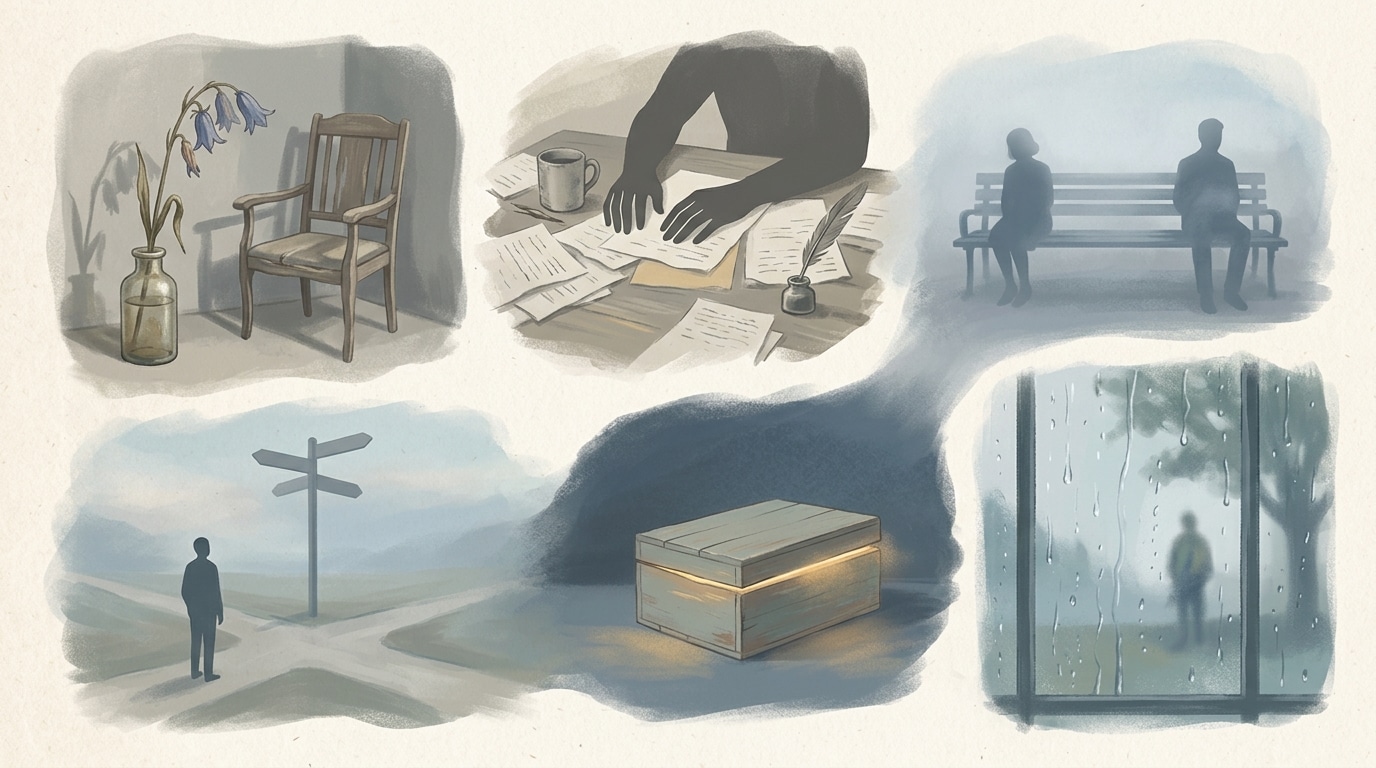
1. Grief and Loss That Has Not Been Processed
Unprocessed grief doesn’t announce itself. It settles quietly into a persistent emptiness that can last years after a loss, long after people around you have decided you should be “over it.”
The absence of acute pain doesn’t mean the grief is resolved.
2. Emotional Burnout From Giving Too Much
Burnout depletes emotional reserves in ways that don’t always look like exhaustion.
Many patients expect to feel tired. What catches them off guard is the numbness, a flat disconnection from people and activities they used to care about.
That is burnout too, and it is often missed because it doesn’t fit the conventional picture.
3. Loneliness and Lack of Meaningful Connection
Humans are wired for connection at a neurological level. When that need goes chronically unmet, when people feel unseen even in a room full of others, the nervous system doesn’t produce sadness so much as a quiet hollowness.
It’s one of the more underdiagnosed drivers of emotional emptiness I see in clinical practice.
4. Living Without a Sense of Purpose or Direction
Purpose is not a luxury. Research in positive psychology consistently links a sense of meaning to emotional wellbeing.
When daily life feels like going through the motions, when there is no clear “why” underneath the routine, emptiness tends to move in. Patients often describe it as a gap they can’t quite name.
5. Unresolved Trauma and Suppressed Emotions
Trauma that was never processed doesn’t disappear; it goes underground. In clinical terms, emotional suppression is a regulatory strategy that trades short-term stability for long-term cost.
One of those costs is a chronic, diffuse emptiness that feels disconnected from any obvious cause, because the cause itself was buried.
6. Depression and Emotional Numbness
Depression is widely misrepresented as sadness. In reality, many depressed patients feel flat, not tearful. Clinicians call it anhedonia, the inability to experience pleasure in things that once mattered.
It is its own kind of suffering, and it is frequently missed precisely because the person doesn’t “look depressed.”
When Emptiness Turns Into Self-Doubt, Why Do I Hate Myself
One of the most consistent patterns I observe is this: the longer emotional emptiness persists, the more personal it becomes.
People stop asking “why do I feel this way?” and start asking “what is wrong with me?”
The inner critic gets louder. It replays failures, dismisses any evidence to the contrary, and starts to feel like the truth.
What I tell patients and what the research supports is that this voice is not an honest narrator. It is a symptom.
Mental Health America identifies self-hatred as a core symptom of depression, which means it often lifts when the underlying condition is treated.
That is not a minor footnote. It means the self-loathing is not revealing something true about you. It’s telling you that you need care.
Is Feeling Empty a Sign of Depression?

It can be, but it’s not automatically that. Depression does not always present as sadness.
For many people, it feels flat and colorless, what clinicians call anhedonia, the inability to feel pleasure even in things that once brought joy.
But emptiness is not always depression. Burnout, grief, and chronic loneliness can produce functionally identical symptoms without meeting the clinical criteria for a depressive episode.
If it has lasted more than two weeks and is affecting daily life, it is worth speaking to a doctor or therapist. A proper assessment doesn’t just give you a label; it tells you which path through this actually applies to you.
What Emotional Emptiness Actually Feels Like: Voices From the Mental Health Community
People describe emotional emptiness differently, but the core experience is strikingly consistent. Here is how real people across mental health communities have put it into words.
1. Rabbit29, Portland, OR (2020)
“Recently the empty feeling that usually lives under my rib cage has been growing and I’m starting to feel it almost everywhere. My purpose in life and place in the world doesn’t exist right now. This is not something I can easily explain to just anyone.” Source: Mental Health Forum
2. Paraplanner, London (2025)
“I go to the gym every day and I look good, strength is great, but the emptiness inside is still there. I am feeling very sad and empty inside with no real way out. I am trying.” Source: Mental Health Forum
3. mentalhealthandme (2023)
“My depression is pretty bad right now. I don’t know what to do with my life and I’m feeling left out. I have this empty feeling in my chest. I’m waiting for the day to end so I can hide in my room and not feel guilty. I’m stuck.” Source: HealthUnlocked
How to Cope When You Feel Empty Inside?
When I feel empty, the instinct is to wait for it to pass. But waiting rarely works. Small, consistent actions tend to move the needle more than any single breakthrough moment.
- Notice It without Judgment: When the feeling arises, I try to name it. “I feel disconnected right now.” That small act of naming creates a little distance between me and the feeling.
- Move Your Body: Even a ten-minute walk changes something. It does not have to be a workout. According to the Mayo Clinic, regular physical activity has a measurable impact on mood and emotional regulation.
- Write It Down: Not a journaling exercise. Whatever comes out, unfiltered. Seeing it on paper loosens the grip.
- Reach Out to One Person: Not an announcement. Just a text to someone you trust: “I’m having a rough week.” That is enough.
- Limit Screen Time: Scrolling amplifies emptiness. Even thirty minutes less a day creates noticeable mental space.
How to Get Help When Feeling Empty Takes Over?
If the question “why do I feel empty inside” has moved from occasional to constant, these are the resources I point people toward.
1. 988 Suicide and Crisis Lifeline
Call or text 988 anytime, day or night. This free and confidential service connects you with a trained counselor who can help you through moments of emotional crisis, suicidal thoughts, or overwhelming distress.
2. Crisis Text Line
Text HOME to 741741 to reach a trained crisis counselor over text.
This is a good option if you are not comfortable talking on the phone but need immediate support. Visit the Crisis Text Line to get started.
3. NAMI Helpline
Call 1-800-950-6264 for guidance on finding mental health care, understanding a diagnosis, or figuring out your next step.
Visit NAMI for free peer support groups across the country.
4. Psychology Today Therapist Finder
Search for a licensed therapist by location, insurance, and specialty, including depression, trauma, and self-esteem. Visit Psychology Today to find a therapist and book an appointment.
The Bottom Line
Feeling empty is not a character flaw. “Why do I hate myself?” is not a question with a truthful answer; it is a symptom of a system under stress.
These feelings point to distress, not to your value as a person.
Emotional emptiness has real causes: depression, burnout, grief, loneliness, and real clinical paths through them.
If you’ve been sitting with this for a while, reaching out is not a weakness. It is the most clinically sound thing you can do. You do not have to figure this out alone!
Frequently Asked Questions
Can Feeling Empty Be Related to a Lack of Purpose?
Yes. Some people experience emptiness when their daily lives feel disconnected from their personal values, goals, or activities that give them a sense of meaning.
Why Do I Feel Empty Even When My Life Seems Good?
External success does not always create emotional fulfillment. You can have supportive relationships, stability, or achievements and still feel internally disconnected.
Does Social Media Make Feelings of Emptiness Worse?
For some people, constant comparison and excessive screen time can increase feelings of dissatisfaction, isolation, or disconnection from real-life experiences.