
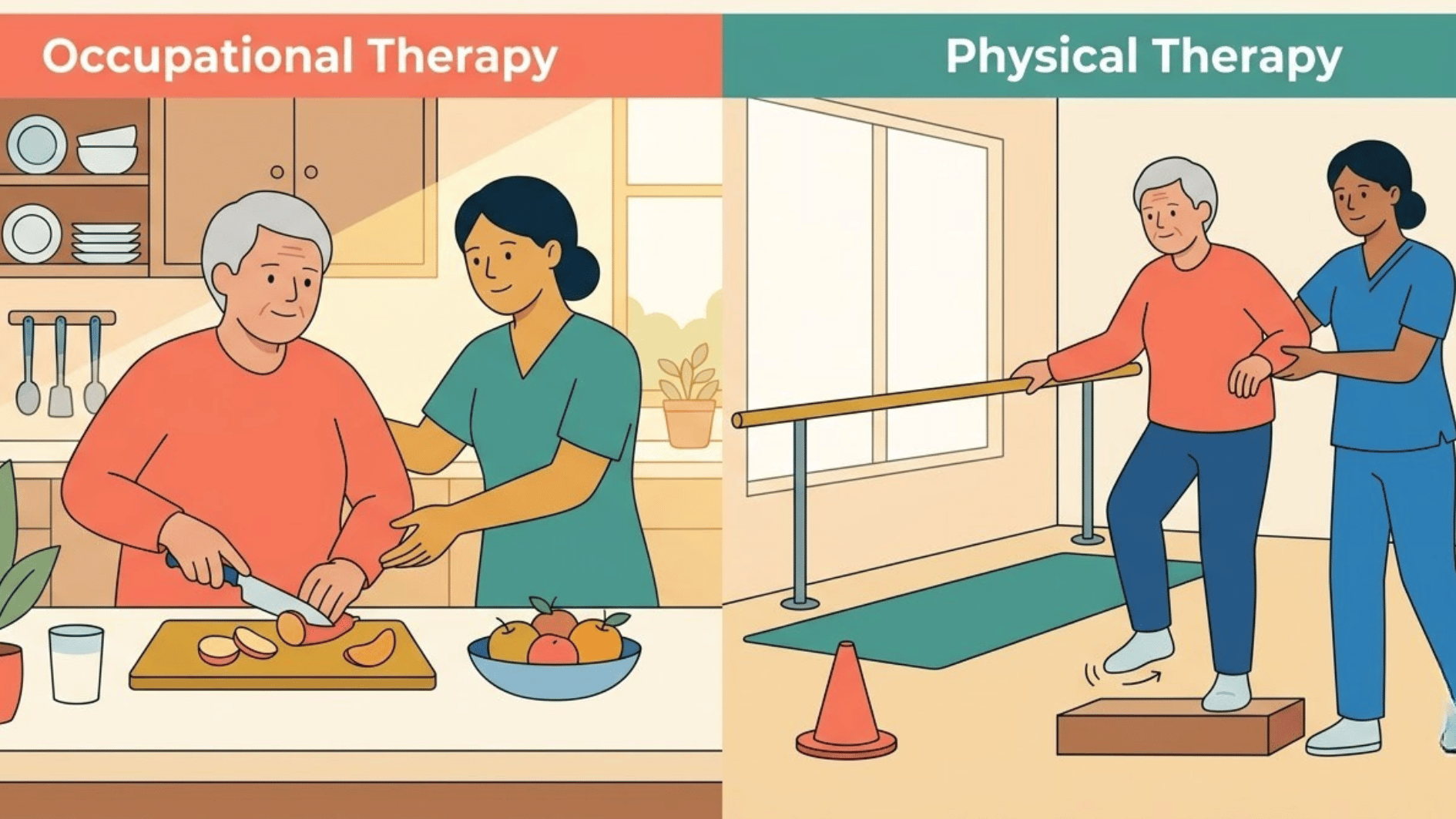
After an injury, surgery, or illness, your doctor may recommend therapy. But many people are unsure about the difference between occupational therapy and physical therapy
Both therapies support recovery but have different goals. Understanding occupational therapy vs physical therapy helps you choose the right treatment.
This blog explains the key differences, when each therapy is used, and when you may need both.
What Can Occupational Therapy Help With?
Occupational therapy (OT) helps people regain the skills needed for everyday activities after an injury, illness, or disability.
Its goal is to improve independence and make daily tasks easier and safer.
Occupational therapists work with people of all ages, including children with developmental delays, adults recovering from injuries or surgery, and older adults who want to remain independent.
Treatment is tailored to each person’s needs and may include fine motor exercises, hand-eye coordination activities, memory training, sensory strategies, and adaptive equipment.
According to the Bureau of Labor Statistics, occupational therapists earned a median annual wage of $98,340 in May 2024, and the field employed about 160,000 workers that same year.
When Occupational Therapy May Be the Right Support?

Occupational therapy can help if an injury, illness, or health condition makes everyday activities harder to manage. These signs may indicate that occupational therapy could improve your independence and daily functioning.
- Daily Tasks are Difficult: You struggle with activities such as dressing, bathing, cooking, writing, and other everyday self-care tasks.
- Hand or Arm Function is Limited: Weakness, pain, stiffness, or poor coordination makes it difficult to grip, hold, or use everyday objects, and some of that difficulty overlaps with ADHD stimming and regulation patterns OTs also address.
- Recovering From an Injury or Illness: A stroke, surgery, fracture, or neurological condition has affected your ability to manage daily routines.
- Sensory Challenges Affect Daily Life: Sensitivity to sounds, textures, lights, or touch makes it harder to complete everyday activities comfortably.
- Independence Has Declined: You need help completing routine activities and want to regain confidence and function in your daily life.
Conditions Physical Therapy Can Treat
Physical therapy (PT) helps improve movement and reduce pain after an injury, surgery, or illness. Its goal is to restore physical function and make everyday activities easier.
Physical therapists commonly help those recovering from joint replacement surgery, sports injuries, fractures, back or neck pain, and neurological conditions such as Parkinson’s disease or stroke.
You May Consider Physical Therapy If:
- Persistent Pain: Pain in your back, neck, joints, or muscles continues or interferes with daily activities.
- Limited Movement: Stiffness or reduced mobility makes walking, bending, reaching, or climbing stairs difficult.
- Recovery After Injury or Surgery: You need structured support to rebuild movement and strength.
- Poor Balance: You feel unsteady, have difficulty walking safely, or experience repeated falls.
- Ongoing Weakness: Muscle weakness affects your posture, movement, or ability to complete routine tasks.
- Neurological Changes: A condition such as stroke or Parkinson’s disease affects your coordination, balance, or physical function.
The Bureau of Labor Statistics counted about 267,200 physical therapist jobs in the U.S. in 2024, with a median annual pay of $101,020.
Occupational Therapy Vs Physical Therapy Vs Speech Therapy
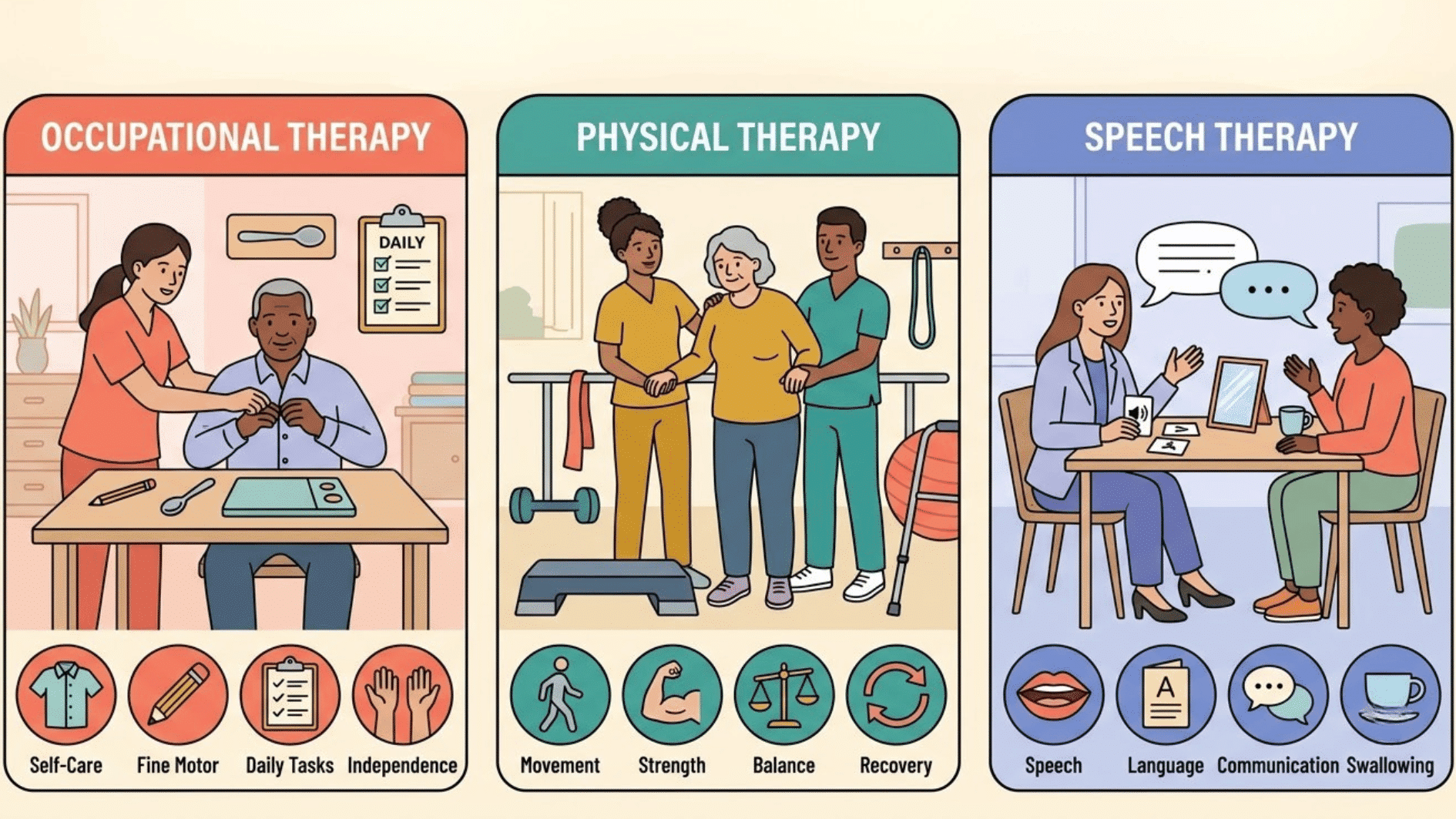
Each therapy supports a different area of daily functioning, although their work may overlap during rehabilitation or developmental care.
| Area | Occupational Therapy | Physical Therapy | Speech Therapy |
|---|---|---|---|
| Main Focus | Helps people perform everyday activities more independently. | Improves movement, strength, balance, and physical function. | Supports speech, language, communication, thinking, and swallowing. |
| Common Concerns | Difficulty dressing, writing, eating, working, playing, or managing routines. | Pain, weakness, limited mobility, poor balance, or recovery after injury or surgery. | Speech delays, unclear speech, language difficulties, voice problems, or trouble swallowing. |
| Common Activities | Practicing self-care tasks, fine motor exercises, sensory activities, and using adaptive equipment. | Stretching, strengthening exercises, walking practice, and balance training. | Practicing sounds, building vocabulary, communication exercises, and swallowing techniques. |
| Overall Goal | Increase independence and participation in daily life. | Improve safe movement and physical ability. | Improve communication and safe eating or drinking. |
| Professional | Occupational therapist | Physical therapist | Speech-language pathologist |
How Occupational Therapy and Physical Therapy Work Together
Yes, occupational therapy and physical therapy can work together as part of the same treatment plan, especially after an injury, surgery, stroke, or health condition that affects both movement and daily independence.
Physical therapy generally focuses on strength, balance, walking, flexibility, and coordination.
Occupational therapy helps a person use those physical abilities to complete tasks such as dressing, bathing, cooking, writing, driving, or returning to work.
| For example: A physical therapist may help someone regain the strength and balance needed to stand safely, while an occupational therapist may teach them how to use that improvement when getting dressed or preparing a meal. Both therapists can coordinate goals, monitor progress, and adjust activities as the person’s abilities change. Working together allows treatment to address physical recovery as well as the practical demands of everyday life. |
Which Therapy Should You Choose?
The right choice depends on your symptoms, recovery goals, and the challenges you face in daily life. Use these guidelines to help determine which therapy may best fit your needs.
Choose Occupational Therapy If:
You have trouble with everyday tasks such as dressing, bathing, cooking, writing, or returning to work after an injury, surgery, or medical condition.
Choose Physical Therapy If:
Pain, weakness, stiffness, poor balance, or limited movement is making it difficult to walk, exercise, climb stairs, or stay active during everyday activities.
Choose Both Therapies If:
You need to improve both your mobility and your ability to perform everyday activities more safely and independently after an injury, surgery, or medical condition.
Talk to a Healthcare Provider If:

You’re unsure which therapy is right for you. A healthcare professional can evaluate your condition and recommend the most appropriate treatment plan.
Do You Need a Doctor’s Referral for OT or PT?
If you need a doctor’s referral for occupational therapy (OT) or physical therapy (PT) depends on your state laws, health insurance plan, and the clinic you choose.
According to the APTA 2025 direct-access report, all 50 states and Washington, D.C., allow provisional or unrestricted access to physical therapy without a referral. State rules and insurance requirements still vary.
Many occupational therapy services require a doctor’s referral, especially if you’re using Medicare or private insurance. Some insurance plans also require a referral before covering OT or PT.
If you’re unsure about the requirements, contact your insurance provider or the therapy clinic before scheduling an appointment.
Conclusion
Understanding occupational therapy vs physical therapy starts with knowing your recovery goals. If you need to improve movement, strength, or balance, physical therapy may be the right choice.
If everyday tasks like dressing, cooking, or working are difficult, occupational therapy can help. In some cases, both therapies work together to support recovery.
In some cases, both therapies work together to support recovery, contributing to long-term healing well beyond the physical side.
If you’re unsure which option is right for you, speak with your healthcare provider to find the treatment plan that best fits your needs.
Frequently Asked Questions
Does Insurance Cover Both OT and PT?
Most health plans cover both when a doctor documents medical need, though copays and visit limits vary by plan.
Can a Physical Therapist Refer You to Occupational Therapy?
Yes. PTs, OTs, and doctors often refer patients to each other when a case calls for both types of care.
How Long Does Occupational or Physical Therapy Usually Last?
It depends on the condition, but many plans run six to twelve weeks. Some patients continue longer for more complex recoveries.