

If you’ve ever felt your head spin during a stressful moment, you’re not imagining it; this off-balance feeling tied to worry is common but rarely discussed.
Many mistake it for an emergency, but anxiety is often the real, explainable cause.
This blog walks you through the question of “Does Anxiety Cause Dizziness?” with the help of biological explanations, other symptoms that accompany it, and real-life experiences people have shared online.
Disclaimer: This blog is for informational purposes only and is not a substitute for professional medical advice, diagnosis, or treatment. Always consult a qualified healthcare provider with any questions you may have regarding a medical condition.
Does Anxiety Cause Dizziness?
Yes, it can, but the full picture is a bit more layered than that, as what makes this tricky is the two-way nature of the relationship, as some people get dizzy because of their anxiety.
Others feel dizzy first, say, from low blood pressure or an inner ear issue, and that dizziness then triggers anxiety. Both are valid, and both happen regularly.
A 2019 study published on PubMed (NIH) found that dizziness is a highly common symptom in the general population, and those dealing with anxiety alongside it tend to experience it significantly.
Why Does Anxiety Make You Feel Dizzy: The Biological Explanations
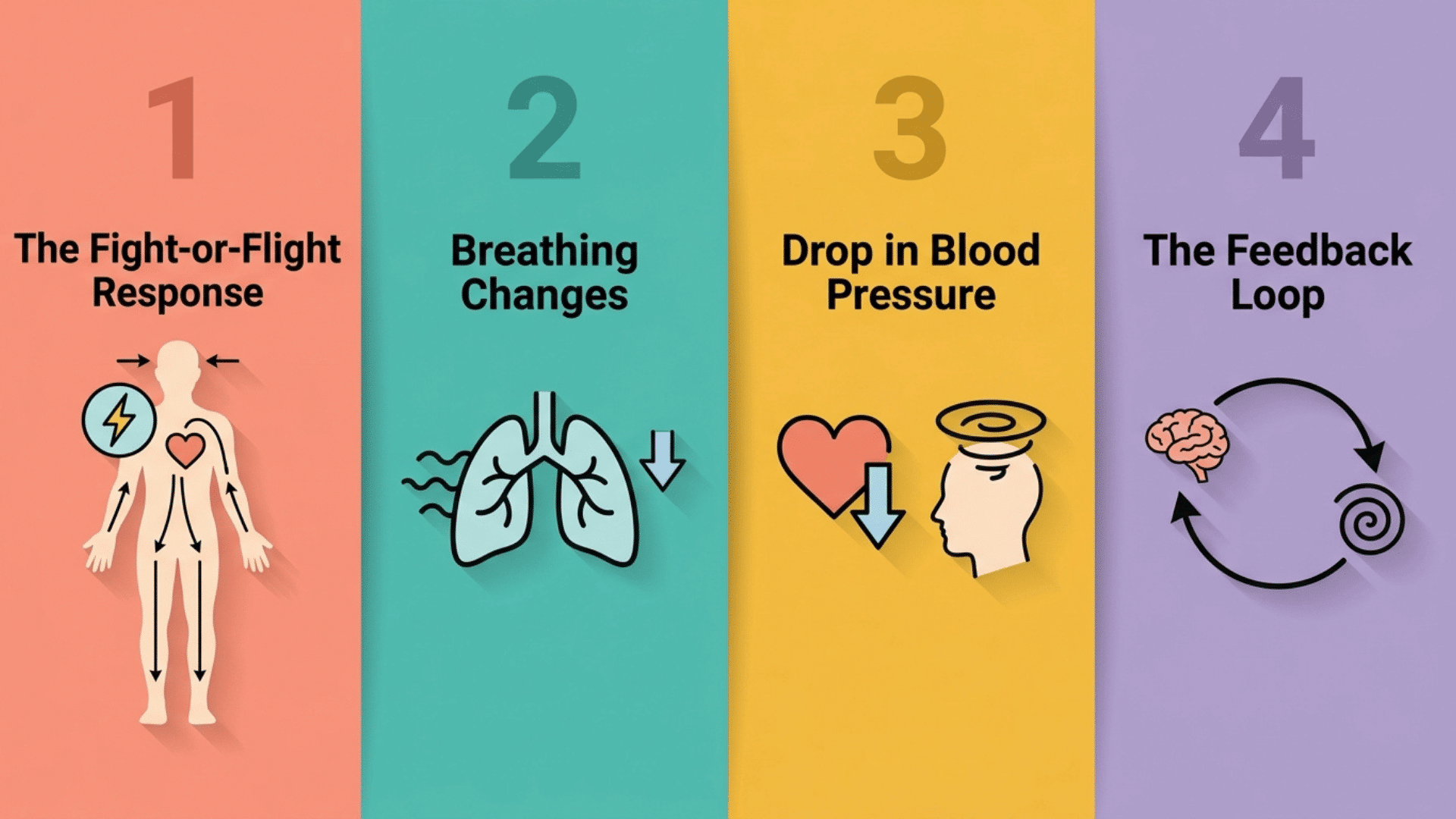
There are four biological processes behind anxiety-triggered dizziness, and each one is a real, measurable change happening inside your body, not just in your head.
1. The Fight-or-Flight Response
When your brain detects a threat, real or perceived, it activates what’s called the fight-or-flight response.
This floods your body with adrenaline, speeds up your heart rate, and shifts blood flow toward your muscles to prepare you to either fight or run.
When blood gets redirected away from the brain, it can leave you feeling lightheaded or off-balance.
2. Breathing Changes (Hyperventilation)
Anxiety often changes how you breathe, causing quick, shallow breaths called hyperventilation, sometimes without you noticing.
Breathing too fast lowers your blood’s carbon dioxide levels, disrupting your body’s balance.
According to the European Society of Medicine, hyperventilation-related symptoms, including dizziness, occur in roughly 25% of patients who present specifically with dizziness, and that’s a significant number.
3. Drop in Blood Pressure (Vasovagal Syncope)
Anxiety can also cause a sudden drop in blood pressure, a response called vasovagal syncope. When your blood pressure dips quickly, your brain gets less blood for a moment, which can cause dizziness and sometimes fainting.
A 2022 systematic review noted a possible connection between vasovagal syncope and emotional distress, which is common in people dealing with several different anxiety disorders.
4. The Feedback Loop
Once you’ve felt dizzy during an anxious moment, your brain starts anticipating it, and the next time you feel even slightly stressed, it watches for the dizziness.
It explains why the two-way relationship mentioned earlier- anxiety causes dizziness, dizziness feeds anxiety, becomes so hard to break, and why it helps to also work on ways to quiet a worry spiral alongside anything you do for the dizziness itself.
Other Symptoms That Often Show Up With It
Anxiety-related dizziness rarely occurs alone because the same fight-or-flight response that causes dizziness also triggers sweating, a fast heartbeat, and trouble breathing.
|
Symptoms |
Why It Happens | What Helps in the Moment |
|---|---|---|
|
Racing heart |
Adrenaline speeds up your heart rate | Slow, deep breaths signal to your body that it’s safe |
|
Nausea |
Gut response to the stress response | Sip water and sit somewhere cool and still |
|
Sweating |
Nervous system activation | Splash cool water on your wrists or face |
|
Tingling in hands/feet |
Low CO₂ from fast breathing | Cup your hands over your mouth and breathe slowly |
|
Chest tightness |
Muscle tension plus fast breathing |
Roll your shoulders back and unclench your jaw |
|
Difficulty concentrating |
Reduced blood flow to the prefrontal cortex | Name five things you can see to refocus |
How to Manage Anxiety-Related Dizziness?

Anxiety-related dizziness usually passes once your body calms down, and a few grounding techniques can speed that up by giving your brain something steady to focus on instead of the spinning feeling.
- Controlled Breathing: In for 4 counts, hold for 4, out for 6. This raises CO₂ levels back to normal and can ease dizziness within minutes.
- Lying DownHelps: It increases blood flow to the brain and reduces the risk of fainting if dizziness comes on suddenly.
- Avoid Caffeine and Alcohol: Both make anxiety and dizziness worse over time.
- Cognitive Behavioral Therapy (CBT): Breaks the anxiety-dizziness feedback loop by changing how you respond to the symptom.
- Medication: A doctor may recommend anti-anxiety medications; note that some SSRIs and benzodiazepines can cause dizziness in the first few weeks as a side effect.
It’s worth pairing these with a broader set of everyday anxiety coping skills, so you’re not relying on just one tool
The Bottom Line
Anxiety and dizziness are more connected than most people realize, and that link is backed by solid medical evidence, not just a feeling.
The dizziness you feel when you’re riddled with anxiety isn’t something you’re imagining. It’s a real, physical response triggered by measurable changes in your breathing and blood pressure.
Your nervous system plays a big role too, shifting gears the moment it senses stress, and these changes happen fast, often before you’ve even noticed you’re anxious.
Frequently Asked Questions
Can Anxiety Cause Dizziness Every Single Day?
Yes, for people with chronic anxiety like GAD, low-grade dizziness can be a near-constant symptom due to habitual shallow breathing and ongoing muscle tension.
Does Drinking Water Help with Anxiety-Related Dizziness?
It can help if dehydration is a factor, but hydration alone won’t resolve dizziness that’s primarily driven by anxiety.
Is Anxiety-Related Dizziness Dangerous?
On its own, no, it’s uncomfortable but not harmful, though if it causes a fall or fainting, it’s worth addressing with a doctor.