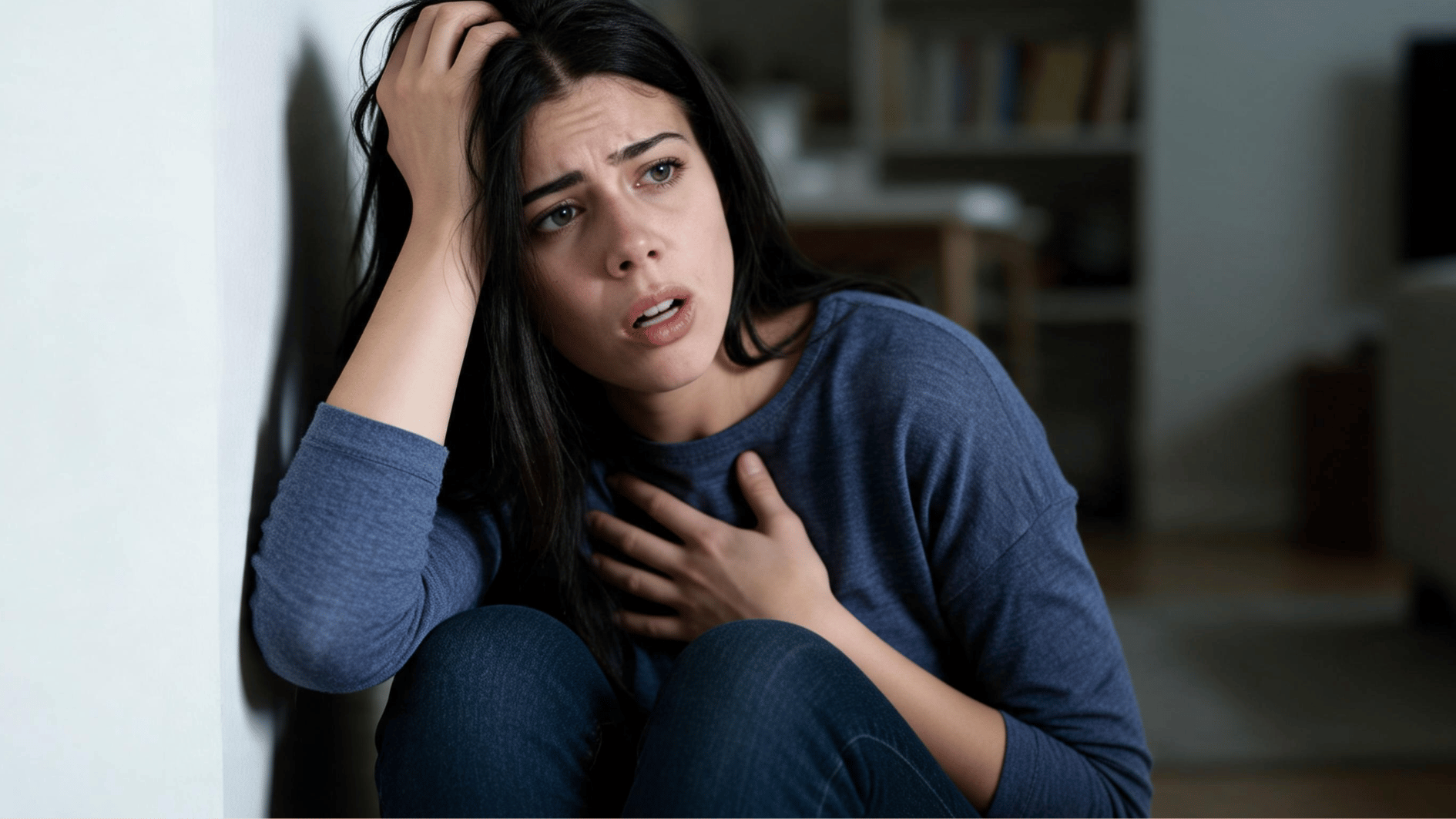
I’m often asked whether a panic attack can actually make you pass out. It’s a common concern, and it makes sense that people wonder about it, especially when the feelings are so intense.
Panic attacks affect the body in real ways, and what’s actually going on in the body is worth understanding, and it can offer some real relief.
In this blog, I’ll gently take you through whether fainting during a panic attack is likely, what causes that lightheaded feeling, and ways to cope.
Disclaimer: This blog is for informational purposes only and is not a substitute for professional medical advice. If you have actually lost consciousness, please get that checked by a doctor before assuming it was a panic attack.
Can You Pass out From a Panic Attack?Most people do not pass out from a panic attack, but they can feel very close to fainting. During a panic attack, the body goes into fear mode, which can cause a racing heart, shaking, chest tightness, shortness of breath, weakness, and dizziness. MedlinePlus lists weakness or dizziness as common panic attack symptoms. NIMH also notes that panic attacks can include dizziness, chest discomfort, and heart palpitations. |
Why Panic Attacks Can Make You Feel Like You’ll Pass Out?
Panic attacks can make you feel like you will pass out because your body is reacting to fear, even when there is no real danger.
1. Fast Breathing Can Cause Dizziness
During a panic attack, many people breathe too fast without noticing it. This can lower carbon dioxide in the blood and make you feel lightheaded. You may also feel tingling in your hands, face, or lips.
That dizzy feeling can seem like fainting, even when you stay conscious.
2. Adrenaline Can Make Your Body Feel Unsteady
A panic attack activates the body’s fight-or-flight response. This releases adrenaline, which can make your heart race and muscles tighten.
Your legs may feel weak, shaky, or hard to control. These body changes can make you feel like you are about to collapse.
3. Fear Makes You Notice Every Body Sensation
When panic rises, your brain starts checking your body for danger. A small wave of dizziness can suddenly feel much bigger. You may think, “I am going to faint,” which makes the fear stronger.
This fear cycle can make the panic attack feel more intense.
4. Feeling Detached Can Be Mistaken for Passing Out
Some people feel unreal, foggy, or disconnected during a panic attack. This is called derealization or depersonalization.
It can feel scary because you may feel distant from yourself or your surroundings. Even though it feels strange, it does not usually mean you are fainting.
Panic Attack Vs Heart Attack: Key Differences
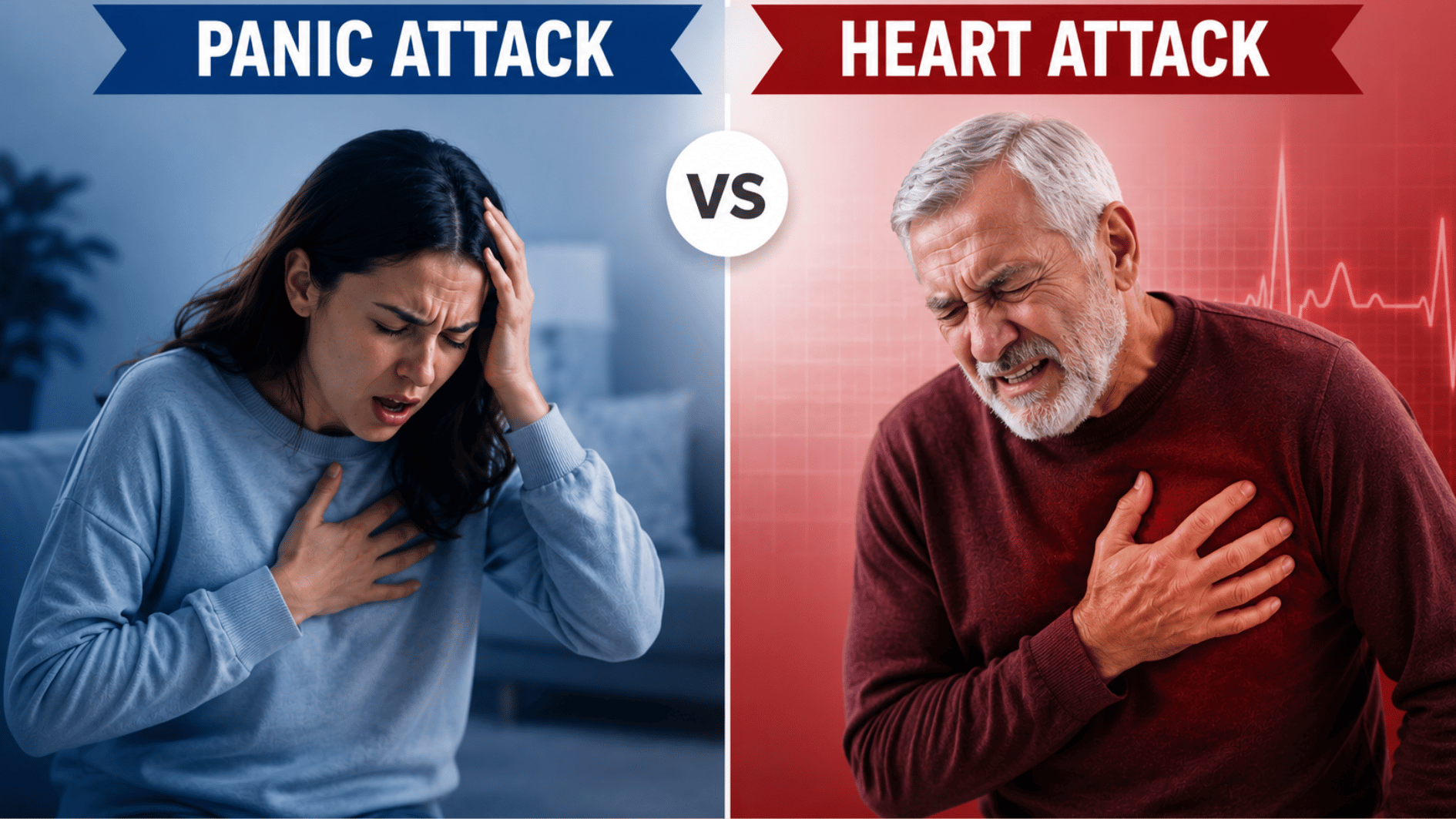
Because panic attacks and heart attacks can share symptoms like chest pain, shortness of breath, and sweating, it can be hard to tell them apart.
| Feature | Panic Attack | Heart Attack |
|---|---|---|
| Cause | Anxiety or the body’s stress response | Blocked blood flow to the heart |
| Chest pain | Sharp, tight, or comes and goes | Heavy, squeezing, or pressure-like |
| Heart rate | Usually fast or pounding | May be fast, slow, or irregular |
| Breathing | Fast breathing, fear, tingling | Shortness of breath with chest pressure |
| Other signs | Shaking, dizziness, fear of losing control | sweat, nausea, pain in the arm, jaw, or back |
| Duration | Often peaks in 10–20 minutes | lasts longer than 15–20 minutes or gets worse |
| What to do | Calm breathing, seek help if repeated | Call emergency services immediately |
Can You Faint from a Panic Attack?
No, most people do not faint from a panic attack, even though they may strongly feel like they will.
Panic attacks can cause dizziness, lightheadedness, shaky legs, and blurred vision because of the body’s stress response and changes in breathing.
Panic attacks commonly include symptoms such as a racing heart, shortness of breath, chest discomfort, and dizziness, rather than loss of consciousness.
Real Experiences of People During Panic Attacks
Many people describe similar sensations during panic attacks. These experiences shared in online anxiety communities show how real and overwhelming it can feel:
|
My Legs Felt Like Jello, and I Couldn’t Focus on Anything but Not Fainting I start to feel sweat coming out of my pores, and then my body feels slightly numb, and the sounds around me become muffled. And if I try to get up, my legs feel like jello. I can’t concentrate on anything other than not fully fainting.- Redd |
|
Can You Faint from a Panic Attack? Yes, you can faint if you hyperventilate, but it’s rare. Although panic attacks feel awful and are scary, they are not dangerous and will not cause you physical harm.- Reddit |
|
The Right Treatment Changed Everything That was me about a year ago. Once my doctors got me on the right set of meds with intensive therapy, I got a million times better. There is hope.- Reddit |
|
I Thought I Was Going to Pass out Every Time. “The impending doom feeling is so much worse than the actual physical symptoms.”- Reddit |
How to Deal with a Panic Attack when They Happen!
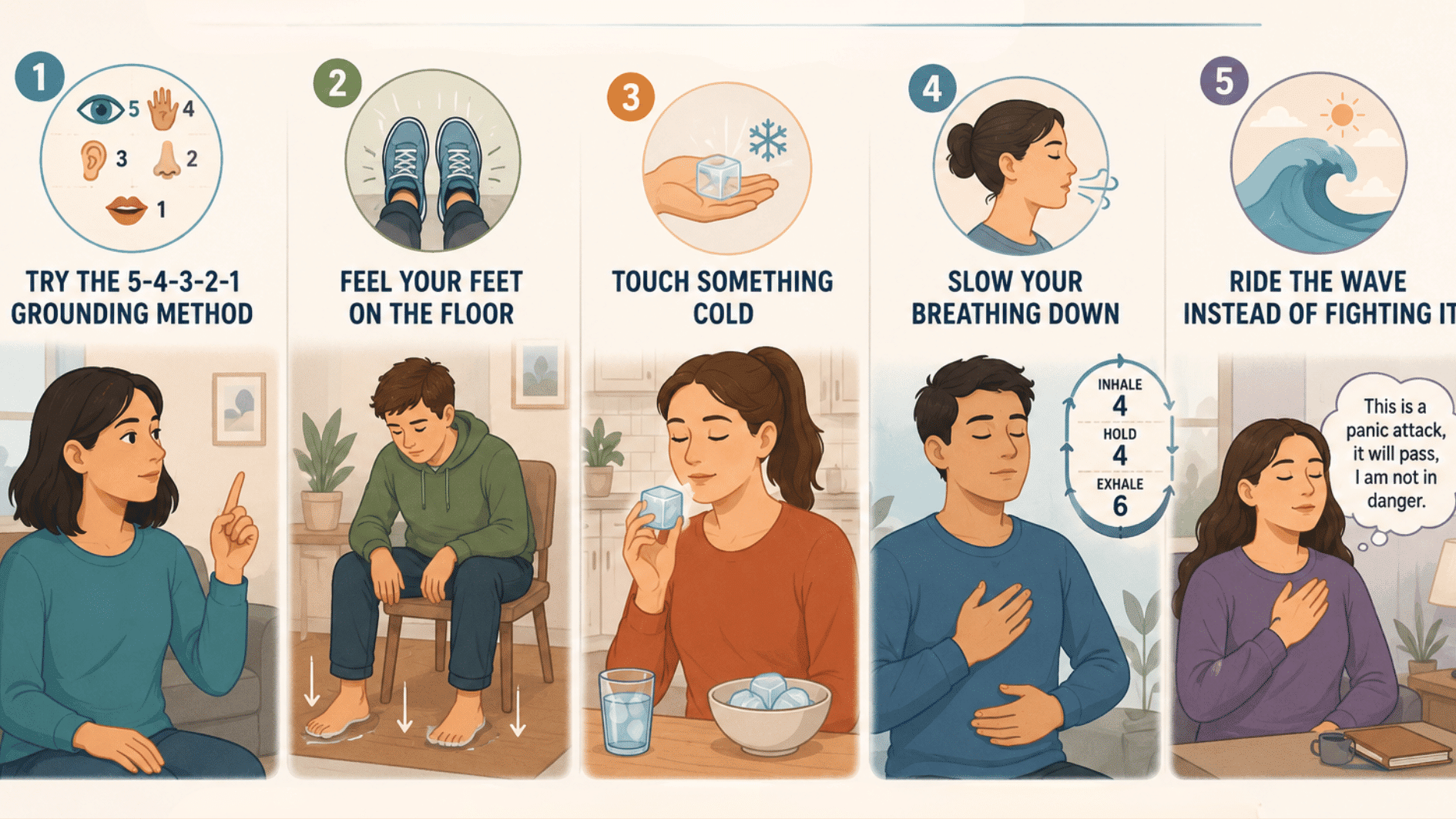
When a panic attack hits, your brain tells you something is terribly wrong. It is not just telling yourself that it rarely helps in the moment. What does help is having a few simple tools ready before you need them.
1. Try the 5-4-3-2-1 Grounding Method
Look around and name 5 things you can see, 4 you can touch, 3 you can hear, 2 you can smell, and 1 you can taste.
This pulls your attention out of the panic spiral and back into the present moment, which is almost always safer than where your brain thinks you are.
2. Feel Your Feet on The Floor
Press both feet firmly into the ground and notice the pressure.
This simple physical anchor reminds your body that it is stable, supported, and not actually falling, even when everything feels like it is spinning out of control.
3. Touch Something Cold
Grabbing a cold object, an ice cube, a cold drink, or running cold water over your wrists sends a sharp sensory signal to your nervous system.
It interrupts the panic cycle by giving your brain something real and immediate to focus on.
4. Slow Your Breathing Down Deliberately
During a panic attack, breathing speeds up and makes symptoms worse. Try breathing in for 4 counts, holding for 4, and breathing out for 6.
The longer exhale activates your parasympathetic nervous system, the part that calms everything down.
5. Ride the Wave Instead of Fighting It
Fighting a panic attack usually makes it worse. Instead, try acknowledging it: “this is a panic attack, it will pass, I am not in danger.” Accepting the wave rather than bracing against it reduces its power and shortens its duration.
When to Seek Medical Advice?
Panic attacks are not dangerous on their own, but some symptoms can overlap with other medical conditions. It is important to make sure nothing else is causing your symptoms,
- You actually lose consciousness
- You experience new, severe, or unexplained chest pain
- You notice irregular or unusually fast/slow heartbeat episodes
- You have neurological symptoms such as confusion, weakness, or difficulty speaking
- It is your first severe episode, and you are unsure what caused it
- Your symptoms feel different or more intense than previous panic attacks
Final Thoughts
Panic attacks can feel frightening, especially when dizziness, sweating, shaky legs, and fast breathing make you think you might faint. So, can panic attacks make you pass out?
In most cases, they do not, although they can strongly feel that way. Actual fainting is uncommon during panic attacks, and if it happens, it should not be ignored.
A doctor can check for other causes such as dehydration, low blood sugar, heart rhythm issues, or fainting disorders. The main takeaway is that panic symptoms are real and treatable.
With the right support, breathing tools, therapy, and medical care when needed, people can feel safer again.
Frequently Asked Questions
How Long Does the Feeling of Almost Fainting Last?
It often improves within minutes as your breathing and stress levels settle down.
Can Panic Attacks Cause Low Blood Pressure?
Panic attacks usually raise heart rate and blood pressure rather than lower them.
How Can I Tell if It’s a Panic Attack or Something Else?
If symptoms are new, severe, or unusual for you, it’s best to get checked by a doctor.
Should I Go to The ER for A Panic Attack?
Seek medical help if symptoms are severe, new, or you are unsure what is causing them.