

The Link Between Depression and Memory Loss
Depression can cause real, measurable memory problems. This isn’t just feeling distracted or “off” during a rough patch.
The National Institute of Mental Health estimates that 14.5 million U.S. adults had a major depressive episode with severe impairment in a single recent year.
For many, memory changes are often part of that picture, alongside sadness, fatigue, or loss of interest. Depression pulls at attention and slows down how the brain stores new details.
That can look like forgetting a name you just heard, losing the track of a conversation, or struggling to place events from months ago.
Four Ways Depression Disrupts Memory
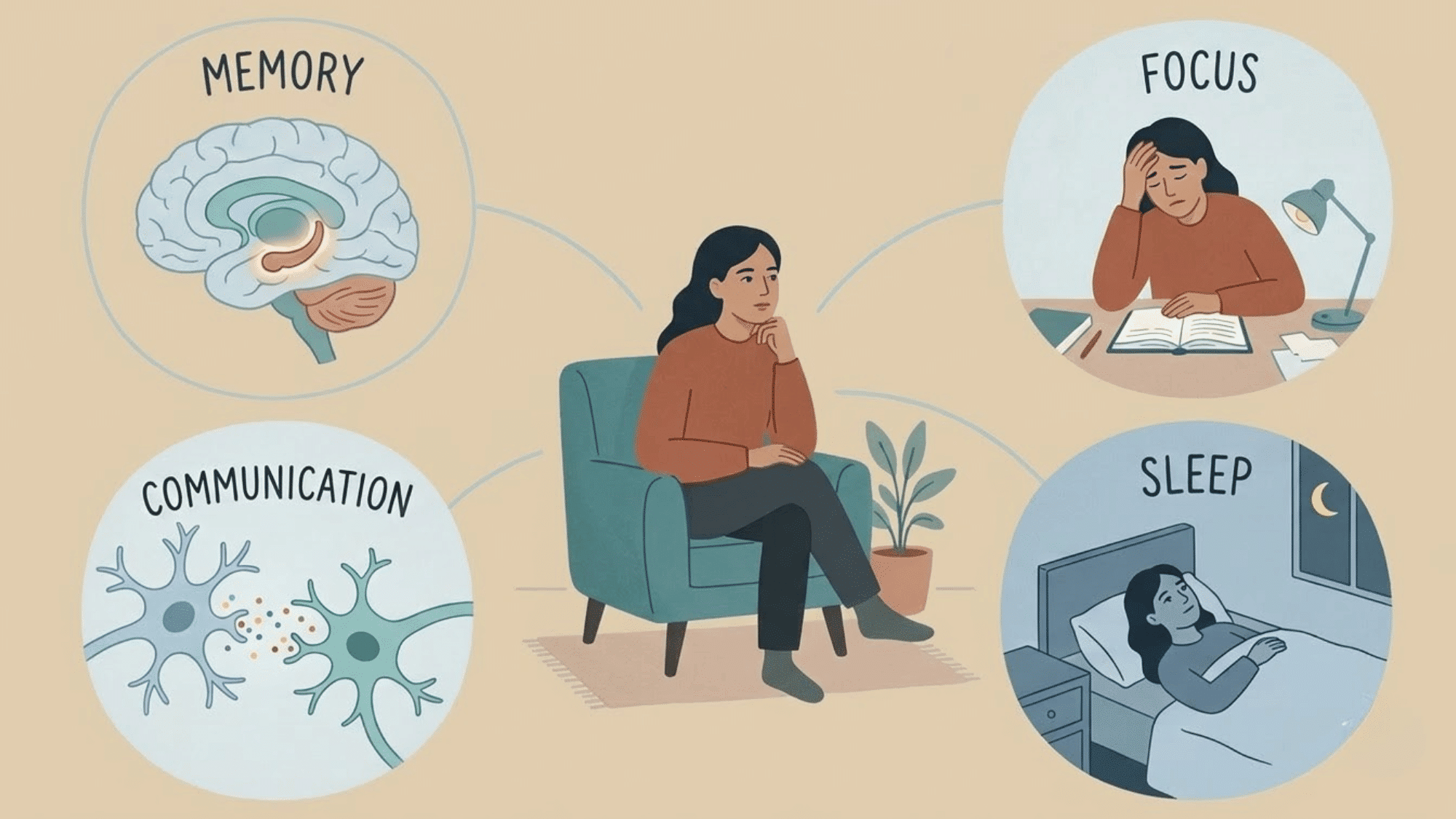
Depression can disrupt memory in more than one way, such as:
-
Brain Structure: Long or repeated episodes of depression are linked to a smaller hippocampus in some people, the brain area that helps store long-term memories, possibly due to excess cortisol.
-
Poor Attention: When your focus is already weak, you don’t take in new information properly, leaving gaps in memory the can make it seem like it never happened.
-
Brain Chemistry: Shifts in serotonin, dopamine, and norepinephrine affect the hippocampus, amygdala, and basal ganglia, the regions behind memory and recall.
-
Sleep Disruption: Depression often disrupts deep sleep, and that’s when the brain normally files away the day’s memories for later recall.
Types of Memory Problems Linked to Depression
Depression doesn’t affect all memory equally. It weakens some types and leaves others mostly intact. Here are the ones it affects most.
1. Short-Term Memory
Short-term memory holds information for a few seconds to a few minutes. Depression makes it harder to focus on what’s happening right now, so small details slip away before your brain can store them.
For example, you put your keys down, and five minutes later you have no idea where they are, or a friend tells you a story, and halfway through you realize you’ve lost track of what they were saying.
2. Working Memory
Working memory lets you hold information in your mind while you use it, like keeping a number in your head while you dial it.
Depression slows down thinking and drains mental energy, so this kind of juggling becomes harder.
For example, you read the same line in a book three times and still can’t take it in, or you lose count halfway through adding up a bill.
3. Autobiographical Memory
Autobiographical memory is the memory of your own life, such as birthdays, holidays, and everyday moments. Depression can make these memories feel vague and general instead of clear and detailed.
Researchers call this overgeneral memory.
4. Biased Memory
Depression changes which memories stick. Painful moments stay sharp and easy to recall, while good memories from the same time fade quickly.
A depressed brain simply holds on to negative experiences more strongly, a thinking pattern that the principle underlying CBT works to correct.
For example, after a family dinner, you clearly remember the one critical comment someone made but can barely recall the laughter and good conversation that filled the rest of the evening.
Pseudodementia: When Depression Mimics Memory Decline
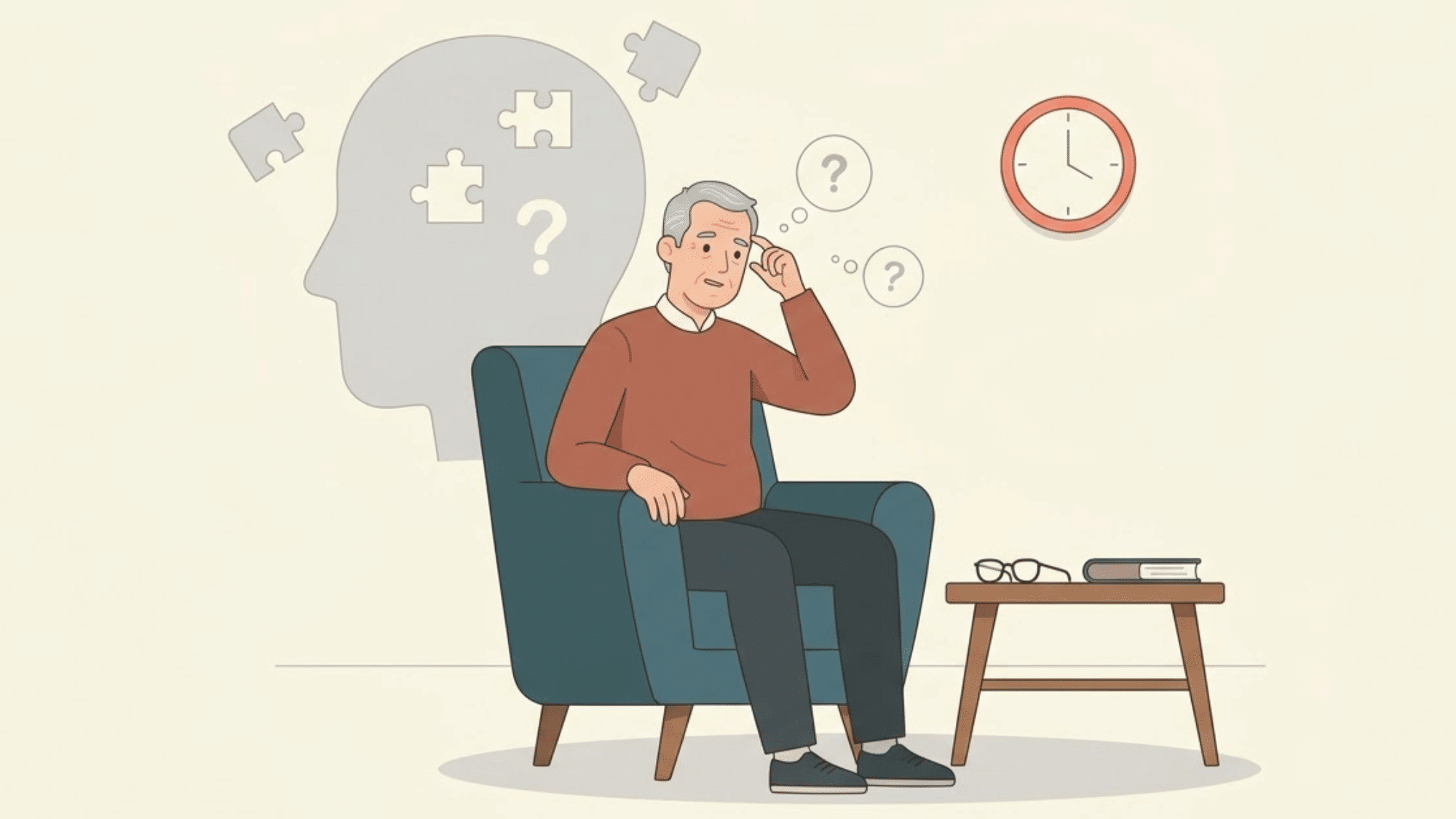
Memory loss from depression can look a lot like early dementia and its neurocognitive disorder symptoms, which is exactly why doctors have a separate name for it (pseudodementia).
The overlap makes sense, as both involve forgetfulness, slower thinking, and trouble focusing. But the two come from very different places in the brain, and mixing them up can lead to the wrong treatment path entirely.
Telling them apart matters because, unlike dementia, depression-related memory problems often improve with treatment.
Some older adults with depression-related memory problems also have a higher risk of dementia later, so follow-up matters even after mood improves.
When to See a Doctor About Memory and Mood Changes
Forgetting things now and then is normal. But some signs mean you should stop waiting and see a doctor, especially if you already have depression.
-
It Has Lasted More than Two Weeks: One bad week can happen to anyone. If you’ve been forgetful and feeling low for two weeks or more, book a visit.
-
It Keeps Getting Worse: If you’re forgetting more things over time instead of having the odd slip, get it checked.
-
Your Mood Changed First: If you felt tired, slept badly, or lost interest in things before the memory problems started, depression may be the cause.
-
It’s Affecting Your Daily Life: Missing work deadlines, forgetting your medicine, or feeling unsafe while driving are signs to see a doctor now.
How Doctors Check Memory and Mood
There’s no single test for memory loss caused by depression.
Most doctors start with a short mood questionnaire called the PHQ-9, which asks how often you’ve felt low, tired, or uninterested over the past two weeks.
Next comes a quick memory test such as the MoCA. It takes about 10 minutes and checks recall, attention, and problem-solving with simple tasks like remembering words or drawing a clock.
Blood tests follow to rule out other causes, including thyroid problems and low vitamin B12.
Your doctor may also ask about snoring or daytime sleepiness to check for sleep apnea, how much alcohol you drink, and which medicines you take, since some sleep aids and older antidepressants can dull memory.
Can Depression-Related Memory Loss Be Reversed?
In most cases, yes. Once depression is treated, memory problems tend to follow the same path back toward normal, since they were tied to the depression itself rather than permanent damage.
A 2004 study published in Biological Psychiatry followed people with major depression before and after successful SSRI treatment.
Their memory scores improved significantly, even though hippocampus size stayed the same, suggesting treatment helps the brain work better rather than simply rebuilding it.
People notice clearer thinking within a few months of steady treatment.
Medication, therapy, consistent sleep, and regular movement all play a part; together, they give the brain a real shot at healing.
The Bottom Line
Depression can affect memory in measurable and documented ways. Research links depression to weaker attention and shifts in brain chemistry, and in some long-term cases, memory loss.
The types of memory affected vary from person to person, from short-term recall to autobiographical detail, but most cases can be treated at the underlying cause.
A proper evaluation remains the clearest path toward both an accurate diagnosis and lasting recovery.
Frequently Asked Questions
Can Depression Cause Memory Loss in Older Adults?
Yes, and it’s often mistaken for early dementia in this age group. Age itself doesn’t change how depression affects memory, but it does raise the stakes for getting an accurate diagnosis.
Does Depression Cause Poor Concentration?
Poor concentration usually comes first, and it worsens memory as a side effect, since information can’t be stored well if attention never locks onto it.
Can Severe Depression Cause Worse Memory Loss?
Generally, yes. Longer or more severe depressive episodes tend to bring more noticeable memory problems, though the effects usually ease as the depression lifts.