
Missed deadlines, forgotten birthdays, drifting mid-conversation- sounds relatable? As a psychologist, I’ve learned that what many adults dismiss as personal failure is often something else.
The signs of untreated ADHD in adults hide in plain sight, masked as laziness, anxiety, or chronic disorganization.
These patterns don’t fade with age; they quietly reshape your life. In this blog, I will cover the signs, everyday challenges, and practical steps that can help adults recognize untreated ADHD and seek the right support.
What is Attention-Deficit Hyperactivity Disorder?
ADHD is short for attention-deficit hyperactivity disorder. In simple terms, it makes it hard to focus, stay organized, and stop yourself before you act on impulse.
A lot of people think it only shows up in kids.
Plenty of adults have it too; it just wears a different face in grown-ups. What surprises many people is that there are actually different types of ADHD, each with its own pattern of attention, impulsivity, and energy.
The signs always start in childhood, before age 12.
But a lot of people don’t connect the dots until adult life gets so full that the tricks they used to get by no longer work.
The Core Signs of Untreated ADHD in Adults
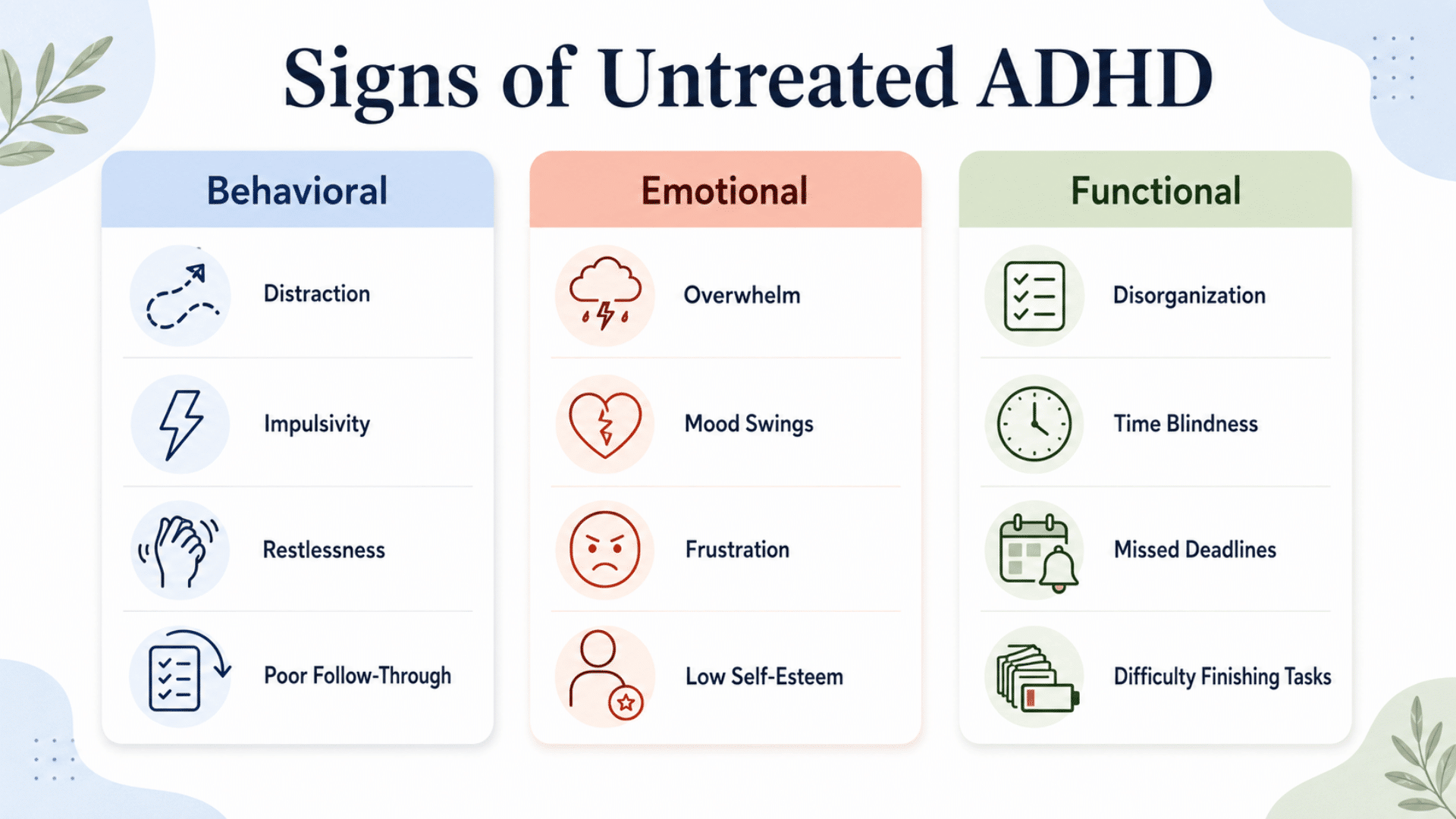
The most common untreated ADHD symptoms across these three dimensions, so you can gently check which patterns might feel familiar.
Behavioral Signs
These are the signs that show up in daily actions and habits, the ones other people are most likely to notice first.
1. Inattention & distractibility
Your mind drifts even when you want to focus, whether it’s zoning out mid-conversation or losing track of what you were just doing.
It’s not a lack of care; it’s a brain that struggles to filter out competing signals.
Small interruptions can pull you off course, and getting back on track may take more effort than people realize. Over time, this can make simple tasks feel scattered, unfinished, or mentally exhausting.
2. Impulsivity
Interrupting people or acting before thinking through consequences often isn’t about poor manners. It’s the brain moving faster than the built-in pause button can keep up with.
3. Inner restlessness
Sitting still and truly relaxing can feel almost physically uncomfortable. Even during downtime, there’s often a background hum of needing to move, fidget, or do something.
That restlessness may show up as leg bouncing, finger tapping, pacing, or constantly switching activities.
4. Trouble following through
Starting projects with genuine enthusiasm and then losing steam isn’t a motivation problem. The initial spark is real, but sustaining attention once the novelty fades is where things fall apart.
Emotional Signs
ADHD isn’t only about focus and behavior; it shapes how emotions are felt and processed, often more intensely than people expect.
5. Emotional Dysregulation
Small triggers can produce reactions that feel out of proportion to the situation. This isn’t overreacting on purpose; it’s a nervous system that struggles to modulate emotional intensity.
Strong emotions can make it difficult to pause before responding or think clearly in the moment. Afterward, feelings of regret, guilt, or confusion may linger long after the situation has passed.
6. Rejection Sensitivity
Mild criticism or perceived disapproval can land like a much bigger blow than intended. This heightened sensitivity often traces back to years of feeling misunderstood or not enough.
7. Low Frustration Tolerance
When a task suddenly gets harder, the urge to abandon it can be immediate and strong.
It’s less about giving up easily and more about how quickly frustration builds internally.
This can lead to unfinished projects, frequent task switching, or avoiding responsibilities that feel overwhelming. Breaking the task into smaller steps often makes it easier to regain momentum and keep going.
8. Mood Swings
Emotions can shift noticeably within a single day, sometimes for no clear external reason. This fluctuation can be confusing both for the person experiencing it and those around them.
Functional Signs
These are the practical, everyday consequences of untreated ADHD, the ones that quietly pile up over time.
9. Poor Time Management
Tasks almost always take longer than expected, leading to a cycle of chronic lateness or rushing. It’s not carelessness; it’s a genuine difficulty estimating time realistically.
10. Disorganization
Cluttered spaces and misplaced paperwork aren’t signs of laziness. They often reflect a brain that struggles with the executive functions needed to create and maintain systems.
11. Procrastination
Tasks get pushed off until the deadline creates enough urgency to force action. The delay usually isn’t about avoiding the task itself, but about difficulty initiating it without a strong enough trigger.
This pattern often leads to last-minute stress, even when there was every intention to start earlier.
12. Financial Mismanagement
Forgotten bills and impulse purchases often stem from the same executive function challenges seen elsewhere: tracking, planning, and pausing before acting.
Why Does ADHD Get Missed in So Many Adults?
If you’re thinking about how something this big could be missed, it’s way too common.
Many adults were never spotted as kids because their teachers or families didn’t recognize the signs, or they coped just fine until adult life got too heavy to handle.
Women are more likely to go undiagnosed than men, often because they learn to hide their struggles and blame themselves instead.
The pattern of high-functioning ADHD in women frequently gets mistaken for perfectionism or anxiety instead of being recognized for what it is.
A national survey from the Ohio State University Wexner Medical Center found that one in four adults suspect they may have undiagnosed ADHD, yet only 13% have shared this with a doctor.
Long-Term Effects of Untreated ADHD in Adults
I share these not to scare you, but because knowing what’s at stake is part of what gives us the push to get help. The long-term effects often include:
-
Anxiety and Depression:Years of falling behind and feeling like you’re letting people down can wear you down, often building into anxiety or depression over time, part of the connection between depression and neurodivergence that researchers are still working to fully untangle.
-
Low Self-Esteem: After a lifetime of being called lazy or scattered, many people come to believe it, and self-blame slowly becomes normal.
-
Strained Relationships:Inattention or strong reactions can quietly hurt the people we love.
-
Higher Risk of Substance Use:Some people reach for alcohol or other substances just to quiet a restlessness, which often makes things worse.
-
Constant Stress: The daily effort of trying to stay organized leaves many people feeling drained.
-
Riskier Choices:Acting before thinking can lead to snap decisions with real consequences long after the moment has passed.
How Untreated ADHD Shows Up at Work?
Work is often where untreated ADHD becomes impossible to ignore. Meeting deadlines and staying organized can lead to falling behind, even for smart and capable people.
Many adults find themselves jumping from job to job, struggling with strict rules, or feeling like they have to work twice as hard just to keep up with coworkers who seem to do it with ease.
Adults with ADHD lose an average of 21.6 more days of work productivity per year than people without it, mostly from burnout and trouble managing tasks.
But I want to be clear about one thing: this has nothing to do with how smart you are or how hard you try. It’s a mismatch between how most workplaces are built and how an ADHD brain naturally works.
How Does Untreated ADHD Affect Relationships?

This is the cost people talk about least, and feel the most. A partner who feels unheard because you drifted off mid-sentence.
A friend who stopped inviting you after one too many forgotten plans. The guilt that piles up when you love someone and still keep dropping the ball. None of it means you care any less.
ADHD makes the small, steady acts of attention, remembering, showing up on time, and staying present genuinely harder. When people understand that, and when you get the right support, a lot of that hurt eases.
I’ve watched it happen more times than I can count.
Real Experiences from Adults Living with ADHD
These publicly shared experiences from Reddit illustrate how diagnosis, treatment, and self-understanding changed their lives.
Everything Suddenly Made Sense After My Diagnosis
One Adult Diagnosed Later in Life Described Finally Understanding Years of Missed Deadlines, Forgotten Commitments, and Constant Self-Criticism. – Reddit
Diagnosis Made Adult Life Feel Less Unfair
one Person Highlights how Adult Responsibilities Can Expose Adhd Struggles that Were Ignored for Years. – Reddit
Getting Diagnosed Helped People Understand Their Lives
In This Thread, Adults Discuss how Finding out They Had Adhd Changed the Way They Understood School, Work, and Daily Functioning. – Reddit
Can Untreated ADHD be Treated in Adults?
Yes. And this is the part I most want you to hold onto. A late diagnosis is not a missed chance; it’s a turning point.
Treatment usually blends a few things: medication for some people, talk therapy or ADHD coaching, and practical changes to how you structure your days.
No single fix works for everyone, and finding your mix takes a little patience. But adults who get treated often describe it the same way, as if someone had finally turned the volume down on the chaos in their heads.
When to Seek Professional Help
If these untreated ADHD symptoms keep affecting your daily life, work, money, or relationships, it may be time to speak with a professional.
- Struggle to function at work or home despite trying different organization systems.
- Frequently miss deadlines because of inattention or time blindness.
- Notice anxiety, depression, or low self-esteem alongside focus problems.
- Recognize these patterns from childhood, even if no one noticed them then. The CDC explains adult ADHD as symptoms that often begin early and continue into adult life.
- Feel that your relationships, finances, or quality of life are being affected. The NIMH ADHD resource can help you understand symptoms and treatment options.
If you are in emotional crisis or having thoughts of self-harm, call or text the 988 Suicide & Crisis Lifeline for immediate support.
The Bottom Line
In all my years of practice, I’ve watched how recognizing the signs of untreated ADHD in adults can completely change the way a person sees themselves.
The forgetfulness, the overwhelm, the years of self-blame, suddenly, it all makes sense.
If any part of this felt like reading your own story, please don’t let another year slip by in confusion.
Take just ten minutes today to write down the signs you saw in yourself, then reach out to a licensed psychologist to get checked. One small step could be the start of gently taking back the life you deserve.
Frequently Asked Questions
Can ADHD Suddenly Appear in Adulthood?
No, ADHD begins during childhood, even if it isn’t recognized until much later. Adult responsibilities often make long-standing symptoms much more noticeable.
Is It Possible to Have ADHD Even if You Did Well in School?
Yes, many people perform well academically by relying on intelligence, structure, or intense effort. Symptoms often become harder to manage once work, finances, and family responsibilities increase.
Can Anxiety Look Like ADHD?
Yes, anxiety, depression, sleep disorders, and adhd can share similar symptoms, which is why a professional evaluation is important instead of self-diagnosing.