
Do you know regular exercise can improve health, boost mood, and lower the risk of many chronic conditions?
But the harder part is staying consistent once the excitement of a new routine starts to fade. In my research, I’ve found that lasting consistency usually has less to do with willpower and more to do with structure.
This blog shares research-backed strategies to help exercise feel less like another obligation and more like a sustainable part of everyday life.
“Motivation is what gets you started. Habit is what keeps you going.” – Jim Ryun, Olympic runner
Why Does Motivation to Work Out Fade?
I’ve noticed that feeling less motivated after the first few weeks of a new fitness routine is completely normal: early excitement is often driven by novelty and emotion, and those feelings naturally fade once the activity becomes familiar.
Instead of expecting my motivation to stay high forever, I’ve found it’s more effective to build routines that don’t depend on how I feel each day, which often starts with changing my mindset around what motivation is actually supposed to feel like.
Research supports this pattern, showing that declining motivation is one of the leading reasons people stop exercising altogether, especially when results take longer to show.
Where Does Real Motivation Come From: Know the Types
Motivation can come from personal meaning or outside rewards, and knowing the difference helps explain why some changes last longer than others.
| Aspect | Intrinsic Motivation | Extrinsic Motivation |
|---|---|---|
| Meaning | Driven by personal value or meaning | Driven by outside rewards or results |
| Example | Exercising to feel stronger or less stressed | Exercising to lose weight or look better |
| Strength | Supports long-term consistency | Helps start action quickly |
| Limitation | May take time to build | May fade when rewards slow down |
| Lasts longer? | Usually lasts longer | Often works best in the short term |
Core Strategies to Build Lasting Motivation to Work Out
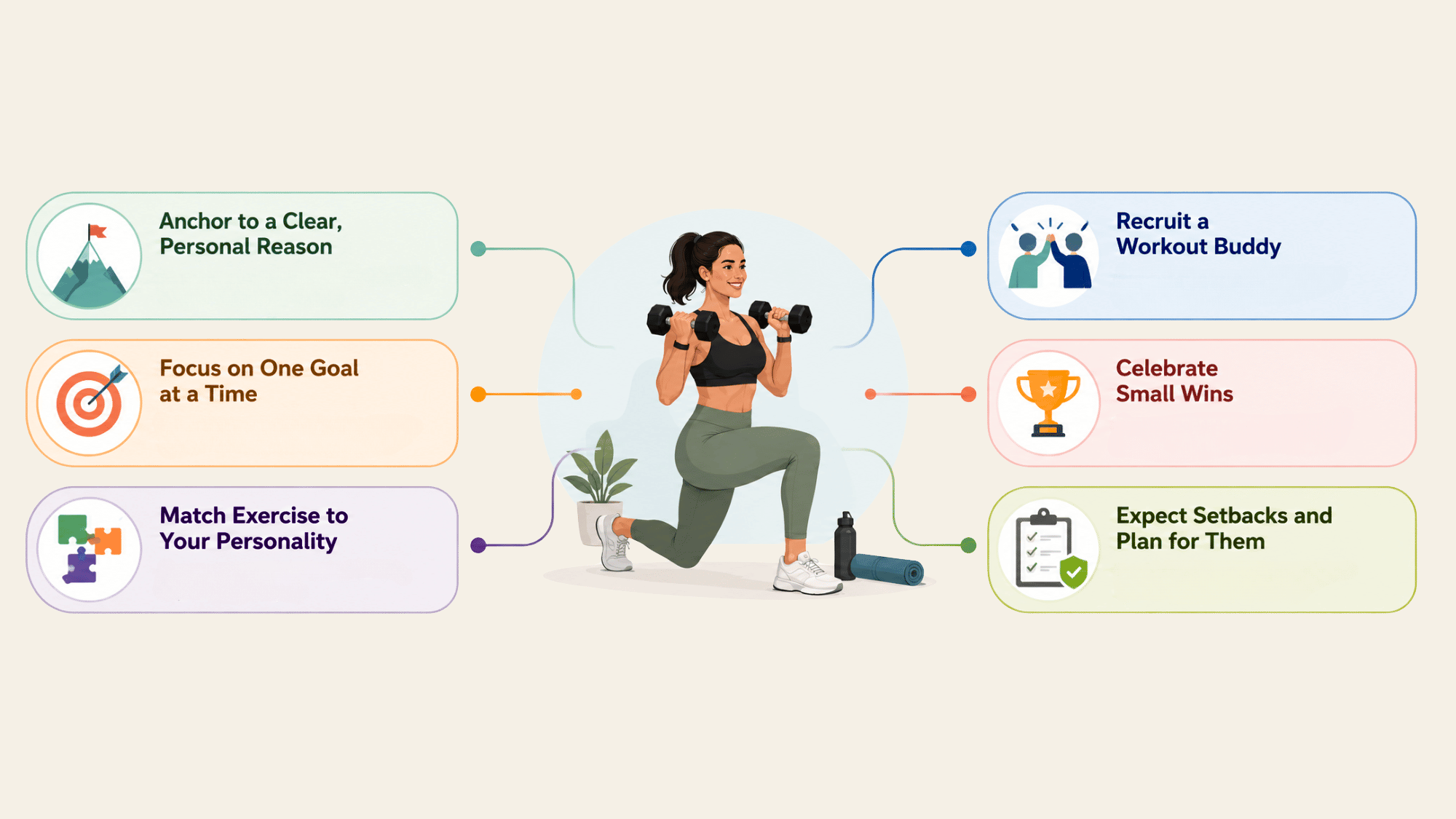
The answer to staying motivated to exercise usually lies in creating systems that make consistency easier, rather than relying on willpower alone, following the same core principles of exercise that apply to any lasting fitness routine.
1. Anchor to a Clear, Personal Reason
One of the first things I ask clients is why they truly want to exercise. The answer usually goes far beyond weight or appearance.
A meaningful personal reason provides direction during difficult days. When your “why” connects with your values, exercising begins to feel like an investment.
You may find it helps to make a vision board that keeps that reason visible day to day.
2. Focus on One Goal at a Time
Trying to improve strength, lose weight, train for a race, and exercise every day at once often leads to frustration.
If you are walking 30 minutes five days a week or completing your first 5K, a focused goal creates momentum. Once you reach it, you can gradually expand your routine without feeling overwhelmed.
3. Match Exercise to Your Personality
A 2025 study published in Frontiers in Psychology found that people enjoy exercise more when it matches their personality and preferences.
People who tend to worry may feel more comfortable with walking, yoga, home workouts, or swimming, where the pace feels calmer and more private, and many enjoy group classes for the energy and social connection they offer.
4. Recruit a Workout Buddy
Accountability removes much of the mental debate that happens before a workout. Knowing someone is expecting you often makes showing up much easier than relying on motivation alone.
A 2024JAMA Network Open study found that older adults who regularly discussed their exercise routines with peers maintained physical activity better than those depending solely on self-motivation.
5. Celebrate Small Wins
Many people wait until they reach a major milestone before acknowledging their progress. However, behavioral research shows that recognizing small achievements helps reinforce healthy habits.
Celebrating actions rather than outcomes builds confidence and keeps you moving forward.
6. Expect Setbacks and Plan for Them
Missing a workout doesn’t mean you’ve failed. Travel, illness, busy schedules, and unexpected responsibilities are a normal part of life.
Expecting these interruptions helps prevent them from turning into long breaks. Instead of aiming for perfection, create a simple backup plan.
Practical Tips for Turning Exercise Into a Habit
Habits develop through repetition rather than motivation. And these habits are usually the biggest reason people have the motivation to work out. Building this kind of habit is really about learning how to be consistent in the first place.
- Start with a Cue: Choose a consistent trigger, such as breakfast, the end of work, or putting on clothes.
- Follow with Movement: Do your planned exercise right after the cue, even if it is short.
- Add a Small Reward: Reinforce the habit with a simple reward, such as a shower or rest.
- Repeat the Sequence: The cue-routine-reward cycle helps your brain connect that moment with movement.
- Make It Automatic Over Time: With repetition, exercise starts to feel like part of your routine.
What Do Experts Say on Staying Motivated?
The leading voices in exercise psychology agree that lasting motivation grows from within, and their work explains why enjoyment and personal ownership outperform pressure and rewards every time.
|
Find an Activity You Enjoy Psychologists Edward Deci and Richard Ryan, founders of Self-Determination Theory, argue that intrinsic motivation is the strongest predictor of long-term adherence. People who exercise for genuine enjoyment stick with it far longer than those chasing external rewards. |
|
Build Several Reasons, Not One The American Council on Exercise notes that aligning exercise with your personal values, what researchers call integrated regulation, helps it endure even on days enjoyment runs low. |
|
Make It Personal Harvard-affiliated trainer Vijay Daryanani puts it plainly in Harvard Health: if you struggle to stay consistent, you may simply not have found the right type of activity yet. |
My Simple Tips to Stay Motivated to Exercise
These simple adjustments can make a noticeable difference if you’re trying to figure out how to stay motivated to exercise, especially on days when energy or enthusiasm is low.
- Schedule Workouts Like Appointments: Decide exactly when and where you’ll exercise, rather than leaving it.
- Use the 3 × 10 rule: Three 10-minute sessions can be just as valuable as one longer workout.
- Prepare the Night Before: Lay out your workout clothes, fill your water bottle, and pack your gym bag.
- Pair Exercise with Something Enjoyable: Save a favorite podcast, audiobook, or playlist exclusively for workouts.
- Lower the Barrier to Entry: Promise yourself just five minutes. Starting is often the hardest part, and many people naturally continue once they’ve begun.
The Bottom Line
Long-term success with exercise is built through consistency rather than constant enthusiasm.
Motivation may help you get started, but habits, realistic goals, and supportive routines are what keep you going when life gets busy or energy is low.
By choosing activities you genuinely enjoy, reducing everyday barriers, tracking meaningful progress, and viewing movement as part of your identity, you make staying active far more sustainable.
There will be days when your motivation dips, and that is completely normal. What matters most is returning to your routine without guilt and focusing on steady progress instead of perfection.
Frequently Asked Questions
What Are Good Exercises for High Cortisol?
Low-intensity mind-body movements such as walking, yoga, tai chi, and light cycling tend to lower cortisol levels more reliably than intense sessions.
Can Too Much Exercise Cause Depression?
Yes, chronic overtraining without adequate recovery can trigger fatigue, low mood, and burnout, so rest days matter.
How Much Exercise is Safe Daily?
Most adults can safely aim for about 30 minutes of moderate activity daily, meeting the federal target of 150 minutes weekly.