

Lamictal is the brand name for lamotrigine, a prescription medication commonly used to treat epilepsy and bipolar disorder.
For many people, it becomes part of a long-term treatment plan, which can make the idea of stopping it feel uncertain or even intimidating.
In this blog, I’ll explain what people often want to know before discontinuing it, including potential symptoms, expected timelines, and situations where medical attention may be necessary.
Disclaimer: This blog is for informational purposes only and should not replace medical advice. Lamotrigine should not be stopped suddenly unless a healthcare provider specifically recommends doing so.
What is Lamictal?
Lamictal is often prescribed to help prevent seizures and stabilize mood in certain mental health conditions such as bipolardisorder.
While many people benefit from it, there are several reasons why someone may consider reducing or stopping the medication.
The decision is usually based on individual circumstances, treatment goals, and guidance from a healthcare professional.
Knowing those reasons clearly can help make sense of the withdrawal process.
So, What Does Lamictal Withdrawal Exactly Mean?
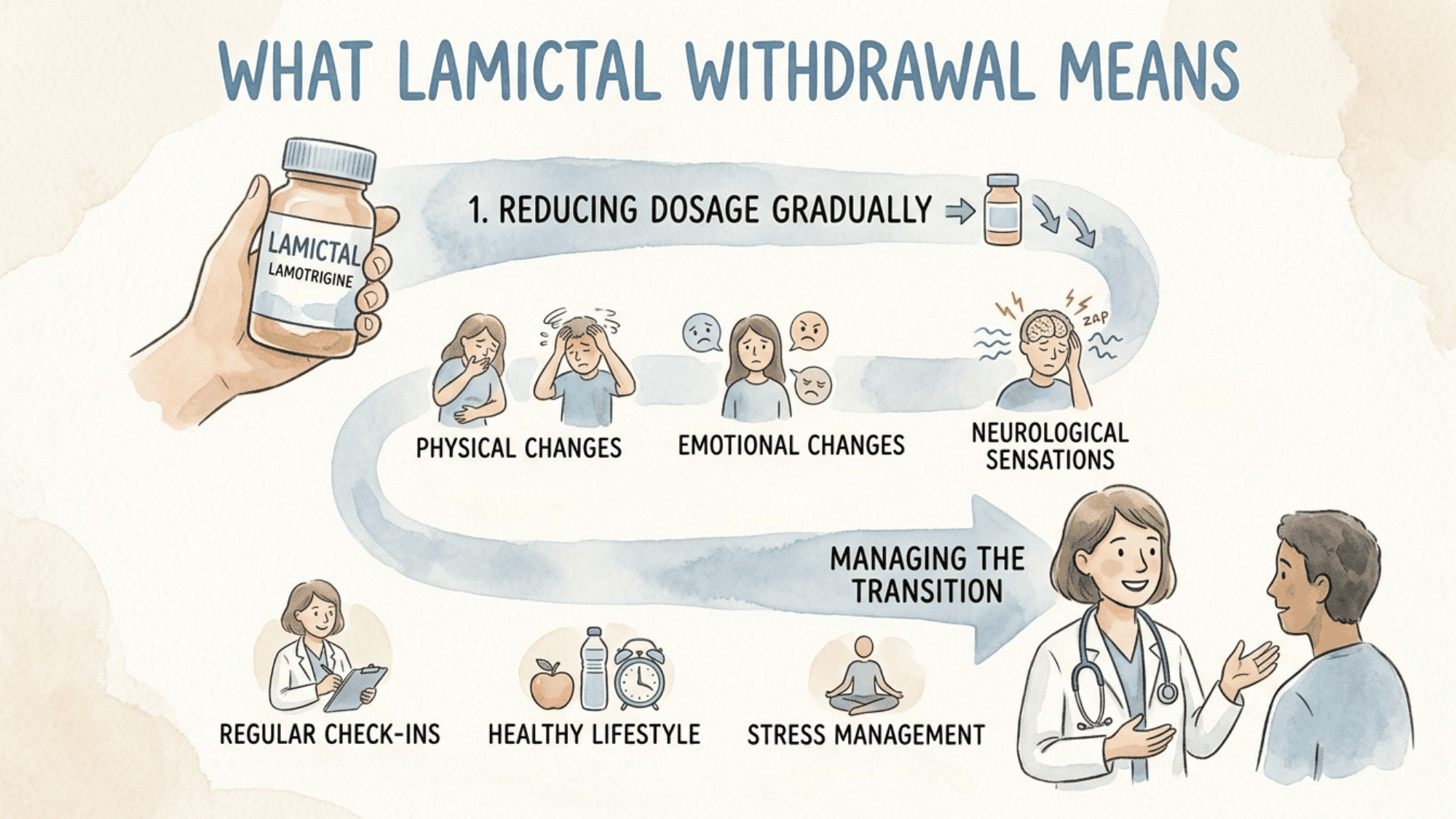
The phrase lamictal withdrawal can sound alarming, but it does not automatically mean a person will experience severe symptoms.
It refers to physical, emotional, or neurological changes that may occur when the medication is reduced or discontinued.
Many people notice only mild or temporary changes, while others may experience a more noticeable adjustment period.
According to the FDA prescribing information for Lamictal, the medication should generally be tapered rather than discontinued abruptly, unless a healthcare provider identifies a safety concern.
What Happens to Your Body After Stopping Lamictal?
Many people want to know when symptoms may begin and how long they might last. The tapering schedule often plays a major role in what happens next.
| Time Period | What May Happen |
|---|---|
| First Few Days | Little to no change for some; others may notice headache, dizziness, or sleep issues. |
| First 1–2 Weeks | Symptoms may become more noticeable; tapering is usually recommended over this period. |
| Several Weeks and Beyond |
Mood symptoms may return in bipolar disorder; seizure risk remains a concern in epilepsy. |
Possible Symptoms People Report

Some effects may reflect the body’s adjustment process, while others may indicate the return of an underlying condition. The severity and duration can vary considerably.
1. Mood-related symptoms: Some people may notice irritability, anxiety, low mood, or mood swings. These changes can feel unsettling, especially if the medication was used for mood stability.
2. Cognitive symptoms: Brain fog or trouble concentrating may occur during the adjustment period. This can make work, school, or daily tasks feel harder than usual.
3. Physical symptoms: Headache, fatigue, dizziness, or nausea may appear after dose changes. These symptoms are often temporary but should be discussed if they persist or worsen.
4. Sleep-related symptoms: Insomnia, vivid dreams, or disrupted sleep may happen during tapering. Poor sleep can also make emotional symptoms feel stronger.
5. Neurological symptoms: People with epilepsy may have an increased risk of seizures after stopping or reducing the medication. Any seizure-like episode should be taken seriously and discussed with a healthcare provider.
When Does Stopping Lamictal Become a Medical Emergency?
Some symptoms should be treated as warning signs rather than expected adjustment effects, as they may require immediate medical intervention. These can be :
- Seizures or Seizure-Like Episodes: A serious neurological risk that needs immediate evaluation
- Severe or Sudden Mood Shifts: Including mania, deep depression, or emotional swings that feel out of control
- Suicidal Thoughts or Feelings: Seek crisis support immediately by calling or texting 988
- Extreme Confusion or Agitation: They may signal unsafe changes in the nervous system
- Skin Rash, Fever, or Swollen Glands: Could indicate a serious allergic reaction that requires urgent care
Lamictal Withdrawal vs Return of Symptoms
It can be difficult to tell whether a new symptom is part of the body’s adjustment to a lower dose or a sign that the original condition is returning.
| Factor | Withdrawal Symptom | Returning Condition |
|---|---|---|
| When It Appears | Shortly after reducing or stopping the dose | Days to weeks after stopping |
| How It Behaves | Gradually improves as the body adapts | Persists or worsens over time |
| Common Signs | Headache, dizziness, brain fog, sleep issues | Seizures, mania, depression, mood instability |
| What It Means | The body is adjusting to lower medication levels | The underlying condition is becoming active again |
| What to Do | Monitor and report to your doctor | Seek medical evaluation promptly |
The National Institute of Mental Health notes that bipolar disorder can involve changes in mood, energy levels, activity, and concentration.
What Helps During Lamictal Withdrawal?
There is no single approach that works for everyone, but these strategies can make the process more manageable:
- Follow a Gradual Taper: Reducing the dose slowly under medical supervision lowers the risk of significant withdrawal effects
- Track Your Symptoms: Note when they begin, how long they last, and whether they improve or worsen, then share this log with your doctor
- Prioritize Sleep: Consistent sleep habits can reduce the intensity of mood and cognitive symptoms during the adjustment period
- Stay in Regular Contact with Your Healthcare Provider: Do not wait for symptoms to become severe before reaching out
- Avoid Alcohol and Caffeine: Both can worsen anxiety, disrupt sleep, and make adjustment symptoms feel stronger
- Lean on Your Support System: Letting a trusted person know what you are going through can ease the emotional weight of the process
- Do Not Stop Suddenly: Unless your doctor specifically advises it, abrupt discontinuation carries higher risks, particularly for seizures and mood stability
Final Thoughts
Stopping Lamictal should not be rushed. Every person’s circumstances are different, and the safest approach usually involves planning, monitoring, and professional guidance.
While lamictal withdrawal can involve temporary changes, many people navigate the process successfully with a gradual taper and appropriate medical support.
Paying attention to symptoms, maintaining follow-up care, and seeking help when needed can make the experience easier to understand and manage.
Frequently Asked Questions
Can You Stop Lamictal Suddenly?
In most cases, no. Stopping suddenly may increase risks, particularly for people with epilepsy or those whose mood symptoms are not fully stable.
How Long Do Symptoms Last?
The timeline varies. Some adjustment effects may appear within days, while other changes related to mood or seizure control can emerge over several weeks.
Is Lamotrigine Withdrawal Dangerous?
Lamotrigine withdrawal can carry risks for some individuals, particularly if seizures, severe mood symptoms, or other significant health concerns develop.