
“There is hope, even when your brain tells you there isn’t.”- John Green
I get asked this question more than almost any other, usually in a quiet voice, sometimes through tears: can OCD go away?
As a psychologist who has spent years studying cognition and emotional regulation, I wish I could hand you a tidy yes. The honest answer is more layered than that, and more hopeful than you’d expect.
So let’s sit with it together, gently, and talk about what actually happens to OCD over a lifetime and what you can do about it.
Disclaimer: This blog is for informational purposes only and does not substitute for professional medical advice. Please consult a licensed mental health professional for personalized guidance.
Can OCD Go Away on Its Own?Yes, OCD can occasionally ease on its own, but it rarely disappears without proper intervention. OCD rarely disappears without any form of intervention. It is a chronic condition, and while that word can feel heavy, chronic does not mean hopeless. There are exceptions worth noting. Some people with mild, situational OCD tied to a specific stressor may find their symptoms ease once that trigger is removed. Temporary relief is possible, particularly when symptoms are minor and short-lived. |
So, What You Need to Know About OCD First?

First, we need to be clear about what we’re dealing with.
OCD or Obsessive Compulsive Disorder is not about loving a tidy desk or lining up your pens. That’s a stereotype that does real harm to people who are suffering.
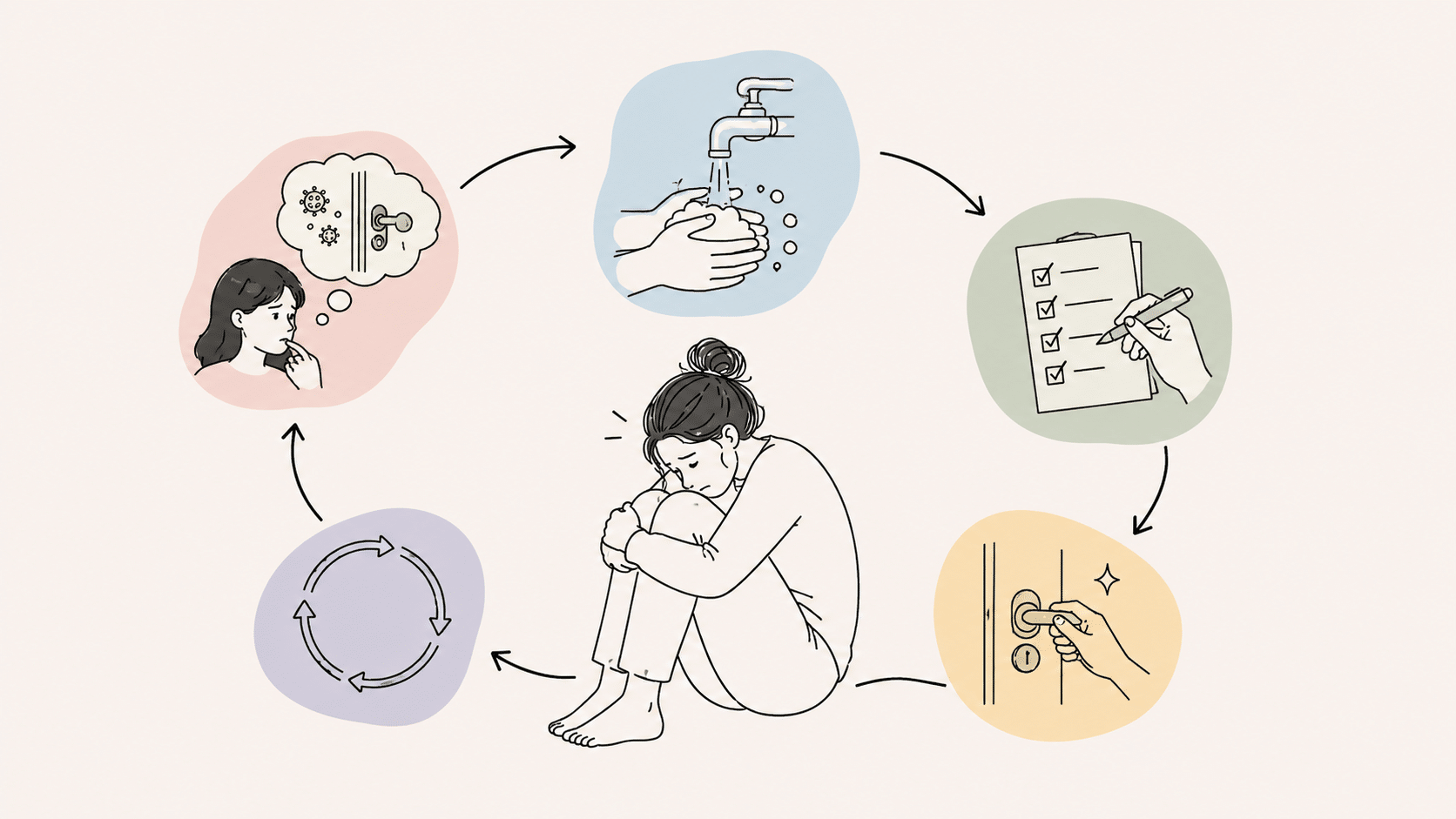
It’s a cycle; it starts with obsessions: unwanted, intrusive thoughts, images, or urges that show up uninvited and refuse to leave. They cause genuine distress.
To quiet that distress, a person engages in compulsions, which are repetitive behaviors such as washing, counting, or seeking reassurance. The relief lasts only a moment. Then returns, often louder.
In my clinical understanding, what makes OCD so cruel is that the compulsions feel like the solution when they’re actually the fuel.
Treatments That Actually Help With OCD?
Over the years, what I’ve seen is that treatment is usually what makes the real difference. Here are some approaches that can help you out.
1. Exposure and Response Prevention (ERP)
This is the gold standard. ERP gradually exposes you to what triggers your obsession, then helps you resist the compulsion.
Research shows it reduces compulsive behaviors even in people who didn’t respond to medication. It’s hard work, but it’s transformative.
2. Cognitive Behavioral Therapy (CBT)
ERP lives inside the broader family of CBT, which Beyond OCD calls the gold standard of psychotherapy.
It teaches you to question the negative thoughts feeding the cycle and to change the patterns that keep you stuck.
3. SSRI Medication
Selective serotonin reuptake inhibitors are the. First-line medications for OCD target serotonin to quiet the volume of obsessions.
They take patience, often eight weeks or more, to work, but for many people, they make therapy possible.
4. Combination Treatment
You don’t always have to choose. One trial found that pairing therapy with medication produced the largest improvement of all.
For moderate to severe OCD, this combined approach is frequently where I see the most lasting change.
5. Lifestyle Support
The everyday things matter more than people expect. Steady sleep, regular movement, nourishing food, and relationships where you don’t have to hide.
None of these cures OCD alone, but they create the conditions where the other treatments can truly take hold.
What Does OCD Treatment Recovery Actually Look Like?

Treatment does not eliminate OCD, but it changes your relationship with it in ways that are very real and measurable.
- Thoughts become less frequent: Intrusive thoughts don’t disappear completely, but they show up less often and feel less urgent over time.
- Compulsions lose their hold: ERP therapy trains your brain to sit with discomfort without reacting to it, which gradually weakens the compulsion cycle.
- Daily life opens back up: Things you avoided, places, situations, and people become accessible again without the weight of rituals attached to them.
- Symptoms stop spreading: Untreated OCD tends to expand into new areas of life. Treatment stops that pattern and often reverses it.
- Other conditions improve too: Treating OCD also reduces co-occurring depression, anxiety, and stress because the root cycle driving all of them is being addressed.
When to Seek Professional Help?
You don’t need to wait until things feel unbearable. If OCD is stealing your time, your peace, or your relationships, that’s reason enough to reach out. Here are the signs I’d gently watch for:
- Time: Obsessions and compulsions are eating up an hour or more of your day.
- Distress: The thoughts cause real anguish, not just mild annoyance.
- Interference: It’s affecting your work, school, sleep, or closest relationships.
- Avoidance: You’re rearranging your life to dodge triggers.
- Isolation: You’re hiding symptoms out of shame or fear of judgment.
Where to find help:
- International OCD Foundation: A directory of ERP-trained therapists and support groups at
- If you’re in crisis: Call or text 988 in the US to reach the 988 suicide and crisis lifeline.
What Happens When OCD Goes Untreated?
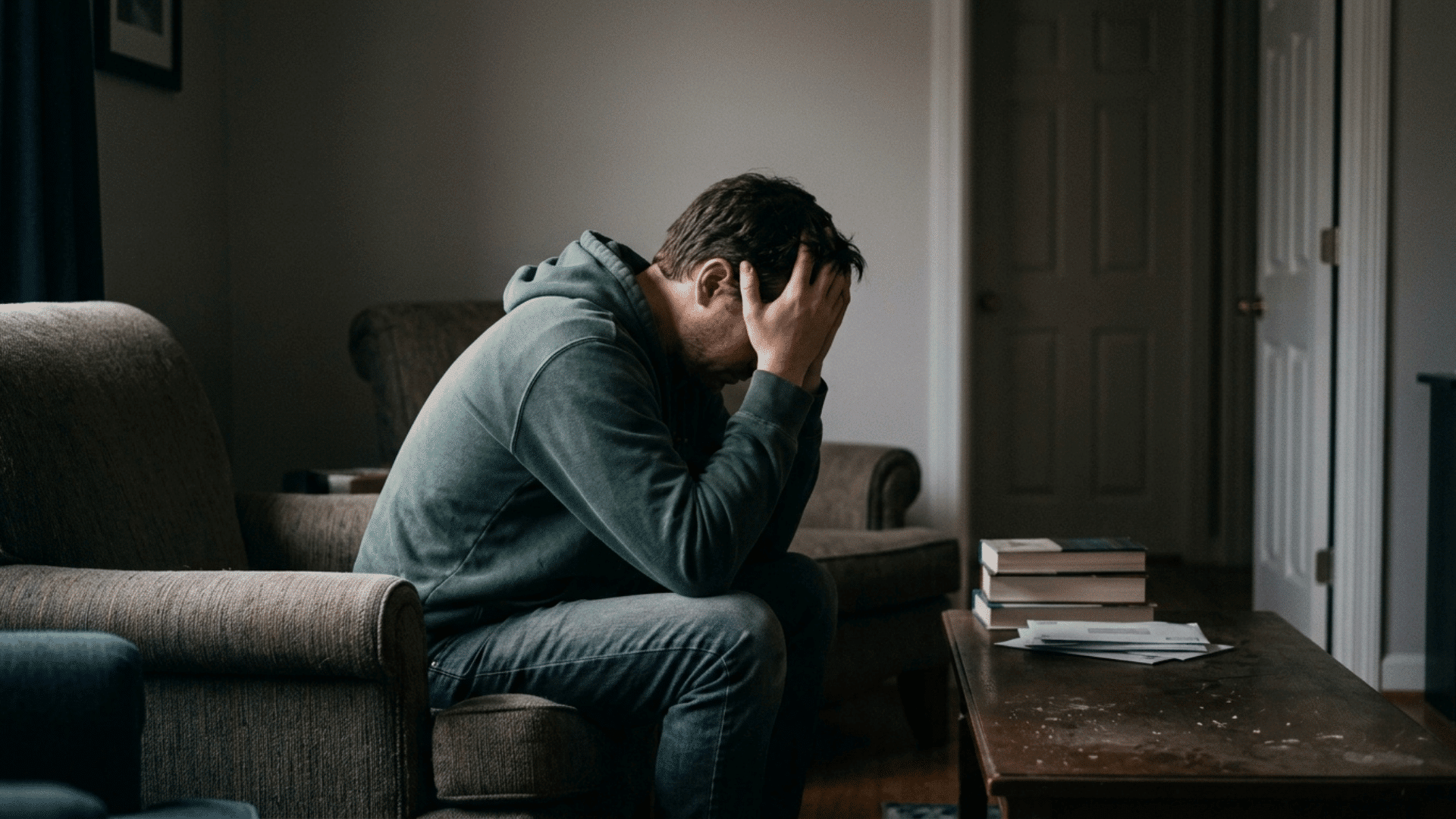
When OCD is left alone, it grows. What starts in one area of life, say, a fear of contamination or a constant need to check things, slowly spreads to others.
Your relationships, work, sleep, and your ability to leave the house without a ritual.
According to a study published on PubMed, it takes up to 17 years from the first appearance of OCD symptoms for a person to receive proper treatment.
On top of that, some people with untreated OCD develop a co-occurring addiction as a way to cope. The longer it goes unaddressed, the more it convinces you that this is just who you are, and that’s the most damaging part of all.
Real Experiences From People Living With OCD
I find that statistics land differently once you hear from real people. Here are voices from those who’ve walked this road, shared publicly online.
| A 66-year-old on Quora: He described developing OCD at 17, having it torment him for a decade, then suddenly losing the symptoms completely, only for them to return five years later. – Quora |
| A man on Reddit: Described suffering silently for five years with intrusive thoughts before finally reaching out, calling it the best thing he’d ever done. – Reddit |
| A Quora writer reflected on years of therapy: Saying she’d stopped chasing the goal of being “normal” and instead learned to live alongside her OCD, which is what finally brought her relief- Quora |
The Bottom Line
So, can OCD go away? Completely and forever, rarely.
But quieted to the point where it no longer steals your days, your relationships, or your sense of self? Absolutely, and for the majority of people who get help.
I’ve seen too much recovery to believe otherwise. If you’re carrying this weight right now, please don’t carry it in silence.
Reach out to a therapist trained in ERP, talk to someone you trust, and take that first small step today. Your life is waiting on the other side of it, and you don’t have to get there alone.
Frequently Asked Questions
Can Children Outgrow OCD as They Get Older?
Sometimes, especially with infection-linked cases. But many carry it into adulthood, so early evaluation matters.
Does OCD Get Worse with Age if Untreated?
It can. Compulsions tend to strengthen and spread over time. The upside: treatment works at any age.
Is It Possible to Relapse After Recovery?
Yes, usually during stress. It’s not a failure, and your therapy skills stay with you.