
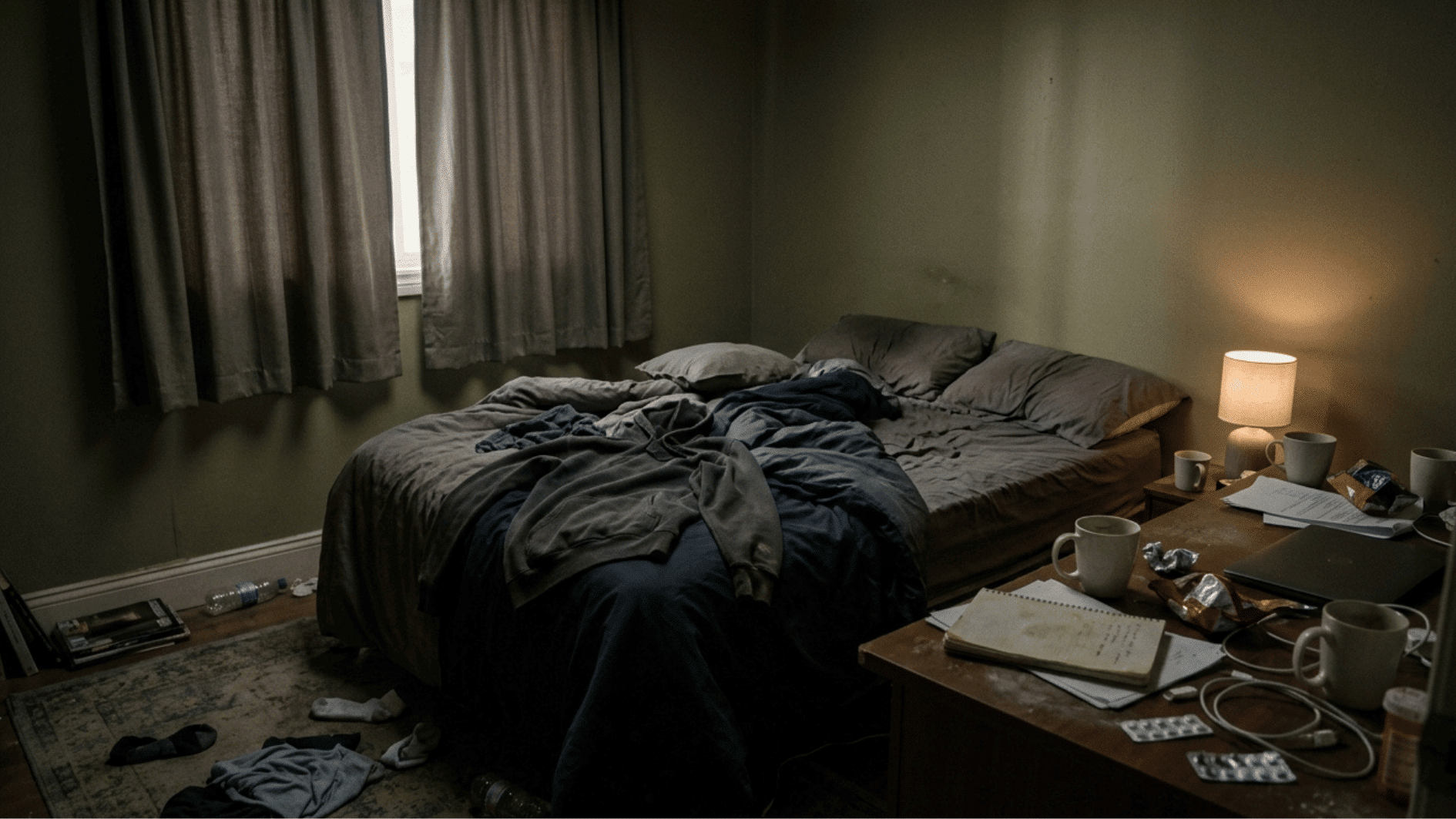
A “depression room” not only refers to an untidy space but is often used to describe something deeper.
A depressed bedroom should not be used to judge someone, because it does not show the full picture of what they are going through.
In this blog, I will explain what it means in simple words and what people usually refer to when they use this term.
Disclaimer: This blog is for educational purposes only and is not medical advice, diagnosis, or treatment. If you are struggling with mental health, please seek help from a qualified professional or trusted helpline.
What Does the Term “Depression Room” Really Mean?A depression room or depression bedroom is a term people use to describe a living space that may look messy, unclean, or unorganized during emotionally difficult times. It is not something doctors officially use; instead, it is a way people talk about emotional struggles in a relatable way. In short, it is an internet term that people use to describe real-life feelings in an easy way. It can happen when someone feels low energy or has trouble doing daily tasks like cleaning or organizing, a struggle that can look very different from person to person when living with depression. It is important to remember that every person experiences this differently, and there is no fixed way it looks. This does not define a person, and it should never be used to judge someone’s situation. |
What Does a Depression Room Look Like?

It can look different for every person. It usually reflects low energy or difficulty in managing daily tasks during emotionally hard times.
- Clothes may be left on the bed, chair, or floor
- Dirty dishes or cups may stay in the room for days
- Items like books, bags, or personal things may be scattered
- Dust or clutter may slowly build up over time
- Curtains may stay closed, making the room feel dark or with low light
- Trash or wrappers may not be cleaned regularly
- The bed may remain unmade for long periods
What Are the Reasons for A Depressed Room?
A depressed room usually does not happen suddenly. It often develops slowly when a person is going through emotional or mental stress and finds it hard to manage daily routines.
1. Low Energy and Tiredness
When a person feels very low on energy, even simple tasks like cleaning or organizing can feel difficult. This tiredness is not just physical but also emotional, making it hard to start anything.
Over time, small tasks get delayed again and again. This can slowly lead to a cluttered or unclean room.
2. Feeling Overwhelmed
Sometimes life feels too heavy with school, work, or personal issues. When everything feels like “too much,” people may avoid cleaning or basic chores. The mind focuses on surviving the day rather than organizing space.
This can cause the room to become messy over time.
3. Loss of Motivation
During a low mood, a person may lose interest in daily activities. Even cleaning or keeping the room tidy may no longer feel meaningful. Starting any task can feel tiring or pointless.
Starting any task can feel tiring or pointless, a pattern that overlaps closely with recovering from burnout.
This can lead to delays in simple routines like picking up or arranging things. Slowly, the room may reflect this lack of motivation.
4. Disrupted Daily Routine
A stable routine helps keep a room clean and organized. But during emotional struggles, sleep and daily habits can change. People may go to bed late, wake up irregularly, or skip small routines.
Because of this, cleaning gets ignored or postponed. Over time, the room may become disorganized without a fixed pattern.
5. Avoidance and Emotional Stress
I have seen that sometimes a person may start avoiding their room because it reminds them of stress or negative feelings. Spending less time in the space also means less attention to cleaning.
Emotional pressure can make even small tasks feel difficult to face. This avoidance slowly adds to clutter and mess in the room. Over time, the room may feel harder to manage.
Depression Room Vs Normal Messy Room
A depression room and a normal messy room may look similar on the outside, but the reasons behind them are often different. This table shows a simple comparison.
| Aspect | Depression Room | Normal Messy Room |
|---|---|---|
| Main reason | Emotional stress, low mood, or low energy | Busy schedule or laziness to clean |
| Energy level | Very low, even small tasks feel hard | Usually, normal energy is present |
| Cleaning ability | Cleaning feels overwhelming or impossible | Cleaning is delayed but still manageable |
| Time factor | Mess builds up over longer periods | Mess may be temporary or short-term |
| Emotional state | Often linked with sadness, stress, or burnout | Not strongly linked with emotional distress |
| Response to mess | A person may feel stuck or avoid the room | A person can usually clean later without difficulty |
How to Support Someone Who May Be Struggling?

When someone is going through emotional difficulty, small acts of care and understanding can make a big difference. You do not need perfect words, just kindness and patience.
- Listen without Interrupting: Let them speak freely without judging or correcting them.
- Avoid Blaming or Shaming: Do not comment negatively on their room, habits, or behavior.
- Show Simple Support: Small help like sitting with them or offering water can matter.
- Speak Gently and Calmly: Use soft, respectful words rather than pressure or criticism.
- Encourage, Don’t Force: Suggest help or professional support, but do not push them.
- Check in Regularly: A simple message or call can remind them they are not alone.
- Respect Their Space: Sometimes they may need quiet time, and that is okay too.
Personal Stories of Living Through a Depression Room
Personal stories of living through a depression room show how emotional struggles can slowly reflect in a person’s living space during difficult times.
|
Cleaning a Depression Bedoom After Struggling Mentally A Reddit user shared how their room slowly became unmanageable during a depressive phase. They described piles of clothes, unfinished tasks, and feeling “stuck” in the same space for weeks. They explained that cleaning did not feel like a simple chore, but something emotionally heavy. With support from others online, they took small steps, picking up one area at a time. |
|
Viral “before and After” Depression Bedroom cleanup A widely shared social media story showed a person struggling with depression who documented their messy room before and after cleaning it. The user explained that the clutter built up during low-mood periods, and that cleaning helped them feel slightly more in control. Many commenters focused on the emotional weight of the mess rather than the mess itself. |
|
Small Cleaning Steps Help During Emotional Recovery A Reddit user explained that during their recovery phase, their room reflected their mental state. They shared that instead of deep cleaning, they started with small tasks like making the bed or picking up a few items each day. These small wins helped them feel slightly more in control. Over time, their space became more manageable, and they felt less emotionally stuck in their environment. |
Where to Seek Help?
If someone is struggling with their mental health, knowing where to reach out for help can make an important difference, especially during difficult or overwhelming times.
- 988 Suicide & Crisis Lifeline (call or text 988, available 24/7)
- Local mental health clinics or community health centers
- Licensed therapists or psychologists (in-person or online platforms)
- Hospital emergency rooms in urgent or crisis situations
- School or college counseling centers (for students)
- SAMHSA Helpline Call 1‑800‑662‑HELP (4357) for free information about mental health and substance use treatment
Wrapping it Up
A “depression room” is not just about mess or clutter. It is often associated with emotional stress, low energy, and difficult life moments that can disrupt daily routines.
Through real-life stories and simple explanations, you can understand that everyone experiences these phases differently, and it is important not to judge someone based on their surroundings.
What matters most is support, care, and understanding. Small steps and help from others can make a real difference over time, and that difference often unfolds gradually along the path to recovery.
If someone is struggling for a long time, reaching out for professional help is always a positive step toward recovery.