
I have spent years studying how people think, cope, and respond to emotional challenges. One thing I have learned is that emotional pain is often invisible.
Many people appear to be functioning normally while privately struggling with feelings of emptiness, self-doubt, or self-criticism.
If you have ever felt disconnected, exhausted, or unusually hard on yourself, it may be a sign that something deeper needs attention.
These experiences are more common than many people realize, and they can affect anyone regardless of age, background, or life circumstances.
“The greatest glory in living lies not in never falling, but in rising every time we fall.” – Nelson Mandela
What Does “Feeling Lost in Life” Exactly Mean?Feeling lost in life is a common emotional experience, not a medical diagnosis. It often involves uncertainty about your purpose, direction, identity, or future, even when things seem fine on the surface. These feelings may appear after major life changes such as a breakup, career shift, relocation, or graduation. They can also develop gradually when your goals or values no longer match your current circumstances. Feeling lost does not necessarily mean you have a mental health condition. However, if these feelings persist or begin affecting your daily life, speaking with a qualified mental health professional may be helpful. |
When Feeling Lost Turns Into “I Feel Like a Failure”
Feeling lost simply means not knowing where you’re headed, but the mind rarely leaves that uncertainty alone. It often fills the gap with self-blame, turning “I’m unsure” into “I’m a failure.”
The research backs this up: people who score high on impostor scales, the persistent sense that you’re not as capable as others think, are about 3.5 times more likely to have significant depressive symptoms.
Psychologists call this overgeneralization: taking one setback, such as a failed job, relationship, or difficult year, and treating it as proof of a flawed identity.
That shift can deepen emotional distress, especially since impostor feelings and depression often reinforce each other.
Warning Signs Your Emotional Struggles Need Attention
When these feelings go on for weeks, not days, your mind and body start to show it. This is not about being dramatic. It is about noticing when something inside you is asking for more than you are giving it.
- Persistent Guilt: A steady feeling of blame or worthlessness that does not easily fade.
- Withdrawing from Others: Pulling away from people, responsibilities, or routines that once felt natural.
- Disrupted Sleep: Sleeping too much, too little, or struggling to rest even when tired.
- Difficulty Focusing: Finding it hard to hold a thought, make decisions, or stay present.
- Emotional Numbness: Feeling empty, distant, or disconnected even during moments that should matter.
- Harsh Self-Thoughts: Believing painful thoughts like “I hate myself” or “I am not enough.”
- Struggling to Function: Finding work, relationships, or daily responsibilities harder than usual
Gentle Ways to Cope When You are Feeling Lost in Life
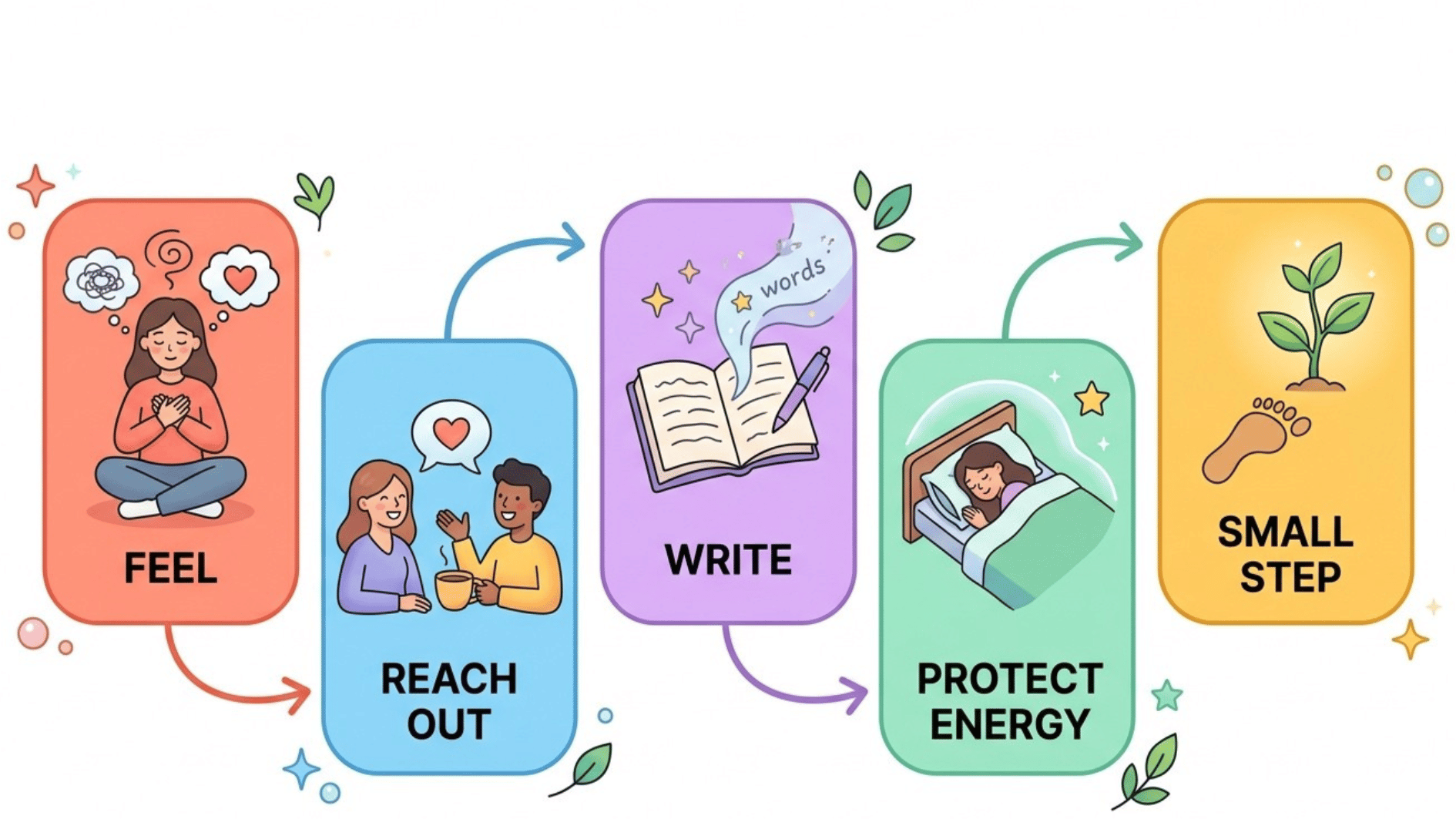
If you are feeling lost in life right now, I want you to know that you do not have to fix everything at once. Coping does not mean having all the answers. It means taking one small, honest step at a time.
1. Permit Yourself to Feel Without Judgment
You do not have to pretend you are okay. Allowing yourself to sit with your emotions, without shame, is often the first step toward genuine healing.
Suppressing what you feel only makes the weight grow over time, and you deserve the space to be honest with yourself.
2. Reach Out to One Person You Trust
You do not need to explain everything at once. Sometimes just telling one safe person that you are struggling is enough to lighten what you are carrying.
Human connection, even in its smallest form, reminds you that you do not have to walk through this alone.
3. Write Down What Still Matters to You
When feeling lost in life, putting even small things on paper can help you reconnect with what still feels meaningful to you.
Seeing your own words in front of you can quietly shift your perspective in ways that thinking alone sometimes cannot.
4. Protect Your Energy From What Drains You
Not every situation or relationship deserves your energy right now. Gently stepping back from what consistently leaves you feeling worse is a form of self-respect.
Creating that small distance is not giving up. It is giving yourself room to breathe and recover.
5. Take One Small Grounding Action Each Day
It does not have to be significant. A short walk, a glass of water, or five quiet minutes can remind your mind and body that you are still here and still moving forward.
Over time, these small actions build a quiet foundation that gradually makes the weight of feeling lost a little easier to carry.
Where to Seek Professional Help?
You do not need to wait for a crisis to seek help. If feeling lost is affecting your work, relationships, or sleep for more than a few weeks, reach out to one of the following free, confidential organizations.
- 988 Suicide & Crisis Lifeline: Call or text 988 for free, confidential support during emotional distress or a mental health crisis.
- SAMHSA National Helpline: Provides 24/7 treatment referrals and information for mental health and substance use concerns.
- Mental Health America:Offers mental health screening tools, educational resources, and guidance on finding support.
- National Alliance on Mental Illness (NAMI): Provides education, support resources, and local mental health referrals.
- Psychology Today Therapist Directory: Helps users find licensed therapists based on location, specialty, and insurance.
- APA Psychologist Locator: Connects users with licensed psychologists across the United States.
Know About Evidence-Based Therapies That are Proven to Help
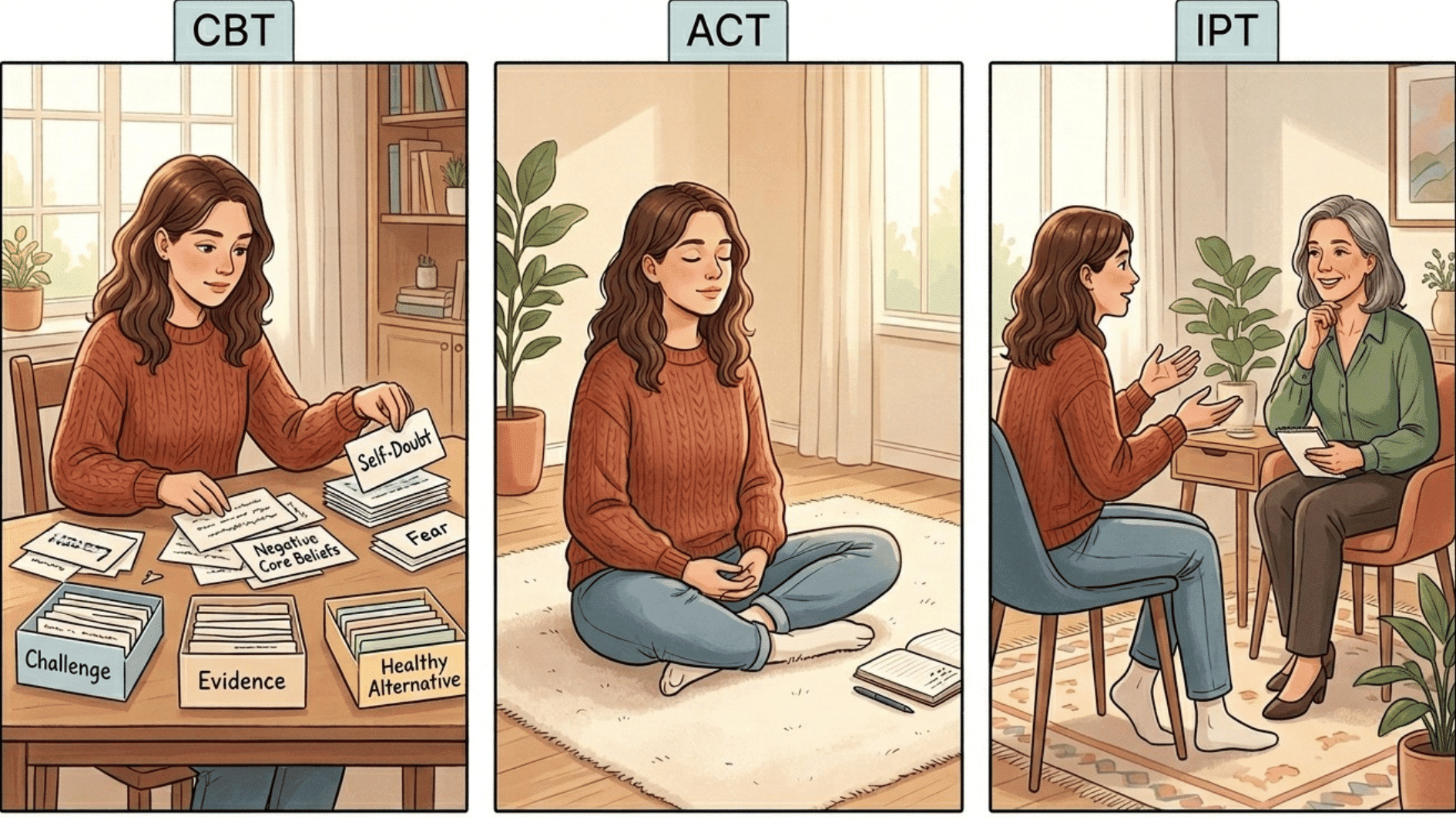
If you are feeling lost in life or struggling with persistent thoughts of failure, the following therapies are clinically recognized to help.
| Therapy Type | Best For | How It Helps |
|---|---|---|
| Cognitive Behavioral Therapy (CBT) | Negative thoughts, self-criticism, and feelings of failure | Helps you notice unhelpful thinking patterns and replace them with healthier ones |
| Acceptance and Commitment Therapy (ACT) | Difficult emotions, avoidance, and feeling stuck | Helps you accept hard feelings while taking actions that match your values |
| Interpersonal Therapy (IPT) | Relationship stress, isolation, and communication struggles | Helps improve social support, communication, and relationship patterns |
Real People Who Have Felt Exactly What You Are Feeling
These words were shared by real people in online communities like Reddit and the Mental Health Forum. People who were not looking for advice. Just trying to put words to something they could not explain to anyone around them.
|
One 25-year-old Redditor described failing academically, facing serious health issues, and battling mental health challenges before teaching himself coding and securing a successful career. |
|
After feeling stuck, approaching 30, and struggling with a life crisis, one Redditor shared how gradual improvements changed everything. |
|
“I woke up this morning and realized I’ve hit a wall. I can’t get out of bed. I just don’t know what to do anymore. I just needed to speak this despair out loud, even to strangers on the internet.” |
Key Takeaways
I have seen how easy it is for people to believe that a difficult chapter defines their entire story. It does not.
Feeling lost, disconnected, or uncertain about your future does not determine your worth, nor does it predict where your life will go next.
These experiences are often signals that something needs attention, reflection, or support, not proof that you have failed.
This blog can help you better understand what you are experiencing and remind you that change is possible.
Frequently Asked Questions
Can Feeling Lost in Life Affect Your Physical Health?
Yes, prolonged emotional distress from feeling lost can contribute to physical symptoms, including fatigue, headaches, and a weakened immune response.
Is It Possible to Feel Lost Even when Life Appears to Be Going Well on The Outside?
Yes, feeling lost in life can occur regardless of external circumstances, as it stems from internal misalignment with your values, purpose, or identity.
How Long Does Therapy Typically Take for Someone Feeling Lost in Life?
The duration varies by individual, but many people begin to notice meaningful progress within 8 to 12 structured therapy sessions.
Can Feeling Lost in Life Affect Your Ability to Maintain Employment?
Yes, persistent feelings of aimlessness and low self-worth can directly impact your concentration, decision-making, and overall job performance.