
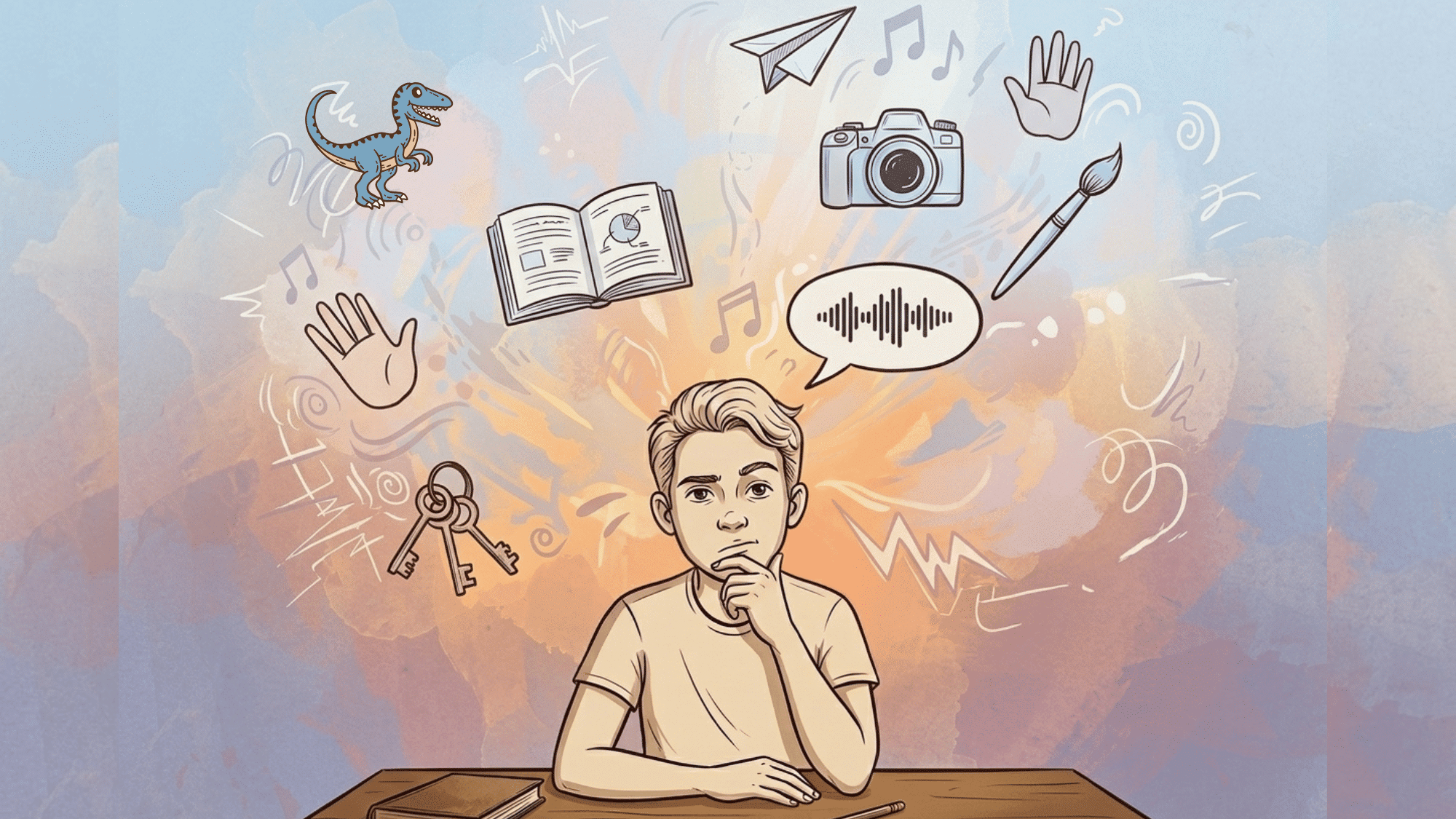
From my first evaluation to my most recent session, I have sat across from children who cannot sit still, teenagers who stare blankly at walls, and adults who have spent decades wondering why their brains work differently from everyone else’s.
What surprises most of my clients is that they all carry the same diagnosis. The truth is, ADHD is not one-size-fits-all.
Understanding the 7 types of ADHD changed how I approach every evaluation and treatment plan created, because getting the type right is what makes the difference between a strategy that works and one that doesn’t.
A Note From the Author
This blog reflects my clinical experience and current research on ADHD subtypes. While Dr. Amen’s seven-type framework remains a topic of ongoing discussion in the field, many of my clients have found it genuinely useful for understanding their own patterns. This content is intended to educate and guide, not replace a personalized evaluation with a qualified mental health professional
Where Does the “7 Types of ADHD” Theory Come From?
The concept of seven ADHD types comes from psychiatrist Dr. Daniel Amen (@doc_amen), who developed a classification system based on observations from SPECT (Single Photon Emission Computed Tomography) brain scans.
Based on patterns observed across thousands of scans, Dr. Amen proposed that individuals with similar ADHD symptoms may have different underlying brain activity patterns.
His observations led to the development of seven proposed ADHD subtypes.
While many people find these categories useful for describing their experiences, the model remains controversial because it has not received the same level of independent scientific validation as the DSM framework.
How Many Types of Adhd are There: 7 Types Explained
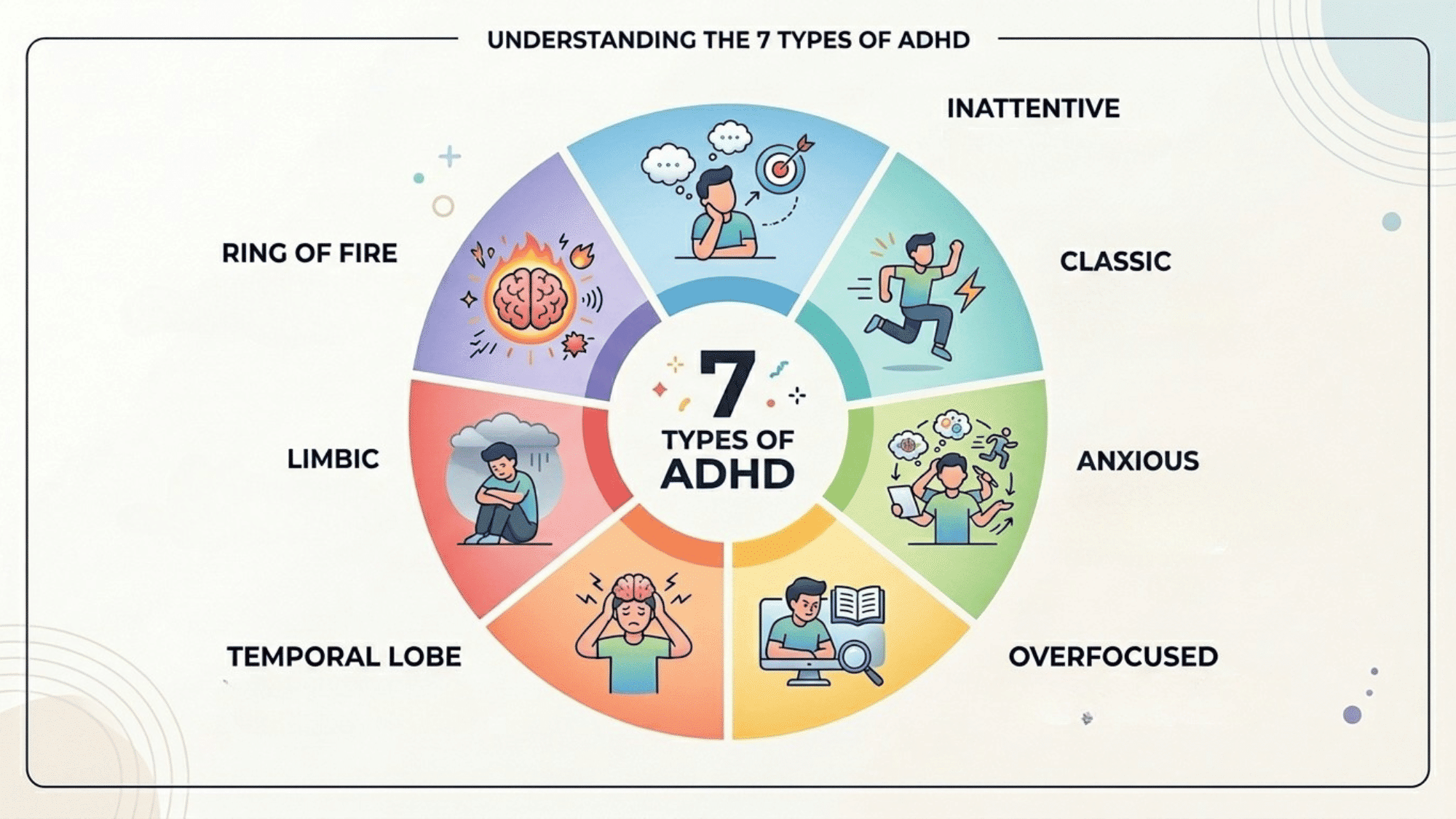
This expanded model keeps the term ADD, since Dr. Amen maintains that not every type involves hyperactivity.
Type 1: Classic ADHD
This pattern most closely resembles what many people traditionally associate with ADHD.
Individuals may struggle with distractibility, impulsivity, hyperactivity, restlessness, poor organization, and difficulty completing tasks.
Among Dr. Amen’s categories, Classic ADHD most closely resembles the DSM’s combined presentation, and this is often the easiest type to recognize because the symptoms are visible and outwardly disruptive.
Recommended Treatment Focus: Combines well with both medication and behavioral structure
Type 2: Inattentive ADHD
People with this pattern primarily struggle with attention, concentration, forgetfulness, procrastination, and organization. Hyperactivity and impulsivity are minimal or absent.
Because these individuals are often quiet rather than disruptive, symptoms can go unnoticed for years.
This type is more commonly missed in girls and adults, who may instead be labeled daydreamers.
Recommended Treatment Focus: Responds strongly to CBT and organizational coaching
Type 3: Over-Focused ADHD
In addition to attention difficulties, individuals may struggle to shift attention from one idea, activity, or thought pattern to another.
They may become stuck on worries, negative thoughts, routines, or specific interests.
This reduced cognitive flexibility can sometimes appear as stubbornness or rigidity.
Transitions between tasks or changes in plans can feel especially frustrating for these individuals.
Recommended Treatment Focus: Benefits from flexibility training and mindfulness practices
Type 4: Temporal Lobe ADHD
This subtype combines ADHD symptoms with concerns involving mood regulation, memory, and emotional stability.
Individuals may experience irritability, learning difficulties, memory problems, or emotional outbursts.
Because the temporal lobes influence emotion and memory, these challenges can affect both learning and relationships.
Recommended Treatment Focus: Often needs mood support alongside standard ADHD treatment
Type 5: Limbic ADHD
Limbic ADHD combines attention difficulties with a persistent low mood. Common features may include low energy, reduced motivation, feelings of hopelessness, low self-esteem, and social withdrawal.
Because these symptoms overlap with depression, a professional evaluation is especially important.
Getting an accurate diagnosis matters here, since treatment for one condition may not fully address the other.
Recommended Treatment Focus: Therapy addressing low mood should run parallel to ADHD treatment
Type 6: Ring of Fire ADHD
Named after a ring-like pattern reportedly seen on certain SPECT scans, this subtype is characterized by emotional intensity, sensory sensitivity, irritability, mood fluctuations, and a tendency to feel easily overwhelmed by stimulation.
He describes this as one of the more complex patterns within his framework. Individuals with this pattern may feel as though their emotions and senses are constantly on high alert.
Recommended Treatment Focus: Sensory regulation strategies and mood stabilization are key
Type 7: Anxious ADHD
This subtype combines ADHD symptoms with significant anxiety. Individuals may experience excessive worry, physical tension, fear of failure, and difficulty performing under pressure.
Anxiety can further interfere with concentration, making attention problems feel even more severe.
Addressing both the anxiety and the attention difficulties together often leads to the best outcomes.
Recommended Treatment Focus: Treating anxiety first often makes ADHD treatment more effective
ADHD by the Numbers: What the Latest Research Shows
According to the CDC, ADHD remains one of the most common neurodevelopmental conditions, affecting an estimated 7 million children ages 3–17, or 11.4% of the U.S. population in that age group.
Diagnosis rates are higher among boys (14.5%) than among girls (8.0%).
In adulthood, more than half of individuals receive their diagnosis later in life, highlighting ongoing recognition gaps.
Despite growing awareness, approximately one-third of adults with ADHD remain untreated.
These numbers underscore why accurate classification and timely intervention are essential for improving access to effective care and support.
What Does an ADHD Assessment Actually Involve?
If you recognize yourself in one or more of the types above, the next step is a proper evaluation. ADHD looks different in every person, which is why a thorough assessment goes beyond a quick checklist.
A comprehensive ADHD assessment typically includes:
- A detailed clinical interview covering your symptom history across childhood and adulthood, including how those symptoms affect work, relationships, and daily life
- Standardized rating scales filled out by you and sometimes a parent, partner, or teacher who knows you well
- Screening for co-occurring conditions such as anxiety, depression, or mood disorders, since these frequently appear alongside ADHD and can complicate diagnosis
- Ruling out other conditions that can mimic ADHD symptoms, including sleep disorders, thyroid issues, and learning disabilities
When Should You Seek a Professional Evaluation?
If your symptoms have persisted since childhood, are affecting your work, relationships, or daily functioning, or you recognize yourself in one of the subtypes above but have never been formally assessed, it is time to see a psychiatrist or psychologist.
The earlier you get clarity, the sooner you can stop guessing and start getting the right support.
Many people spend years managing anxiety, low mood, or focus struggles without realizing ADHD is the underlying driver.
A proper evaluation does not just confirm a diagnosis; it gives you a roadmap for everything that comes next.
Evidence-Based Treatment Across ADHDTypes

Regardless of which classification model resonates with you, treatment should be based on approaches supported by clinical evidence.
1. Medication
Medication remains one of the most effective treatments for ADHD. Depending on an individual’s needs, healthcare providers may recommend:
- Stimulant medications
- Non-stimulant medications
- Combination treatment approaches
2. Behavior Therapy
Behavior therapy gives people practical tools to manage ADHD symptoms in daily life. NIHM talks about these treatments in further detail
- CBT (Cognitive Behavioral Therapy) helps reframe negative thought patterns, tackle procrastination, and build coping strategies
- ADHD Coaching focuses on real-world accountability, goal setting, and building daily systems that stick
- For children younger than six, behavior therapy is generally recommended as the first-line treatment.
- For older children and adolescents, the American Academy of Pediatrics recommends combining behavior therapy with medication whenever appropriate.
3. Executive Function Support
Many individuals benefit from strategies that strengthen:
- Time management
- Organization
- Task initiation
- Planning skills
- Emotional regulation
Does Treatment Differ by ADHD Type?
Core ADHD treatments are often similar across presentations, but the focus of care may change depending on a person’s main symptoms.
Treatment priorities may vary by presentation: inattentive ADHD often emphasizes organization, planning, time management, and task initiation.
Hyperactive-impulsive ADHD may focus on impulse control, behavioral regulation, and restlessness, and combined ADHD usually addresses both attention-related and hyperactive-impulsive symptoms.
When anxiety, depression, or other mental health concerns are also present, those conditions may need to be addressed alongside ADHD treatment.
The Key Takeaway
A label is only useful if it leads somewhere. Knowing whether anxiety, mood, or inattention is driving your ADHD changes everything about how you approach treatment, relationships, and daily life.
The 7 types of ADHD are not about putting people in boxes. They are about finally giving people language for something they have felt but could never explain.
No matter if you are a parent trying to understand your child or an adult who has spent years feeling misunderstood, the right diagnosis is not the end of the path; it is the clearest starting point you will ever have.
Frequently Asked Questions
Are there any Medications for ADHD?
Yes, ADHD is commonly treated with medications, including stimulants like methylphenidate and amphetamines, though they should always be prescribed and monitored by a healthcare provider.
What is the 24-hour rule for ADHD?
The 24-hour rule for ADHD means waiting a full day before acting on a strong impulse, emotional reaction, or non-urgent decision. It helps create a pause so the person can think more clearly.
Is ADHD a Type of Autism?
No, ADHD and autism are different neurodevelopmental conditions, though they can share some overlapping traits and sometimes occur together.