|
To reduce anxiety immediately, slow your breathing with a long exhale, such as the 4-7-8 method (inhale for 4 seconds, hold for 7, exhale for 8). The 5-4-3-2-1 grounding technique, cold water on your face, or tensing and releasing your muscles can also calm your body within a few minutes. |
Disclaimer: This blog is for general information only and is not medical advice. If you have chest pain, trouble breathing, or thoughts of self-harm, call 911 or the 988 Suicide & Crisis Lifeline (call or text 988).
Why Does Anxiety Spike So Suddenly?
Anxiety often spikes suddenly because your body’s alarm system mistakes an everyday stressor, like a tense email or a crowded room, for real danger.
Within seconds, your brain releases stress hormones that speed up your heart rate and tighten your muscles, preparing you to fight or flee even when there is nothing to run from.
The National Institute of Mental Health explains that this fight-or-flight response activates to help keep you safe, even in moments that feel threatening but aren’t actually dangerous.
This response feels intense, but it is your body trying to protect you.
In real terms, recognizing this can bring a small sense of relief, since the reaction is automatic, not a sign that something is wrong with you.
Ways to Reduce Anxiety Immediately
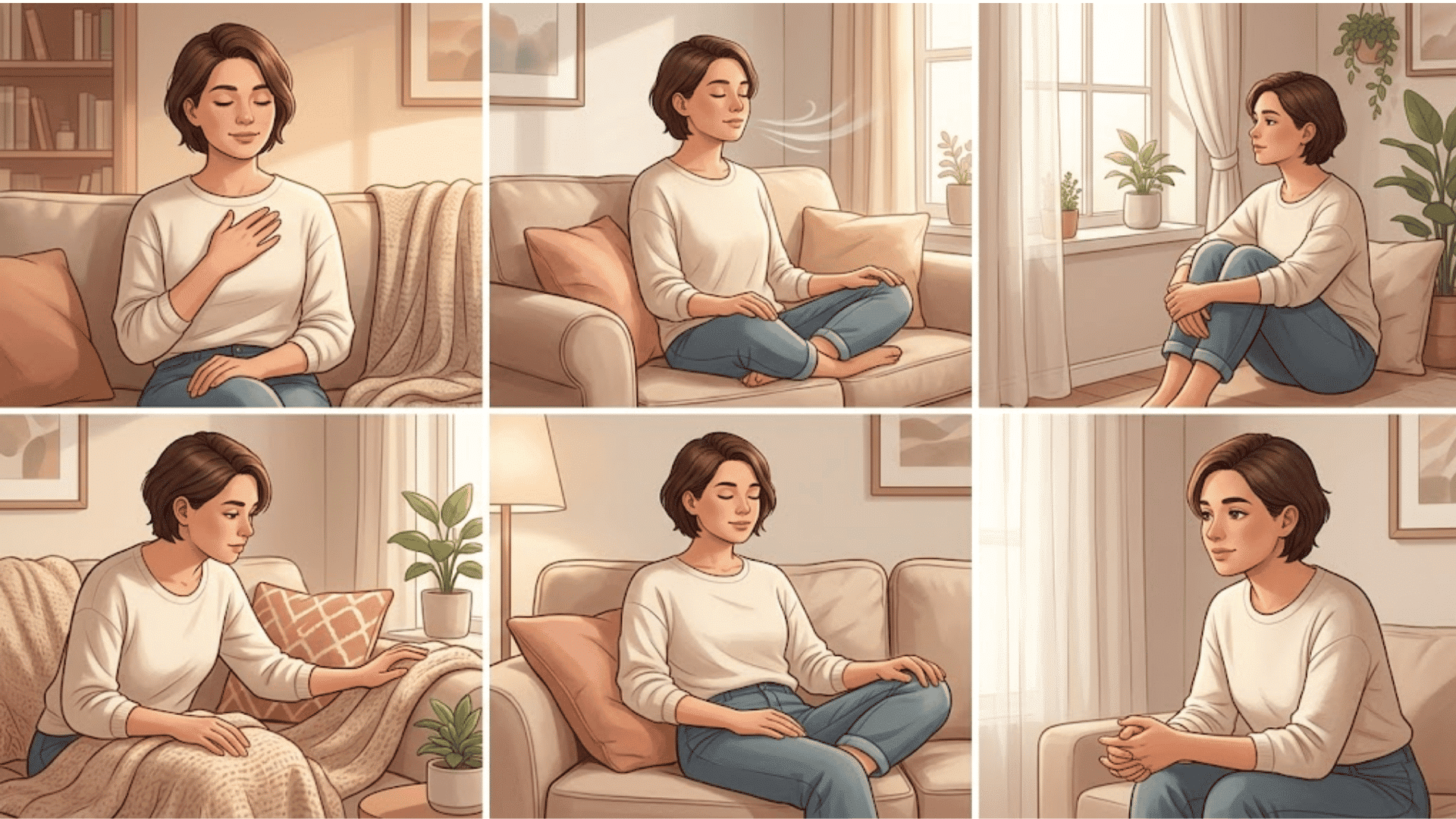
When anxiety feels overwhelming, a few simple techniques can help calm your body and mind within minutes. Try one of these gentle methods the next time anxiety strikes, and give yourself permission to pause.
(1) 4-7-8 Breathing Method
This breathing pattern uses a long exhale to slow you down. Your heart rate naturally rises a little as you breathe in and falls as you breathe out.
-
Breathe in quietly through your nose for four seconds
-
Hold your breath for seven seconds.
-
Exhale slowly through your mouth for eight seconds.
Repeat this cycle three to four times. You may observe your shoulders relaxing, your breathing smoothing, and your thoughts feeling less rushed as your breath slows.
(2) Box Breathing
Box breathing uses equal counts for each phase, which can feel steadying when your mind is racing or your thoughts feel difficult to control.
-
Inhale for four seconds.
-
Hold for four seconds.
-
Exhale for four seconds.
-
Hold again for four seconds.
Continue this pattern for a minute or two while keeping your breathing comfortable. Many people find the even rhythm easier to follow when anxiety makes breathing feel difficult or uneven.
(3) Cyclic Sighing
Cyclic sighing involves two inhales through your nose, followed by one long exhale through your mouth.
-
Breathe in slowly through your nose.
-
Once your lungs feel full, take a second, shorter inhale to top them up.
-
Breathe out slowly through your mouth until your lungs feel empty.
Try repeating this for a few minutes while keeping your shoulders loose. The longer exhale signals to your body that it is safe to relax and can help reduce feelings of tension.
(4) 5-4-3-2-1 Grounding Method
This technique, one of several sensory grounding methods, gently shifts your focus away from anxious thoughts by engaging your senses and helping you pay attention to the present moment.
Notice five things you can see, four you can touch, three you can hear, two you can smell, and one you can taste.
Take your time with each step instead of rushing through it. This can help bring your attention back when anxiety pulls your mind toward worries or fears.
(5) 333 Rule
The 333 rule is a simpler version of sensory grounding for moments when you need something quick and easy to remember.
Look around and name three things you see, three sounds you hear, then move three parts of your body. You can do this quietly, even when you are around other people.
This small shift in attention can interrupt anxious thought patterns and help you reconnect with your surroundings during stressful moments.
(6) Cold Water or Ice Reset
A brief burst of cold can help your body shift attention away from overwhelming feelings. Splash cool water on your face and wrists, or hold an ice cube in your hand for a few seconds.
This sensation gives your mind something immediate to focus on while helping you pause the anxious cycle. Many people find it helpful when anxiety feels especially intense or difficult to control.
(7) Quick Walk or Stretch
Gentle movement helps release built-up tension and excess energy that may come with anxiety.
A short walk, a few stretches, or simply changing your position can ease physical restlessness. Even a minute of movement can help you feel more connected to your body.
As you move, notice your steps, breathing, or surroundings, and let your body settle gradually.
(8) Progressive Muscle Relaxation
This method helps release tension by working through your body one muscle group at a time. Starting at your toes, tense each muscle group for a few seconds, then slowly release the tension.
Move upward toward your head, relaxing each area as you go. This gradual release can help your body feel calmer and reduce the tightness that often comes with stress.
(9) Find a Quiet Space
If possible, move away from loud sounds, busy areas, or stressful surroundings. A calmer environment can make it easier to settle your thoughts and give your mind a short break.
(10) Other Fast Coping Tips
Small sensory shifts can also offer quick relief when anxiety rises.
Listening to your favorite calming music, holding a comforting object like a soft toy, or reaching out to someone you trust can help ease the moment.
These low-effort actions give your mind something steady to focus on when thoughts feel overwhelming. Choose the option that feels most comfortable and realistic for you during that moment.
What Makes an Anxiety Spike Worse in the Moment?
Certain habits and daily patterns can worsen anxiety over time. Knowing what affects anxiety can help you notice possible triggers.
-
Too Much Caffeine: Drinking large amounts of coffee, tea, or energy drinks can increase restlessness, a fast heartbeat, and other feelings that may feel similar to anxiety.
-
Poor Sleep: Not getting enough quality sleep can leave your mind more sensitive to stress, making it harder to handle worries and emotional reactions during the day.
-
Constant Checking: Repeatedly seeking reassurance or checking for signs that something is wrong can keep anxious thoughts active and make it harder to feel calm.
-
Ignoring symptoms: Avoiding strong or repeated anxiety symptoms without addressing them may allow the problem to continue and can make daily activities feel more difficult over time.
When Should You Get Support for Anxiety?
It’s time to get support when anxiety starts shaping your days instead of passing through them.
Common signs include losing sleep, falling behind at work or school, or losing interest in things you used to enjoy. Frequent panic attacks, or worry that keeps running no matter what you try, are also good reasons to talk to someone.
Reaching out is not a sign of weakness. A doctor, psychologist, or therapist can look at what sets off your anxiety and match you with a treatment that fits.
The two main options are talk therapy and anxiety medication. Some people do best with one, while others use both together.
Frequently Asked Questions
What Do They Give You at the Hospital for Anxiety?
Hospitals may give fast-acting medications, such as benzodiazepines, to ease severe anxiety or panic attacks. Treatment depends on the symptoms, medical history, and doctor’s assessment.
Will the ER Admit You for Anxiety?
The ER usually does not admit patients for anxiety alone. Doctors first check for other medical causes and help manage symptoms. Hospital admission may be needed if there are serious safety concerns or severe mental health symptoms.
What Feels Like Anxiety but Isn’t?
Several medical conditions can cause symptoms similar to anxiety, including low blood sugar, thyroid problems, heart rhythm problems, and asthma. These conditions may cause a racing heart, dizziness, shaking, or trouble breathing.