
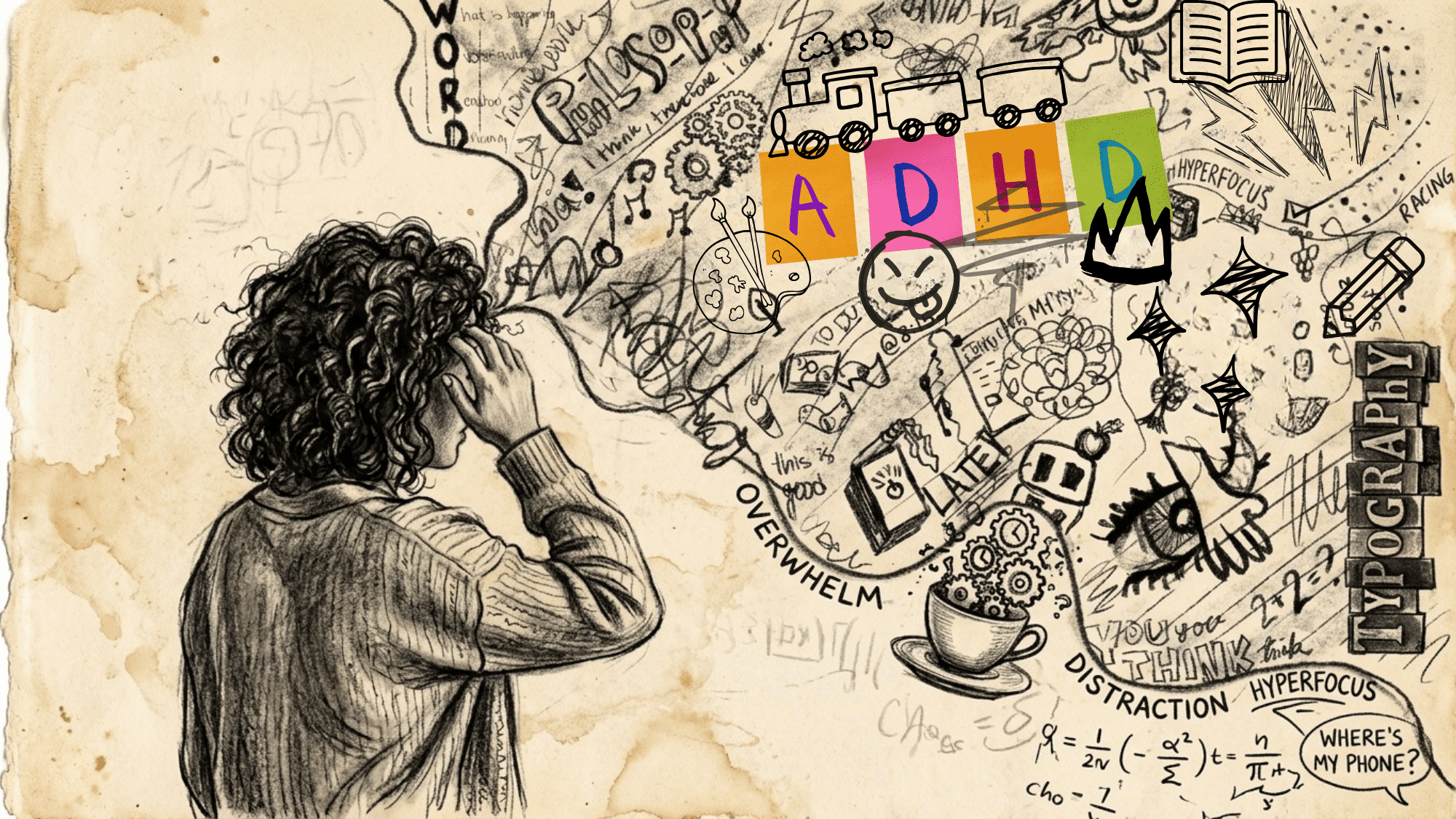
I’ve seen many women who spent years feeling like they were falling behind, without ever knowing ADHD was the cause.
High-functioning ADHD often hides behind good grades, busy routines, and a calm “I’m fine” on the outside.
On the surface, these women seem to be managing well. But underneath, there’s often tiredness, self-doubt, and a feeling of having to work twice as hard just to keep up.
In this blog, I’ll gently point out the symptoms that so often go unnoticed in women and how to cope with them.
What is High-Functioning ADHD?
High-functioning ADHD is not an official medical label, but clinicians use it to describe people whose symptoms are real yet masked by strong coping skills.
A woman may hold a demanding job and appear organized while privately struggling with focus, memory, and overwhelm.
Left unaddressed long enough, this can look a lot like untreated ADHD symptoms that simply took longer to surface.
The term matters because it clarifies how the condition can manifest even when someone appears outwardly functional or high-achieving.
Symptoms of High-Functioning ADHD in Females

These ADHD symptoms in adult women tend to cluster, and most women I read about describe several at once rather than one in isolation. This is how they show up.
1. Masking Symptoms
Masking means hiding ADHD struggles to look calm, organized, or in control. Many women learn to cover forgetfulness, distraction, or overwhelm in public.
This can make symptoms harder for others to notice. Over time, constant masking can lead to stress and exhaustion.
2. Overcompensating to Keep Up
Overcompensation happens when a woman works much harder to meet normal expectations.
She may overprepare, double-check everything, or stay up late to finish simple tasks. From the outside, she may seem capable and high-functioning. Inside, she may feel drained, anxious, or always behind.
3. Inattention and Brain Fog
Inattention in women often looks quiet rather than disruptive.
She may lose focus during conversations, forget appointments, or miss details. Brain fog can make everyday tasks feel heavy and slow.
Because it is less visible, it is often dismissed as laziness or stress.
4. Emotional Overwhelm
Many women with ADHD feel emotions quickly and intensely. Small setbacks, criticism, or rejection can feel much bigger than expected, a pattern closely tied to rejection-sensitive dysphoria.
Mood shifts may be mistaken for anxiety or sensitivity alone. This can affect confidence, relationships, and daily functioning.
5. Hidden Disorganization
A woman may look polished in public while struggling privately with clutter, inboxes, schedules, or unfinished tasks.
The effort to hide this chaos can be exhausting. This often reflects executive function difficulties rather than a lack of care.
6. Burnout from Holding It Together
Years of masking, overworking, and self-blame can lead to burnout, and recovering from burnout often starts with recognizing how long the exhaustion has been building.
Many women feel tired before they even understand what is happening. Getting support can help reduce shame and make daily life more manageable.
What the Data Shows About ADHD Diagnosis in Women?
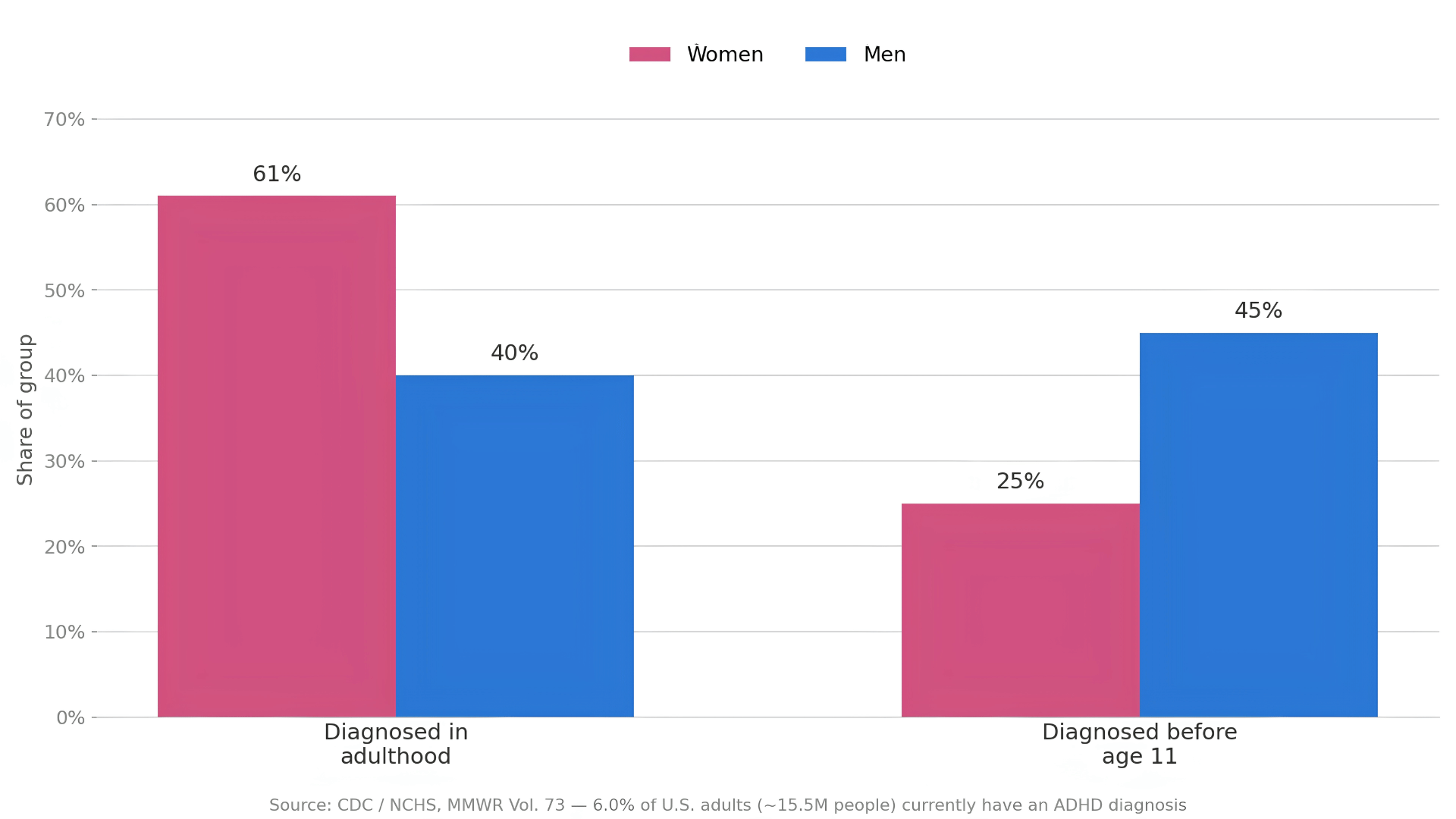
The diagnosis gap becomes clearer when looking at federal survey data. CDC and NCHS data report that 6.0% of the U.S. Adults, roughly 15.5 million people, currently have an ADHD diagnosis.
Data also show that women are more likely to be diagnosed in adulthood. 61% compared with 40% of men, while only 25% of women were diagnosed before age 11 compared with 45% of men.
This suggests that many women spend years coping, masking, or being treated for related issues before ADHD is recognized.
For some, diagnosis comes only after adult responsibilities, work demands, parenting, or hormonal changes make symptoms harder to manage.
Why High-Functioning ADHD Often Goes Undiagnosed in Women?

In my clinical reading and research, I have seen how frequently women receive an ADHD diagnosis much later in life, sometimes only after years of thinking that this is normal.
- Symptoms Point Inward: Inattentive ADHD often affects the woman more than the people around her.
- Quiet Struggle Gets Missed: If she is not disruptive, teachers, parents, or employers may not see the problem.
- Self-Blame Builds Over Time: Many women spend years thinking they are lazy, careless, or not trying hard enough.
- High Functioning Can Mislead Others: Even when she asks for help, she may be dismissed because she “seems fine.”
- Misdiagnosed First: Anxiety or depression may be treated before ADHD is considered.
- Criteria Shaped Around Boys: Older diagnostic models focused more on hyperactive male behavior.
Conditions Often Linked with ADHD
ADHD rarely arrives alone, and the company it keeps is often treated first, while the root cause goes unaddressed, as explained in detail by NIMH
| Pattern | What It Looks Like | Why It Matters |
|---|---|---|
| Anxiety and depression | Worry, sadness, low motivation | Often linked to years of misunderstood ADHD |
| Sleep problems | Trouble sleeping or waking tired | Can worsen focus, mood, and energy |
| Hormonal shifts | Symptoms change across cycles or life stages | May make ADHD feel stronger at certain times |
| Emotional dysregulation | Big mood shifts or intense reactions | Can affect relationships and self-esteem |
| Burnout | Exhaustion from masking or overworking | Can delay support and increase stress |
ADHD in Girls Checklist: Early Signs That Often Get Missed

Recognition frequently traces back to childhood signs that nobody flagged. This ADHD checklist for girls highlights patterns that often slip past parents and teachers because girls tend to be quiet rather than disruptive.
- Frequent daydreaming: She may seem distracted or “in her own world.”
- Being mislabeled: Symptoms may be mistaken for shyness, sensitivity, or perfectionism.
- Working twice as hard: She may need to put in extra effort just to keep up.
- Trouble finishing tasks: May need reminders to complete schoolwork or daily responsibilities.
- Social difficulty: Struggles with peers may be misunderstood as moodiness.
Real Life Experiences of People
The examples below are based on personal stories shared in online communities and show how ADHD symptoms in adult women and others can stay hidden behind a capable exterior.
Feeling “Unevenly Skewed” in Symptoms
A Reddit user in the r/ADHD community shared that they are only mildly disorganized but severely lack structure and follow-through, with a quick-shifting attention span. They described being calm enough that they did not “seem obviously ADHD,” and recalled being dismissed by a psychiatrist who told them to simply use lists. That single dismissal left them unsure what to believe about their own struggles.
Late Diagnosis After Years of Masking
A user in the r/ADHDwomen community wrote about being diagnosed with combined-type ADHD at 35 after years of masking and overcompensating. Labeled a gifted kid, they coasted on structure, deadlines, and praise, but their systems began to break down once they moved to a flexible work-from-home job. As they put it, they still look high functioning while the internal chaos is real.
Struggles That Others Never See
A Reddit user in the r/ADHD community explained that people were surprised by their diagnosis because they did not seem chaotic or disorganized. Their hardest struggles were overthinking, rumination, over-talking, and decision-making. They noted these patterns are not things others would pick up on unless they were around constantly, which made the experience feel invalidating.
What Finally Led to a Diagnosis
In the r/ADHDwomen community, one commenter shared that social media is what led them to seek a diagnosis, since they had been stuck on the childhood image of fidgety, disruptive boys. They described having many coping mechanisms yet still struggling at key points, like dropping classes mid-semester, and feeling behind their peers despite being diagnosed at 39.
Practical ADHD Management Strategies That Actually Work
Managing ADHD is not about trying harder. The right strategies can reduce daily stress, improve focus, and help you work with your brain instead of against it.
- Use Simple Routines: Consistent daily habits reduce decision fatigue and forgetfulness.
- Break tasks into smaller steps: Small, manageable tasks feel easier to start and finish.
- Use reminders and planners: Calendars, alarms, and to-do lists help keep you organized.
- Prioritize sleep and exercise: Healthy routines can improve focus, mood, and energy.
- Practice self-compassion: Replace self-criticism with realistic expectations and patience.
- Seek professional treatment: Therapy, coaching, or medication may help manage symptoms effectively.
- Build a support system: Trusted family, friends, or ADHD communities can provide encouragement and practical support.
Final Reflections
High-functioning ADHD in females can be easy to miss because symptoms are often hidden behind effort, masking, and perfectionism.
A woman may look organized or successful on the outside while struggling with brain fog, emotional overwhelm, disorganization, or burnout in private.
Recognizing these patterns can reduce shame and make support feel more possible. ADHD is not a character flaw or a lack of discipline.
With the right diagnosis, treatment, routines, and self-compassion, women can manage symptoms in ways that fit their real lives.
Frequently Asked Questions
What are the Different Types of ADHD in Women?
There are three presentations: predominantly inattentive, predominantly hyperactive-impulsive, and combined, and women most often show the inattentive type.
What are the 4 F’s of ADHD?
The “4 F’s” refer to the threat-response styles of fight, flight, freeze, and fawn, often discussed in relation to ADHD emotional dysregulation, though this is a clinical framework rather than an official diagnostic term.
What is the Rarest ADHD Type?
The predominantly hyperactive-impulsive presentation is the least common, particularly in women, who skew toward inattentive symptoms.