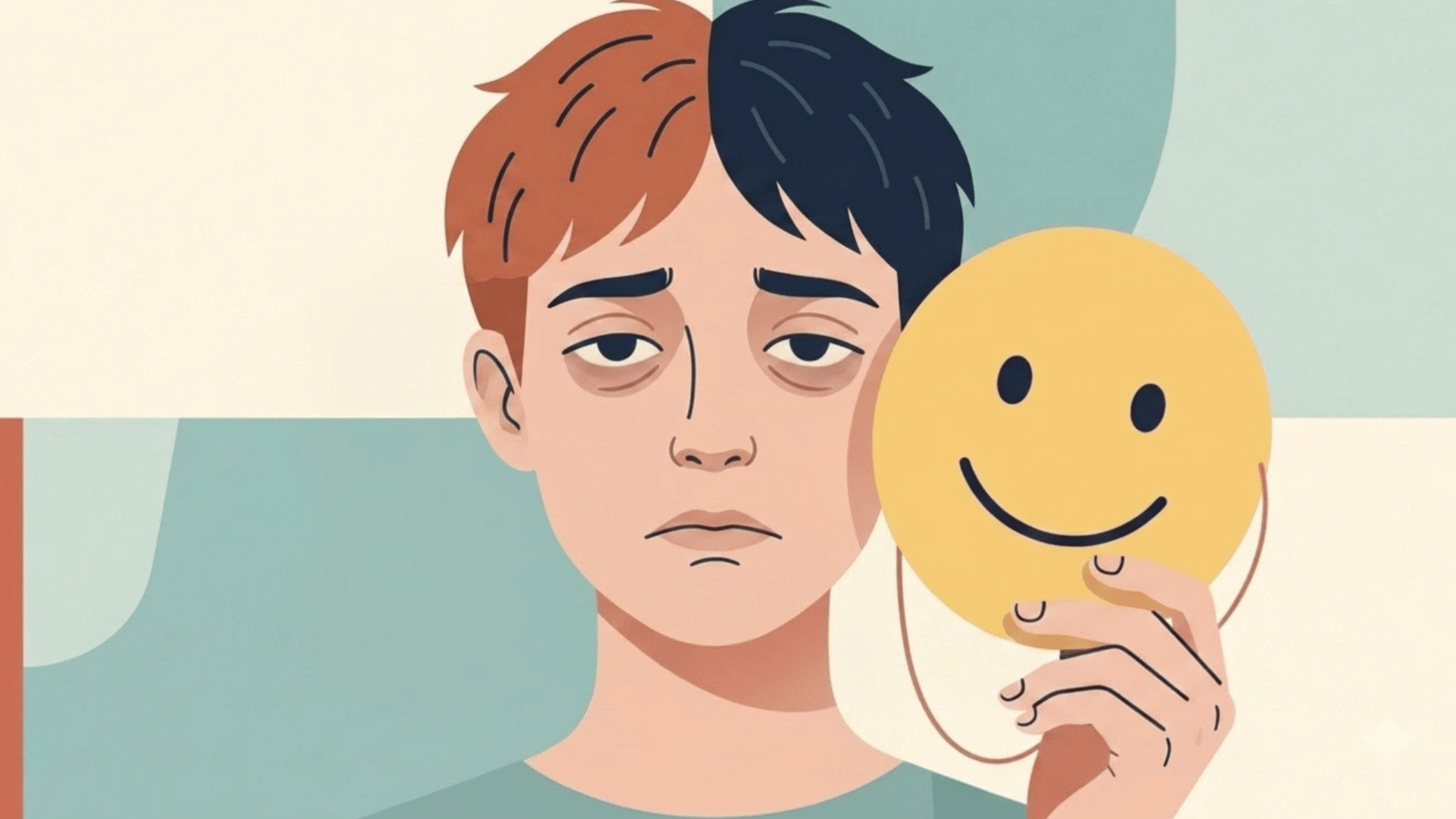

Personal boundaries are the limits you set around your time, energy, emotions, and values, shaping how you want to be treated in relationships.
When these limits are unclear, it can become harder to protect mental and emotional well-being. Learning how to set boundaries is not about distancing yourself from others, but about creating more sustainable ways to interact.
Chronic boundary violations are increasingly recognized as a contributor to anxiety, chronic stress, and recovering from burnout, not just relational friction.
In this blog, I will explain what boundaries are, its types, examples of boundaries, and practical steps for setting boundaries in daily life.
“Boundaries are the distance at which I can love you and me simultaneously.”- Prentis Hemphill
How Do Boundaries Protect Your Peace of Mind?
Setting boundaries is essential for maintaining mental, emotional, and physical well-being.
Establishing limits allows individuals to prioritize needs, communicate expectations effectively, and maintain balance between personal and professional responsibilities without emotional overload or resentment.
Unmanaged stress can negatively impact both mental and physical health.
The National Institute of Mental Health (NIMH) also emphasizes that protecting mental health through coping strategies and self-care improves overall functioning and resilience.
Types of Boundaries You Need to Know
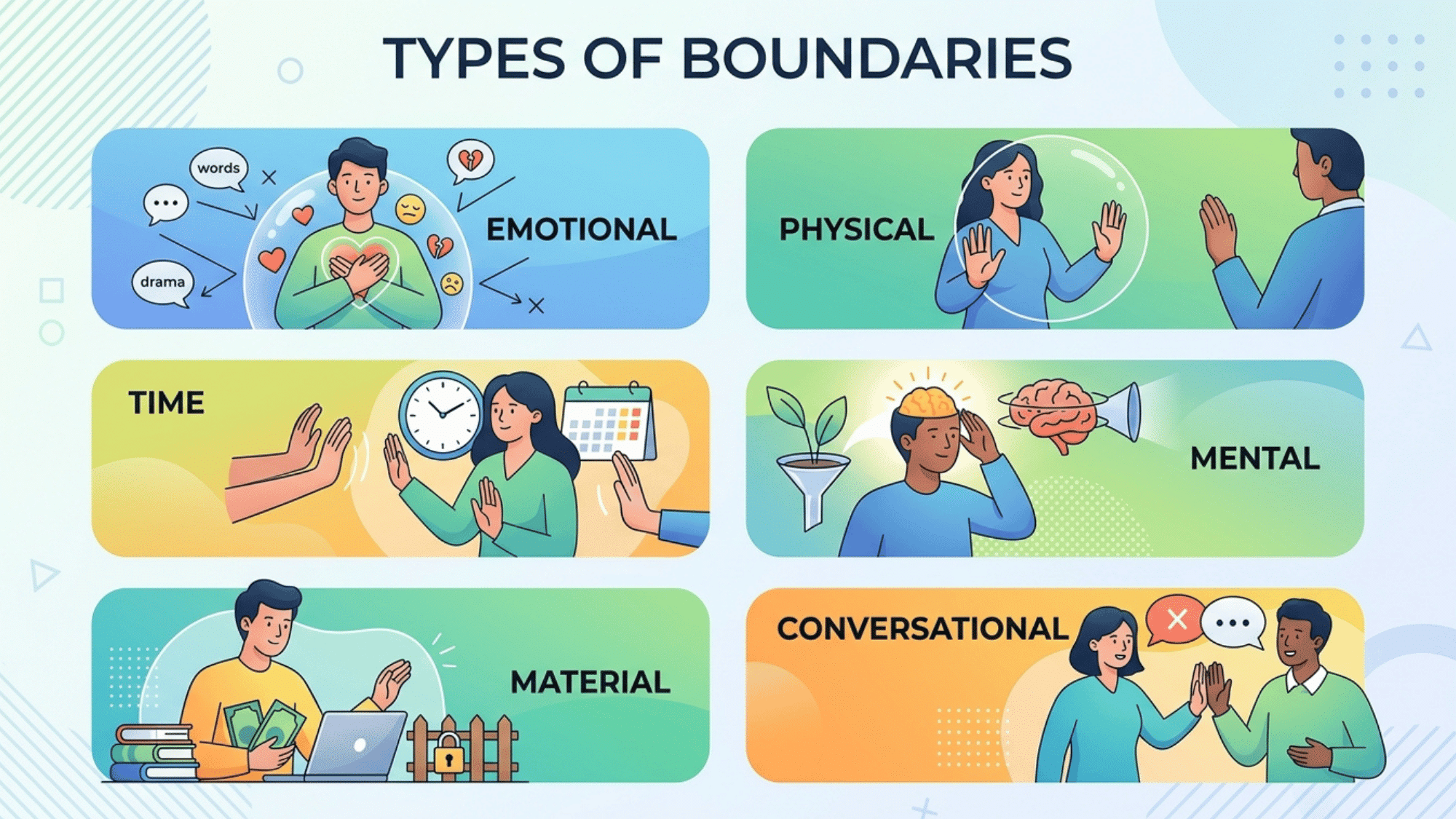
Boundaries come in different forms that protect your emotional, physical, and mental well-being, helping you maintain balance in relationships and daily life.
| Type | What It Covers | Example |
|---|---|---|
| Emotional | Feelings, energy, and mental wellbeing | “I need time to process before we discuss this.” |
| Physical | Body, personal space, physical comfort | “I’m not comfortable with hugs from acquaintances.” |
| Time | How you spend your hours | “I don’t take work calls after 7 PM.” |
| Mental | Your thoughts, values, and opinions | “I’d prefer not to debate this topic with you.” |
| Material | Money, possessions, lending | “I’m not in a position to lend money right now.” |
| Conversational | Topics you will and won’t discuss | “I don’t discuss my salary with coworkers.” |
How to Set Boundaries: The Step-by-Step Approach
Learning how to set boundaries involves identifying personal limits, communicating them clearly, and maintaining consistency to support mental health and reduce stress.
Step 1: Identify Where You Feel Drained
Your emotional responses- frustration, guilt, or anxiety- are often the earliest signals that a boundary is needed.
The first step in how to set boundaries is noticing where your current limits are being crossed; you pay attention to:
- Situations that leave you feeling exhausted or taken advantage of
- Relationships where you consistently say yes when you mean no
- Recurring conflicts that stem from unspoken expectations
Step 2: Clarify Your Values and Needs
Before communicating a limit to someone else, you need to understand what you are protecting. These simple questions can help reveal areas where your boundaries may need attention:
- What do I value most – my time, my peace, my privacy?
- What behaviors feel disrespectful or draining to me?
- What do I need more (or less) of in this relationship?
TherapistAid notes that your values significantly influence your limits – for example, if you highly value family time, you may need to set firm limits on working late.
Step 3: Start Small and Be Specific
When learning how to set boundaries for the first time, vague statements rarely work; instead of “I need more space,” try something like “I won’t be available on weekends for work messages.”
Specific examples of boundaries you can start with:
- At work: “I’m not able to take on additional projects this month.”
- With family: “I won’t discuss my relationship status at family gatherings.”
- With friends: “I need 24 hours’ notice before plans – last-minute changes are stressful for me.”
- With yourself: “I will not scroll social media for the first hour of my morning.”
Step 4: Communicate Clearly and Calmly
Delivery matters as a calm, direct tone signals that you are serious without being aggressive. Setting a boundary does not require a confrontation; use “I” statements to express your need without placing blame:
- Instead of: “You always interrupt me.”
- Try: “I find it difficult to share my thoughts when I’m interrupted; I’d appreciate space to finish speaking.”
Step 5: Expect Pushback and Hold Firm
When you begin setting limits with people who are accustomed to you saying yes, resistance is common; this does not mean your limit is wrong, but it means the dynamic is shifting.
You do not need to justify, over-explain, or apologize for protecting your needs. The discomfort that follows is a normal stress response to change, not evidence that something has gone wrong.
Step 6: Revisit and Adjust Over Time
Boundaries are not permanent rules carved in stone; as life changes, relationships evolve, and your needs shift, revisit your limits periodically – especially after major life transitions – and update them as needed.
Common Challenges When Setting Limits
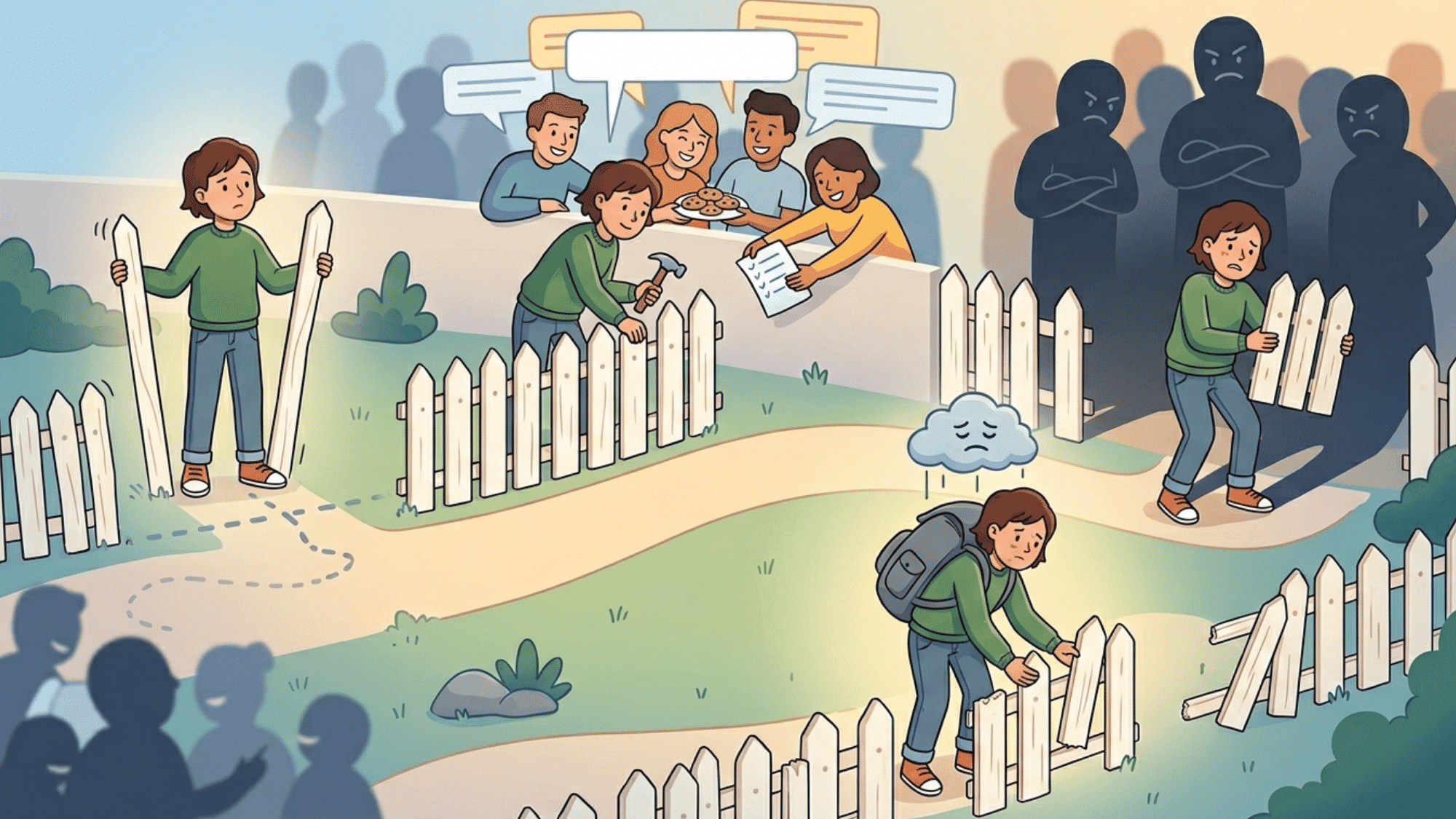
Setting limits can feel difficult at first, but it is essential for maintaining emotional well-being and healthier relationships.
- Guilt: Many people feel guilty when they first begin setting limits, especially with loved ones, but it is important to recognize that guilt is a feeling, not a fact, as protecting your well-being is not selfish but necessary.
- Fear of Rejection: The worry that others will pull away if you assert your needs is common, but in reality, healthy relationships tend to grow stronger with clear communication, while toxic relationship patterns are more often the ones that can’t survive a boundary.
- Inconsistency: Setting a limit once and then not enforcing it sends a mixed message, as consistency is what transforms a stated limit into a lived one.
- People-Pleasing: It can make it hard to set limits, as you may prioritize others’ approval over your needs, but consistent self-respect helps reduce burnout and resentment.
- Lack of Clarity: Unclear boundaries often lead to misunderstandings in relationships, so defining and communicating your limits clearly is essential for mutual respect and emotional well-being.
Practical Boundaries by Life Area
Boundaries look different depending on where and with whom you apply them. Here is how to establish them across the key areas of daily life.
| Life Area | What It Looks Like | |
|---|---|---|
| Personal Relationships | Mutual respect and balance; setting limits when one person overextends, so both feel respected and valued. | |
| Workplace | Defining your hours, clarifying priorities with managers, using out-of-office messages, and protecting focused time. | |
| Family | Declining certain conversations, limiting visit frequency, and expressing needs with respectful support, not distance. | |
| Digital & Social Media | Setting message-checking windows, muting stressful content, sharing response expectations, and limiting data sharing. |
Community Opinions on Setting Boundaries
Sometimes the most comforting wisdom comes from people walking the same path, and here’s what others have shared on community forums like 7 cups and Becoming Fully Human about setting boundaries based on their lived experiences.
Ask where the guilt comes from
A member of the 7 Cups support community found relief by questioning the root of where the guilt, often past conditioning that taught us our feelings matter less.Boundaries are self-kindness, not distance
The same member offered a gentle reframe: boundaries aren’t about restricting people, but about being kind to yourself, recognizing and respecting your own needs and wants.Start small and build confidence.
|One person shared that the journey begins gently by setting smaller boundaries in day-to-day relationships, like agreeing to hang out but declining to stay for dinnerCommunicate directly, knowing how you’d feel if crossed
Another voice advised that the most effective approach is to communicate boundaries directly, with a clear thought about how you’d feel if they were overlooked or crossed.Let go of others’ reactions
A shared lesson many return to: real connection survives honesty, because people who truly love us respect our choices and want us to feel happy and secure.
The Bottom Line
Setting boundaries is not a one-time conversation, and it is an ongoing practice that evolves as your relationships and circumstances change.
The ability to protect your time, energy, and emotional well-being is not a luxury; it is a foundation for sustainable mental health.
If guilt, anxiety, or old patterns keep undoing your boundaries despite consistent effort, that’s often a sign that working with a therapist could help uncover what’s driving the pattern.
If you are learning how to set boundaries at work, within your family, or in your personal relationships, the process begins with one honest conversation, often with yourself first.
Small, consistent limits compound over time into healthier dynamics and stronger self-respect, as you do not need permission to prioritize your well-being.
Frequently Asked Questions
What’s the Difference Between a Boundary and Being Controlling?
A Boundary defines what you’ll do for yourself; control demands that others change and that you manage your own actions, not their behavior.
How Do I Set Boundaries with Someone Who Refuses to Respect Them?
State your limit calmly, then follow through with action; if they keep crossing it, adjust your involvement to protect yourself.
Is It Normal to Feel Anxious Even After Setting a Healthy Boundary?
Yes, completely, as discomfort means you’re breaking old patterns, not doing something wrong, and the unease usually fades as confidence grows with practice.