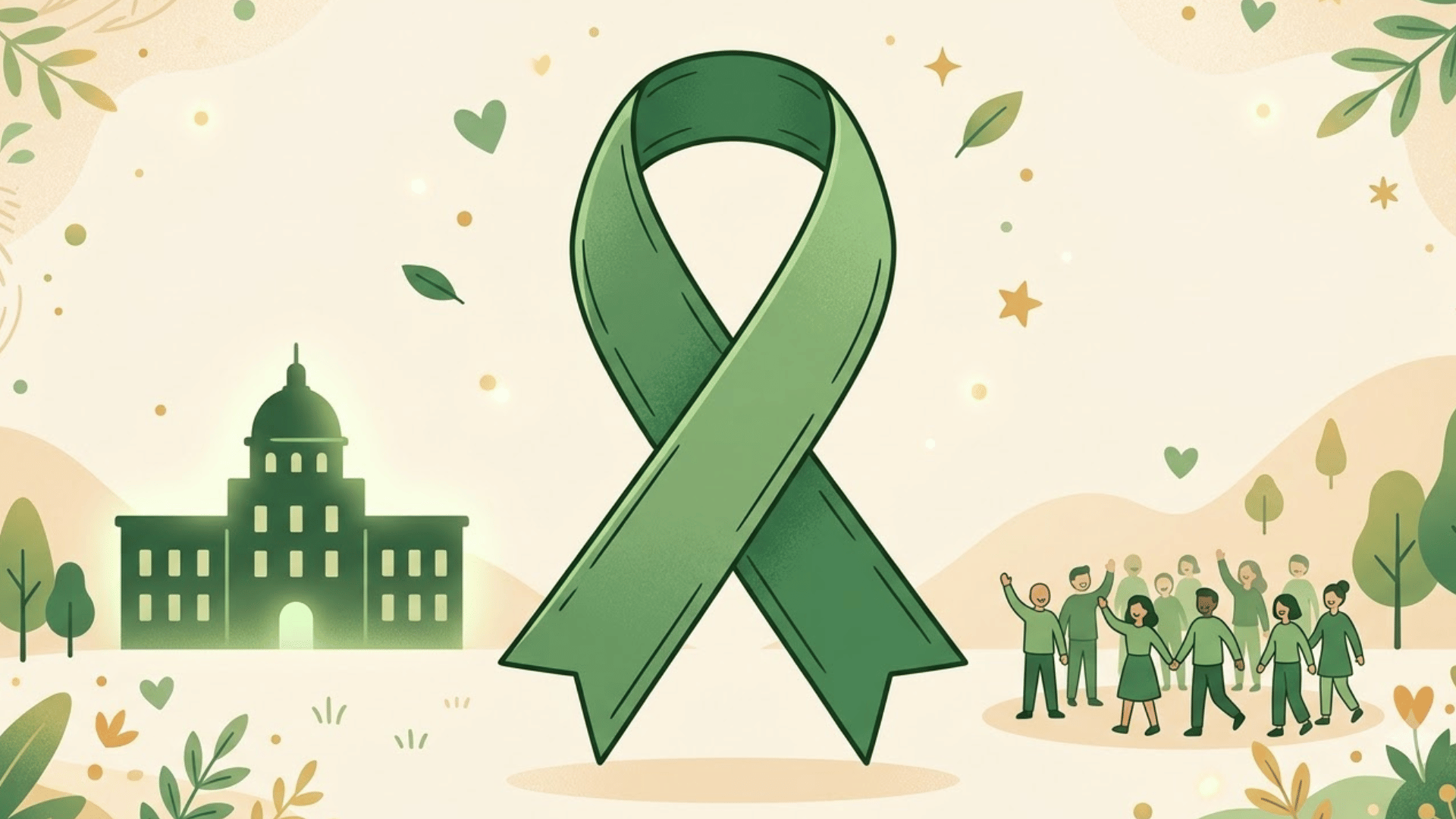
What Color is Mental Health Awareness?Green is widely recognized as the color of mental health awareness across the United States and in campaigns around the world. Organizations may use soft, lime, or deeper shades of green, but the message remains connected to support, understanding, and reducing stigma around mental health. Wearing or displaying a green ribbon can show solidarity with people affected by mental health conditions while encouraging conversations about care and available resources. The U.S. Department of Health and Human Services also identifies the green ribbon as a symbol of mental health awareness in its campaign materials. |
Why Green Was Chosen for Mental Health?
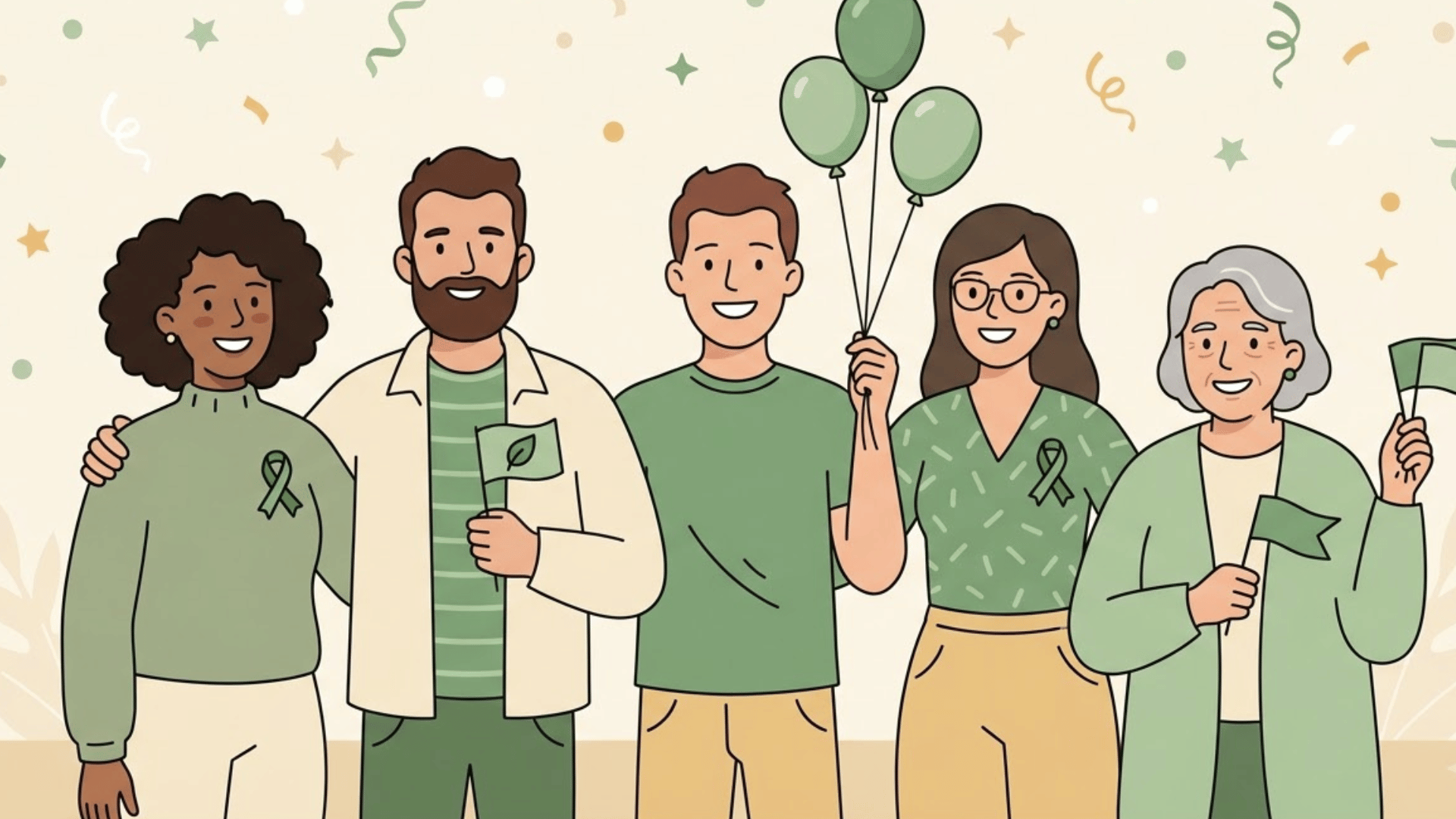
Green was chosen deliberately, not by chance. Advocates wanted a color that felt hopeful rather than clinical, and one that stood apart from other established awareness campaigns already using recognizable colors.
- Represents renewal: Green is tied to growth and new beginnings, mirroring the idea of recovery
- Feels calming: The shade is associated with balance and relief from stress or anxiety
- Connects to nature: Green reflects the natural world, adding a sense of grounding and stability
- Symbolizes hope: It offers a positive, forward-looking tone rather than a somber one
- Stood out at the time: It wasn’t already claimed by a major awareness campaign
- Echoed an existing model: It followed the format set by the red ribbon for HIV/AIDS awareness
- Works across settings: The color translates easily to ribbons, wristbands, buildings, and digital graphics
|
Representation of Green Ribbon in Mental Health Awareness: The green ribbon became a mental health awareness symbol in the 1990s. UK campaigns helped increase its recognition. It is now linked with Mental Health Awareness Month each May. The Pete Foundation introduced the Mental Health Flag in 2020. |
Which Organizations Lead Mental Health Awareness Campaigns?
Several national organizations drive mental health awareness efforts each year, each contributing toolkits, screenings, and helplines that support the campaigns’ reach and impact.
1. Mental Health America (MHA)
MHA runs the Light Up Green campaign, encouraging landmarks and buildings to glow green throughout May.
It also offers a free online mental health screening tool, used by millions to check in on their mental health and find next steps toward support or treatment.
2. NAMI (National Alliance on Mental Illness)
NAMI sets an annual campaign theme, like “In Every Story, There’s Strength,” centered on storytelling and connection.
It also leads Mental Illness Awareness Week each October, offering partner guides and social toolkits organizations use to plan their own events.
3. NIMH (National Institute of Mental Health)
NIMH, a federal agency under the NIH, shares research-based educational resources on mental health conditions and treatment options.
It also provides outreach materials that community groups and health providers use to support awareness efforts nationwide.
Ways to Get Involved in Mental Health Awareness Month

Communities, workplaces, and schools mark the month through visible, participatory actions and accessible resources that raise awareness and open up conversations about mental health.
- Wear green or a green ribbon: A simple, visible way to show support throughout May
- Light up a building or landmark: Businesses and public spaces join MHA’s Light Up Green initiative
- Join community walks or fundraisers: Local NAMI affiliates often host walks and events supporting mental health causes
- Attend workplace or school events: Lunch-and-learns, panels, and awareness talks encourage open dialogue
- Share your story on social media: NAMI’s storytelling campaigns invite people to post using dedicated hashtags
- Take a free mental health screening: MHA’s online screening tool helps people check in and find next steps
- Use official campaign toolkits: NAMI and NIMH offer downloadable resources with graphics and messaging for community use
Are There Other Colors for Specific Mental Health Causes?
Yes, several mental health-related causes use their own distinct colors, helping to separate specific conditions or efforts from general mental health awareness campaigns and events.
|
Causes |
Color |
Meaning |
|---|---|---|
|
Anxiety |
Teal |
Represents calm, coping, and relief from stress |
|
Suicide Prevention |
Purple and Teal |
Symbolizes hope, remembrance, and ongoing support |
|
Teal |
Raises awareness of trauma-related conditions |
|
|
Green |
Aligns with general mental health awareness |
|
|
Self-Harm Awareness |
Orange |
Represents recovery and continued support |
Why Does the Color Matter for Reducing Stigma?
A color gives people an easy entry point into a hard conversation.
Seeing green on a stranger’s jacket or a lit-up building signals that someone, somewhere, cares about mental health without requiring a single word to be spoken.
That visibility matters because silence has long been part of the stigma itself. When a symbol shows up in public spaces, workplaces, and online feeds, it normalizes the topic and reminds people they’re not navigating it alone.
Small, visible signals like this often open doors that direct conversations can’t.
Conclusion
Green carries real weight behind it.
What started as a simple ribbon in the 1990s now appears on buildings, wristbands, and social feeds every May, backed by organizations such as MHA, NAMI, and NIMH.
Knowing what color is for mental health awareness is a small piece of a much larger effort to keep these conversations open. Whether you wear green, share a toolkit, or simply check in on your own mental health, each action adds to that visibility.
If you’re ready to take the next step, try MHA’s free screening tool or connect with a local NAMI affiliate this May.
Frequently Asked Questions
Is Blue Also Associated With Mental Health Awareness?
Blue is sometimes used for calming visuals, but it is not the official color. Green remains the recognized symbol for mental health awareness in the U.S.
What is the Difference Between Mental Health Month and Mental Illness Awareness Week?
Mental Health Awareness Month runs every May, while Mental Illness Awareness Week, led by NAMI, takes place each October to focus specifically on serious mental illness.
Do You Wear the Green Ribbon Only in May?
No. While May sees the most visibility, the green ribbon is worn year-round to show ongoing support for mental health awareness and reduce stigma.