
Something difficult happens. You grieve, you struggle, you tell yourself it will pass. And sometimes it does.
But sometimes the weight lingers far longer than expected, quietly reshaping the way you think, feel, and move through daily life.
People tend to dismiss what they are going through because there was a clear reason for it, as though a cause makes the pain less serious.
In this blog, I will help you understand reactive depression, recognize the signs that most people overlook, and take the first step toward feeling like yourself again.
What Is Reactive Depression?It is a term many people use to describe feeling deeply depressed after going through a stressful or life-changing event. Unlike depression that may develop without an obvious cause, these feelings are tied to a specific situation, such as the death of a loved one, divorce, losing a job, a serious illness, or another major setback. The sadness often goes beyond what someone would normally expect and can make it difficult to work, maintain relationships, sleep well, or enjoy everyday activities. Although it is no longer an official medical diagnosis, mental health professionals generally refer to it as Adjustment Disorder with Depressed Mood, as defined in the Diagnostic and Statistical Manual of Mental Disorders (DSM-5). |
Signs of Reactive Depression
Signs can appear after a painful or stressful event and gradually affect how a person feels, thinks, and functions. They may show up in mood, energy, sleep, work, relationships, or the ability to manage daily responsibilities.
- Persistent sadness: Feeling low, tearful, or emotionally heavy most of the day.
- Loss of interest: No longer enjoying things that usually feel comforting or meaningful.
- Low energy: Feeling drained, tired, or unable to keep up with daily tasks.
- Sleep changes: Sleeping too much, struggling to fall asleep, or waking often.
- Anxiety or worry: Feeling tense, restless, or stuck thinking about the stressful event.
- Social withdrawal: Pulling away from friends, family, or normal routines.
- Hopelessness: Feeling like things will not improve, or the future looks hard to face.
Causes of Reactive Depression
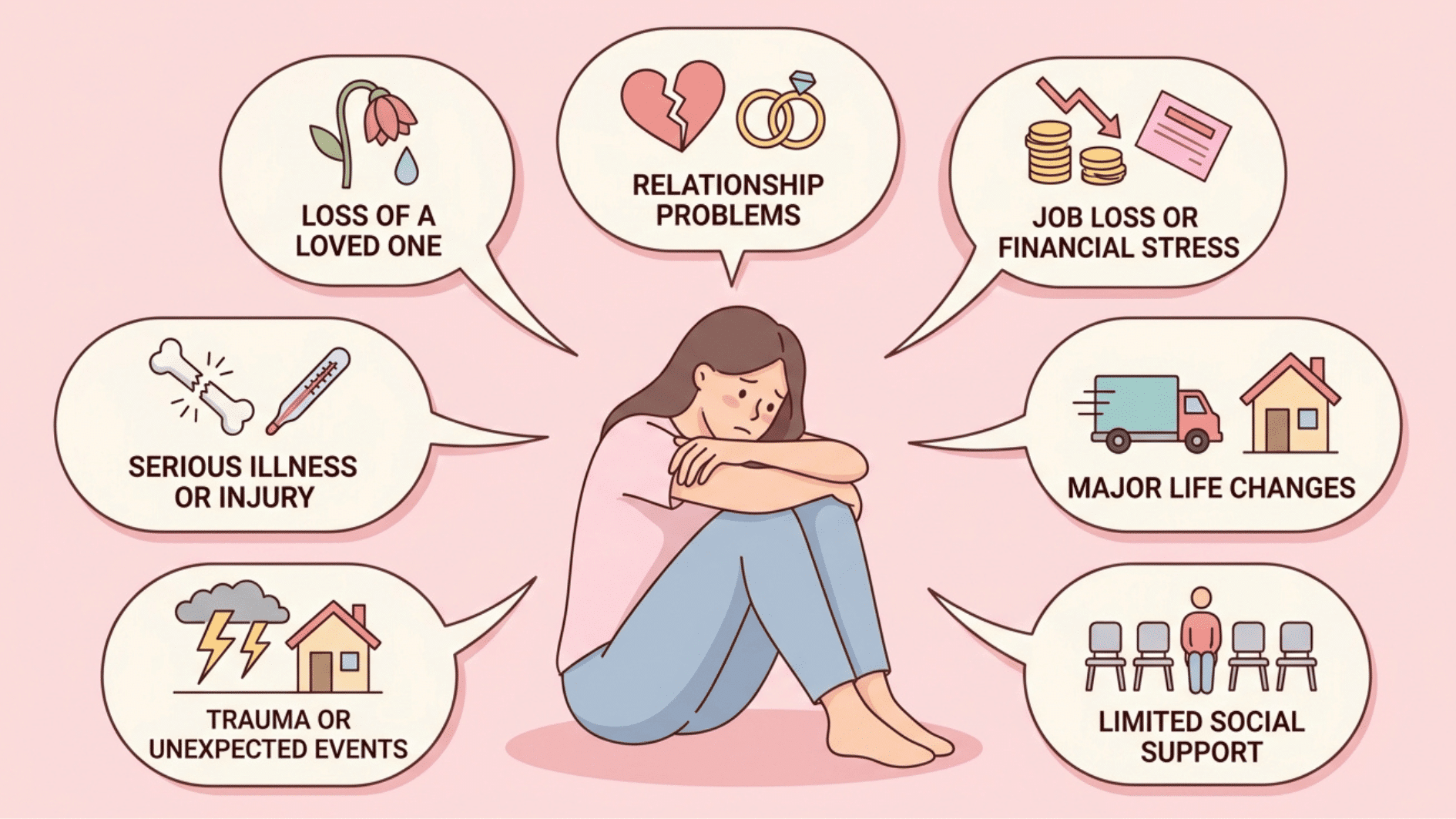
This type of depression develops in response to a significant life stressor. While the same event may not affect everyone equally, major changes and emotional challenges can overwhelm a person’s ability to cope.
1. Loss of a Loved One
The death of a family member, partner, friend, or even a beloved pet can trigger intense grief that affects emotional well-being.
When the sadness becomes overwhelming and starts interfering with daily life, it may contribute to this depression, especially if the loss is sudden or unexpected.
2. Relationship Problems
Divorce, separation, a breakup, or ongoing conflict with loved ones can create lasting emotional distress. Feelings of rejection, loneliness, or uncertainty about the future may make it difficult to recover without additional support.
3. Job Loss or Financial Stress
Losing a job or facing financial hardship can affect much more than income.
It can lead to feelings of insecurity, loss of identity, and constant worry about the future, increasing the risk of developing depressive symptoms and often overlapping with recovering from burnout if the stress has been building for a while.
4. Serious Illness or Injury
Being diagnosed with a chronic illness or recovering from a serious injury can bring major emotional and physical challenges.
Adjusting to changes in health, independence, or daily routines may leave someone feeling overwhelmed and emotionally exhausted.
5. Major Life Changes
Moving to a new city, starting college, becoming a parent, retiring, or taking on caregiving responsibilities are significant life transitions. Even positive changes can create stress as a person adapts to new routines, responsibilities, and expectations.
6. Trauma or Unexpected Events
Experiencing an accident, natural disaster, assault, or another traumatic event can leave lasting emotional effects.
Some people benefit from trauma release exercises as part of processing what happened in the body, not just the mind.
The shock and disruption caused by these experiences may trigger as the person struggles to process what happened.
It may also lead to fear, sleep problems, emotional numbness, or constant worry after the event. In some cases, professional support may be needed to help the person process the trauma in a safe and steady way.
7. Limited Social Support
Having a few trusted people to lean on during difficult times can make stressful situations feel even harder to manage.
Without emotional support from friends, family, or a community, feelings of isolation and hopelessness may become more intense, and practicing self-compassion becomes even more important when that support is thin.
Situational Depression or Reactive Depression: Are They the Same?
Yes, situational depression or reactive depression are terms that are often used interchangeably to describe depression-like symptoms that develop after a stressful life event.
Although both phrases remain common in everyday conversations and online searches, neither is an official diagnosis in the Diagnostic and Statistical Manual of Mental Disorders (DSM-5).
Mental health professionals usually call this Adjustment Disorder with Depressed Mood when symptoms follow a clear stressor and affect daily life.
The important point is not the label itself, but recognizing the symptoms, understanding what triggered them, and seeking appropriate support if they begin interfering with daily life.
Reactive Depression vs. Major Depression
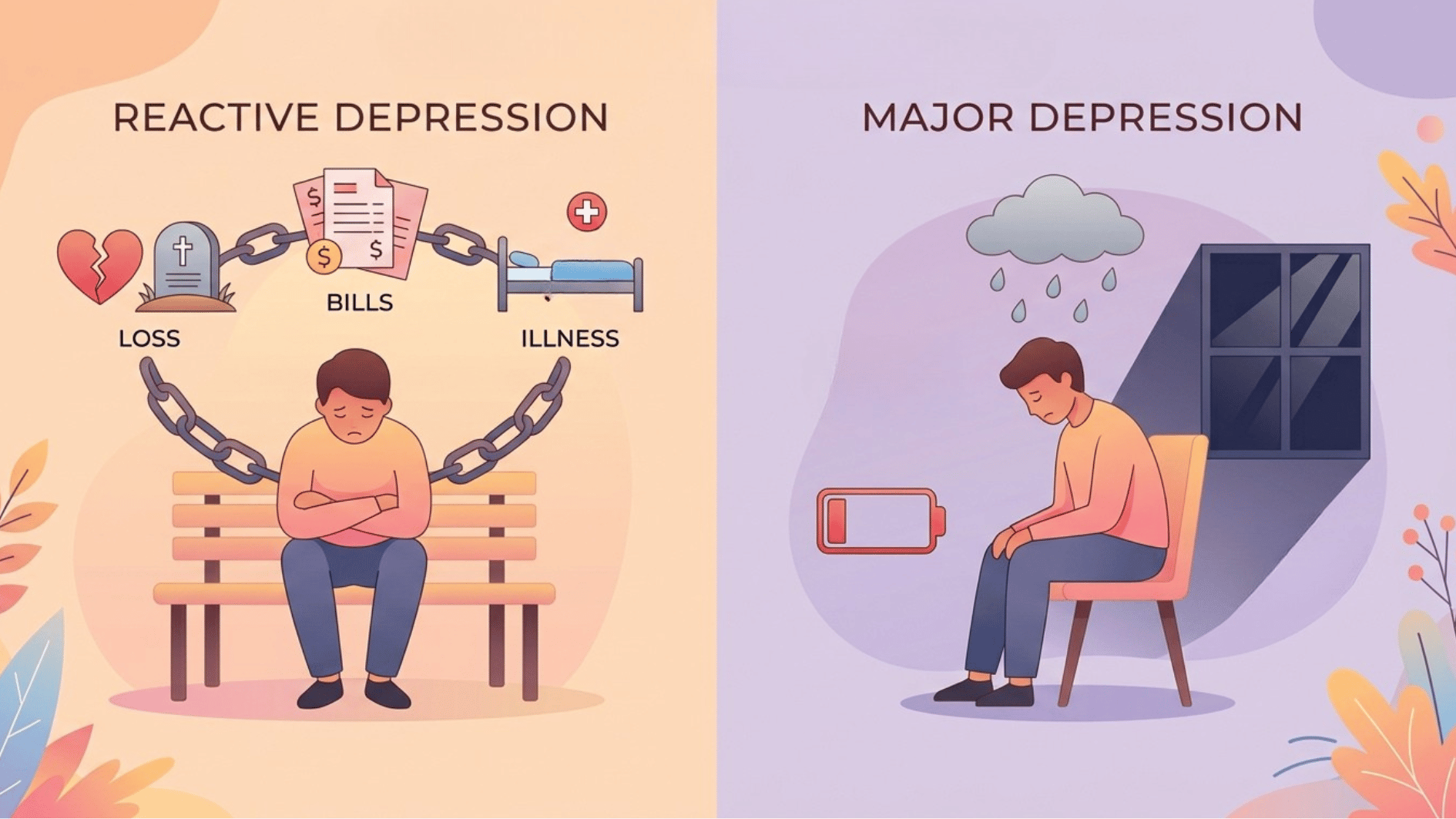
Although they can share similar symptoms, they differ in what triggers them, how they are diagnosed, and how long symptoms typically last.
| Aspect | Reactive Depression (Adjustment Disorder with Depressed Mood) | Major Depression (Major Depressive Disorder) |
|---|---|---|
| Primary trigger | Develops after a specific stressful life event | May develop with or without an identifiable trigger |
| Onset | Begins soon after the stressful event | Can begin gradually or suddenly |
| Main cause | Directly linked to an identifiable stressor | Influenced by biological, psychological, and environmental factors |
| Duration | Often improves as the person adapts or receives support | Usually lasts at least two weeks and may continue much longer |
| Diagnosis | Adjustment Disorder with Depressed Mood | Major Depressive Disorder (MDD) |
| Outlook | Often resolves when the stressor is addressed | May require ongoing treatment to prevent recurrence |
Treatment Options for Reactive Depression
The right treatment depends on your symptoms and how much they affect your daily life. Many people recover with a combination of professional support, healthy coping strategies, and time.
- Talk therapy (Psychotherapy): Working with a therapist can help you process the stressful event and build healthy coping skills.
- Cognitive Behavioral Therapy (CBT): CBT helps replace negative thought patterns with healthier ways of thinking and responding.
- Medication: A healthcare provider may prescribe antidepressants or anti-anxiety medication if symptoms are severe or persistent.
- Healthy lifestyle habits: Regular exercise, nutritious meals, quality sleep, and limiting alcohol can support emotional recovery.
- Stress management: Mindfulness, deep breathing, journaling, or relaxation exercises can help reduce stress and improve resilience.
- Social support: Talking with trusted friends, family, or joining a support group can reduce feelings of isolation.
- Professional follow-up: Regular check-ins with a healthcare provider help monitor progress and adjust treatment if needed.
When to Seek Immediate Help
If feelings of sadness, hopelessness, or anxiety become so intense that they interfere with your ability to work, study, care for yourself, or maintain relationships, it’s important to seek professional help.
Reach out to a healthcare provider promptly if your symptoms continue to worsen, last for several weeks, or you begin withdrawing from daily life.
Seek immediate emergency care or contact your local crisis services if you have thoughts of harming yourself, believe others would be better off without you, or feel unable to keep yourself safe.
Early intervention can make a significant difference, and you do not have to face these challenges alone.
The Bottom Line
Reactive depression can feel overwhelming, especially when it follows a major life change that turns your world upside down. While the emotional pain is real, it does not have to define your future.
Whether that support comes from a trusted friend, a therapist, or a healthcare professional, taking the first step is an important part of healing, and that first step is often the hardest part of the path to recovery.
Remember that recovery looks different for everyone, and there is no right timeline for feeling better.
With the right treatment, healthy coping strategies, and patience, many people gradually regain emotional balance and move forward with renewed hope.
Frequently Asked Questions
How Long Can Reactive Depression Last?
It varies, but symptoms often improve as the person adapts, receives support, or begins treatment.
Can Reactive Depression Happen After a Positive Life Change?
Yes. Events like moving, starting college, becoming a parent, or retiring can still create emotional stress.
Can Reactive Depression Affect Physical Health?
Yes. It may cause sleep problems, changes in appetite, fatigue, headaches, or muscle tension.