
What Is Religious Trauma? Those experiences that often go unnamed for years. People sense that something from their faith background still weighs on them, but they cannot quite explain it.
If a wave of anxiety rises when you question what you were taught, or the word “sin” still tightens your chest, that reaction has a name and a cause, and it’s more common than most people raised in strict households realize.
In this blog, I will explain what religious trauma is: its definition, common signs, causes, symptoms, and the different forms it can take.
Disclaimer: This blog is for educational purposes only and is not intended to criticize, target, or offend any specific religion or faith community. If you are in distress, please speak with a qualified mental health professional.
What is Religious Trauma?Religious trauma is, at its simplest, the emotional, psychological, and sometimes physical harm that results from frightening, shaming, or controlling religious experiences. It tends to take root when faith becomes a tool for fear and obedience rather than comfort and growth, often in settings where questioning is punished, and people are made to feel sinful or unworthy. Clinicians sometimes call the lasting version “Religious Trauma Syndrome,” a term coined in 2011 by psychologist Dr. Marlene Winell. It is not a formal diagnosis, but the harm behind it is real and treatable. |
What Causes Religious Trauma?
Religious trauma rarely comes from a single dramatic moment.
More often, it builds quietly, message by message, over the years. Some of the clearest examples of religious trauma grow out of a few patterns that appear again and again:
- High-control or authoritarian communities that police behavior, thoughts, and relationships, and discourage questioning.
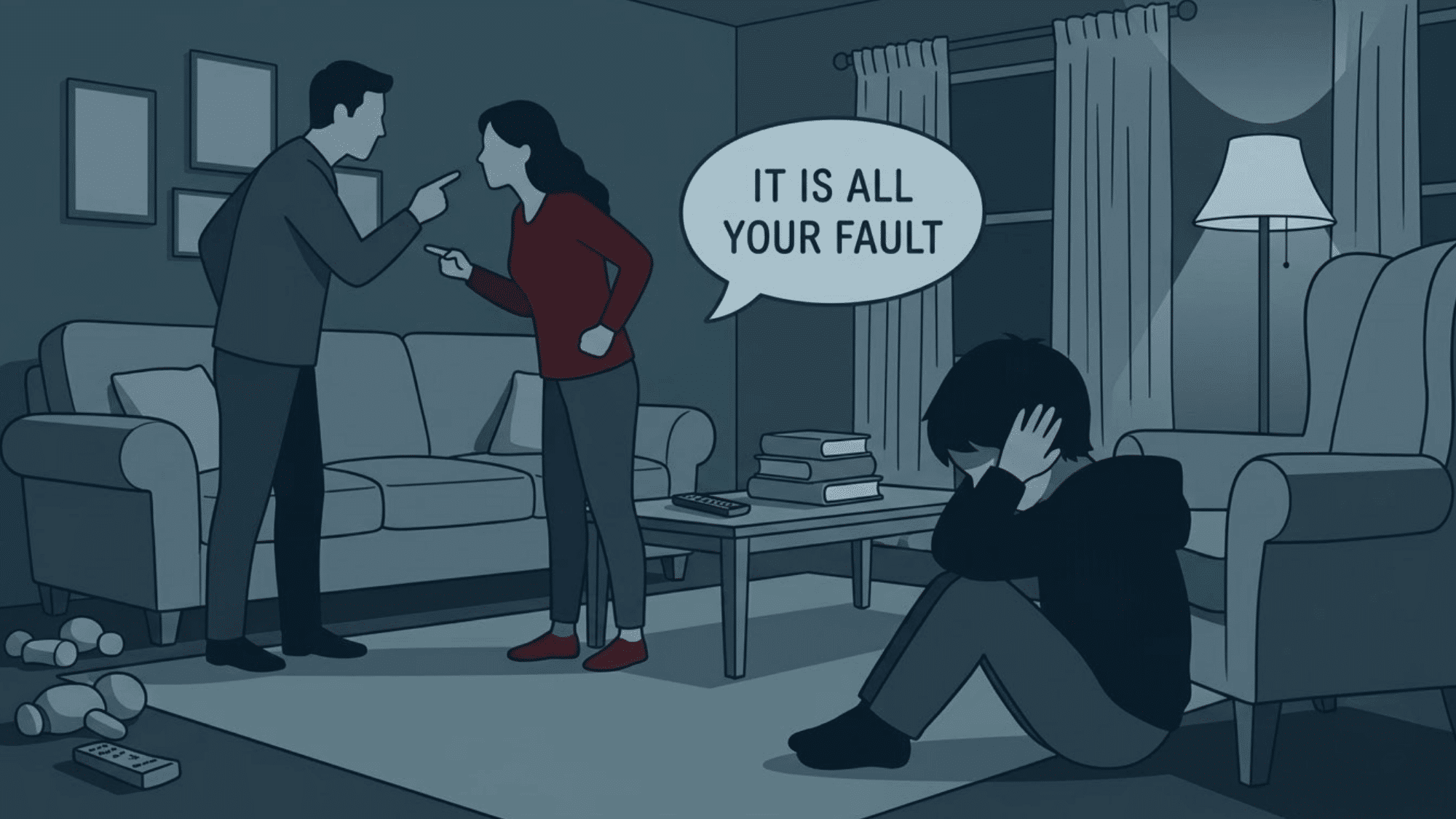
- Fear-based teaching intense threats of hell, damnation, or punishment, especially when absorbed in childhood.
- Spiritual abuse occurs when a leader or community uses someone’s beliefs to manipulate, shame, or control them.
- Rejection of identity, such as LGBTQ+ people being taught that who they are is sinful.
- The act of leaving, which can mean losing community, family ties, and an entire framework for understanding the world, all at once.
How Does Religious Trauma Show Up?
Up to one-third of U.S. adults have faced religious trauma, a 2023 study found, as it often hides in patterns people overlook. These are the signs most recognize in themselves:
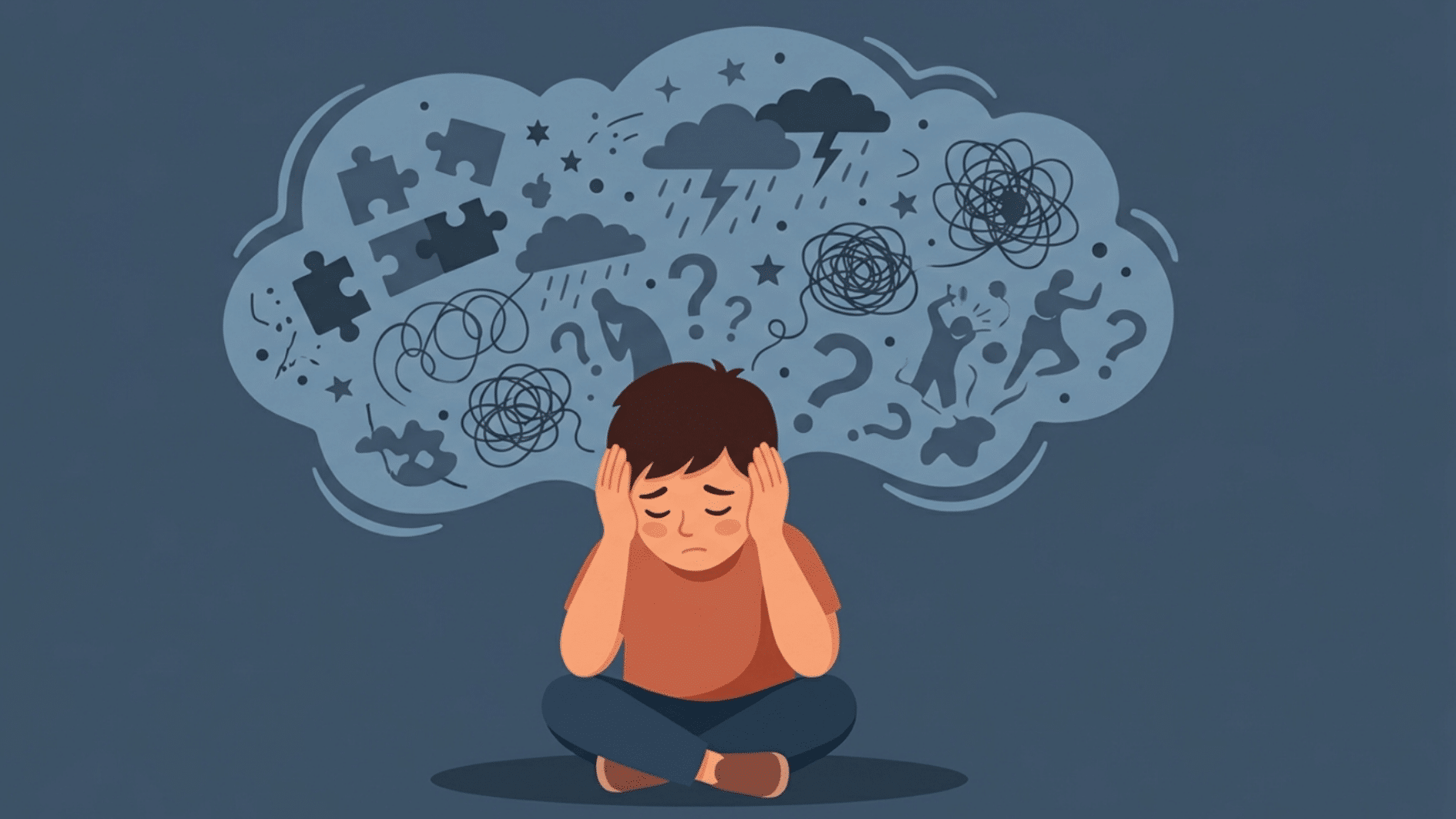
- Persistent guilt or shame that is out of proportion to anything you have done
- Fear of punishment, hell, or divine consequences
- Difficulty trusting your own judgment or making decisions
- Black-and-white, all-or-nothing thinking
- A deep sense of being “broken” or unworthy
- Anxiety whenever you question a belief you were raised with
The Different Forms of Religious Trauma
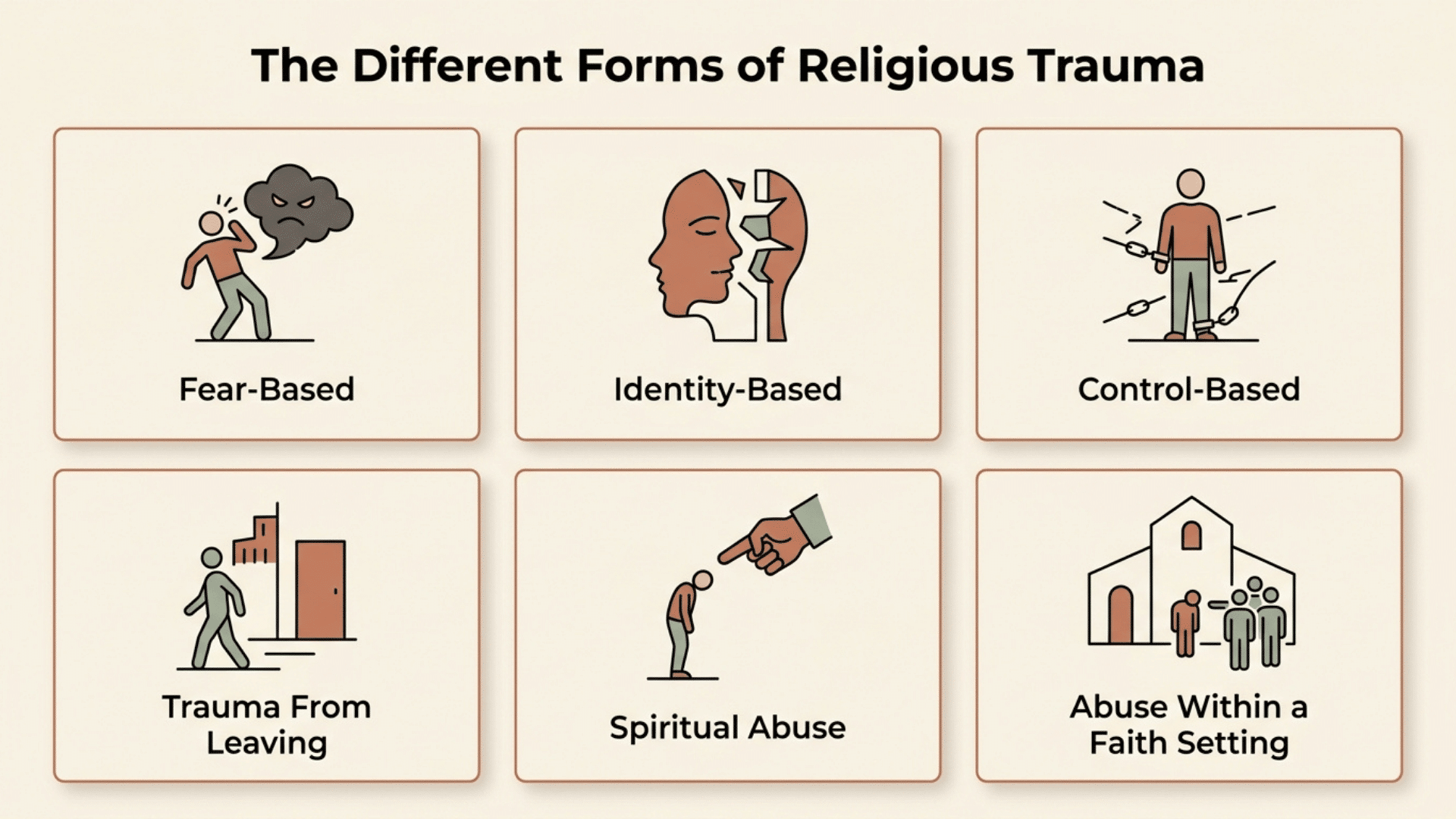
Religious trauma can take many forms, and the same harm may show up differently depending on a person’s background and experiences.
1. Fear-Based Trauma
Fear-based trauma develops when faith is taught through threats instead of care, as children are especially vulnerable because frightening messages can stay with them for years.
Even after beliefs change, many continue experiencing anxiety, perfectionism, or panic when questioning religious teachings, as their nervous system remains conditioned by fear.
2. Identity-Based Trauma
Identity-based trauma occurs when a person’s core identity is labeled sinful or unacceptable, and it is common among LGBTQ+ individuals in some faith settings, creating lasting shame and self-doubt.
Over time, people may come to believe they are fundamentally flawed rather than recognizing that they were exposed to harmful messages.
3. Control-Based Trauma
Control-based trauma develops in environments where beliefs, behavior, relationships, and questioning are tightly controlled, and constant monitoring can weaken confidence in personal judgment.
Even after leaving, many struggle with decision-making, seek constant approval, or fear making mistakes because control has become deeply internalized.
4. Trauma From Leaving
Leaving a faith community can be deeply painful because it often means losing relationships, identity, routine, and a familiar worldview.
Many grieve the loss of belonging alongside family and friends who remain behind; this combination of losses can create trauma similar to other significant life disruptions.
5. Spiritual Abuse
Spiritual abuse happens when someone uses religious authority to manipulate, shame, or control others; tactics may include misusing scripture, threatening divine punishment, or silencing questions.
Over time, this damages self-trust, creates guilt and fear, and may affect a person’s relationship with spirituality itself.
6. Abuse Within a Faith Setting
This trauma occurs when physical, emotional, or sexual abuse happens within a religious community, often involving trusted leaders.
Survivors may face pressure to stay silent or forgive too quickly to protect the community, and these experiences can deepen emotional wounds and delay healing for many years.
How Does it Affect Everyday Life?
When those early signs go unaddressed, the effects often deepen into something closer to anxiety, depression, and PTSD. They tend to surface across the body, the mind, and relationships, as the table below shows.
| Area | Common Effects |
|---|---|
|
Physical |
Panic attacks, hypervigilance, a heightened startle response, and sleep difficulties |
|
Cognitive |
Intrusive thoughts, flashbacks, nightmares, difficulty concentrating |
|
Emotional |
Chronic anxiety, depression, numbness, ongoing fear or dread |
|
Relational |
Trouble trusting authority, difficulty setting boundaries, isolation from loved ones |
|
Identity |
Confusion about who you are and your sense of purpose once the old framework falls |
Real Stories of Religious Trauma
Statistics describe the scale; personal stories describe the feeling. The reviews were shared publicly by individuals on online forums and Q&A sites.
A lifetime mislabeled as “lack of faith”
One person, posting on a public mental health forum, described being raised in a strict household where their struggles were blamed on weak belief rather than recognized as health issues. They wrote that it took until age 36 to realize the only person they needed to have faith in was themselves.Source: Mental Health Forum
“Scared of my own shadow”
In a reply on the same forum thread, another member recalled a childhood in the Plymouth Brethren where guilt was constant. They described being told they were sinful with every breath, and being so frightened by the idea that “God was watching” that they were scared of their own shadow.
Source: Mental Health Forum
Repeated harm within the family’s beliefs
A user answering a question on Quora shared that they were traumatized by their Mormon family’s beliefs and attitudes, describing being hurt repeatedly over many years when their own experiences and perspective were dismissed.
Source: Quora
What Healing Can Involve?
Recovery from religious trauma is possible, and it does not require adopting or abandoning any particular belief.
Trauma-informed approaches such as CBT, EMDR, and somatic (body-based) work have helped many people loosen the grip of fear and rebuild a sense of safety and self-trust.
The aim is not to settle a question of faith, but to restore a person’s ability to think, choose, and feel at ease in their own mind.
Working with a therapist who specializes in religious trauma or spiritual abuse is often the most effective place to start.
The Bottom Line
Recovery from religious trauma is possible, and it does not require adopting or abandoning any particular belief.
Trauma-informed approaches such as CBT, EMDR, and somatic (body-based) work have helped many people loosen the grip of fear and rebuild a sense of safety and self-trust.
The aim is not to settle a question of faith, but to restore a person’s ability to think, choose, and feel at ease in their own mind.
Working with a therapist who specializes in religious trauma or spiritual abuse is often the most effective place to start.
Frequently Asked Questions
Is Religious Trauma an Official Mental Health Diagnosis?
No, it is not in the DSM-5, but its symptoms are real and are treated like other forms of trauma.
Can you have religious trauma even if you still believe?
Yes, religious trauma is about harmful experiences, not about whether you keep or leave your faith.
Can religious trauma be healed?
Yes, with trauma-informed therapy, most people see meaningful improvement in their symptoms over time.